Flashcards · Biology · Defence Against Disease
Human Defence Systems
-
What are the body's non-specific defences?
Barriers such as the skin, nose, trachea and bronchi, and stomach that work against all pathogens.
-
How does the skin protect the body?
It is a barrier that most pathogens cannot pass, and platelets seal any cuts with a scab.
-
How does the nose protect the body?
Hairs and mucus trap pathogens in the air.
-
How do the trachea and bronchi protect the body?
Mucus traps pathogens and cilia move it up to be swallowed.
-
How does the stomach protect the body?
It makes hydrochloric acid, which kills pathogens.
-
What is the immune system?
White blood cells that try to destroy pathogens that get into the body.
-
What is phagocytosis?
A white blood cell engulfing and digesting a pathogen.
-
What is an antigen?
A molecule on the surface of a pathogen.
-
What is an antibody?
A protein made by white blood cells that sticks to a specific antigen.
-
Why is each antibody specific?
Its shape fits the antigen of only one type of pathogen.
-
What do antitoxins do?
They neutralise the toxins made by bacteria.
-
Which cells make antibodies?
Lymphocytes (white blood cells).
-
What happens to a pathogen covered in antibodies?
It is destroyed, often by phagocytes.
-
What do cilia do in the airways?
Move mucus, with trapped pathogens, up towards the throat.
-
Which defence is non-specific, phagocytosis or antibodies?
Phagocytosis.
-
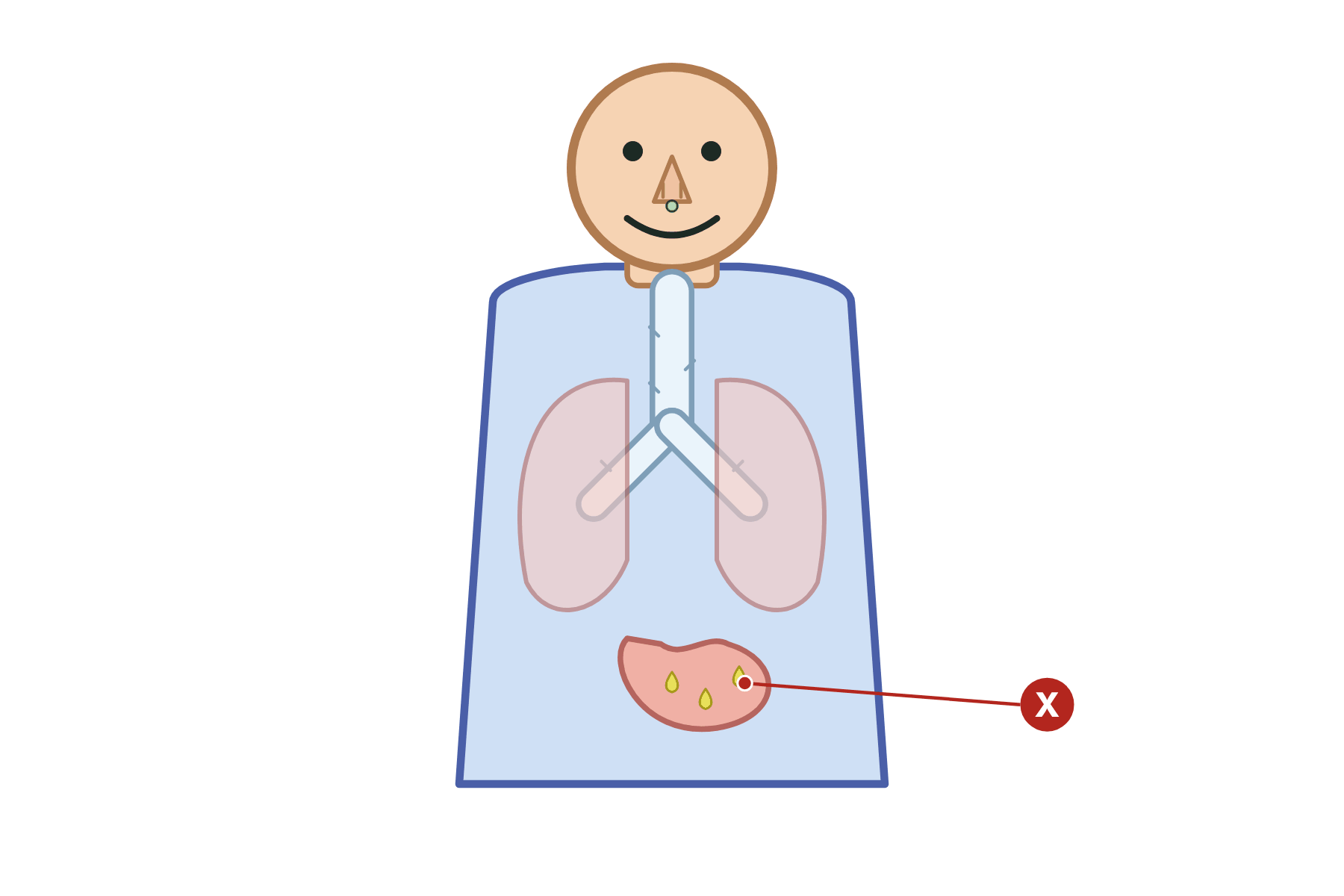 Name the defence marked X and say how it protects the body.
 The stomach. It produces hydrochloric acid, which kills most of the pathogens that are swallowed.
-
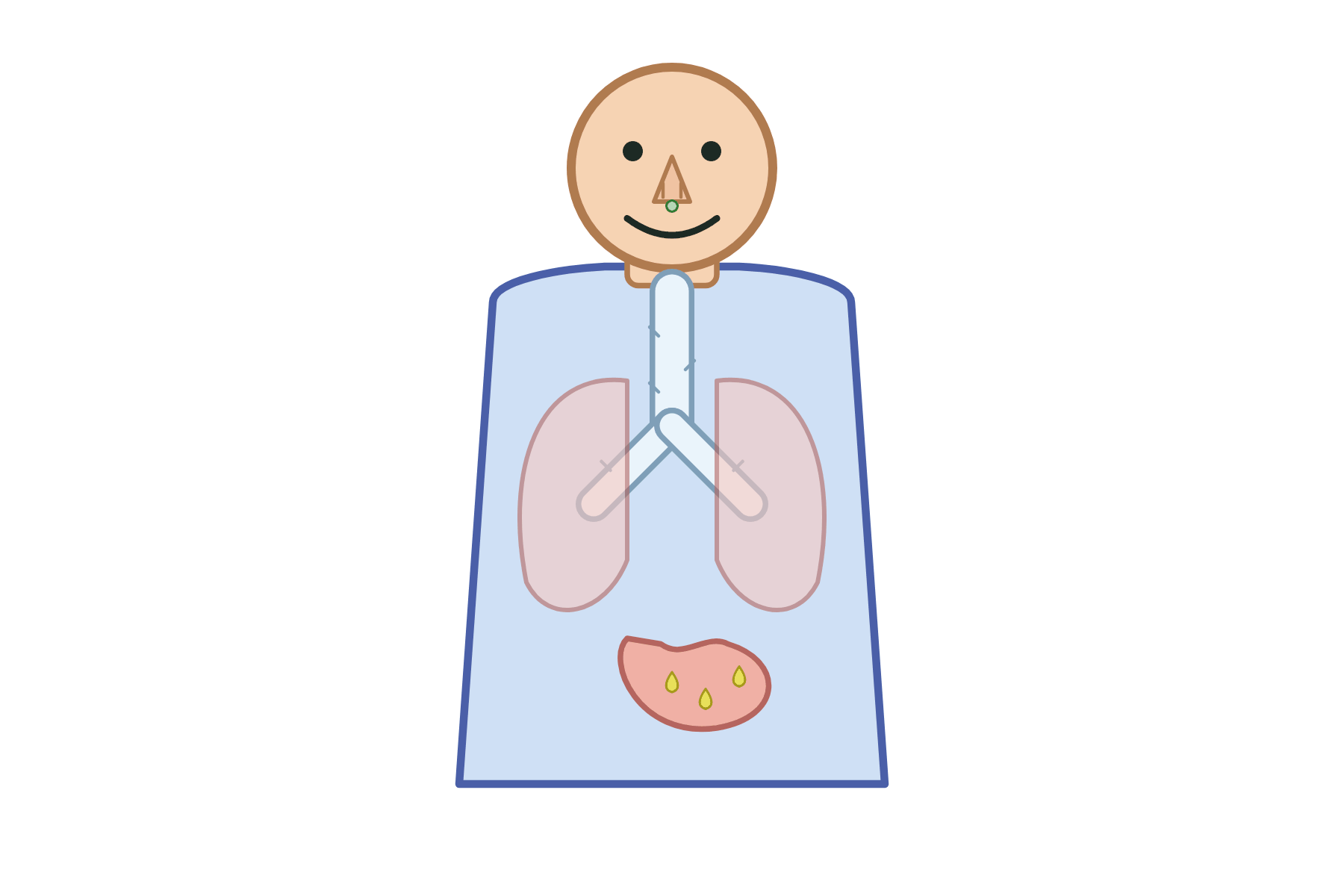 Label the body's non-specific defences.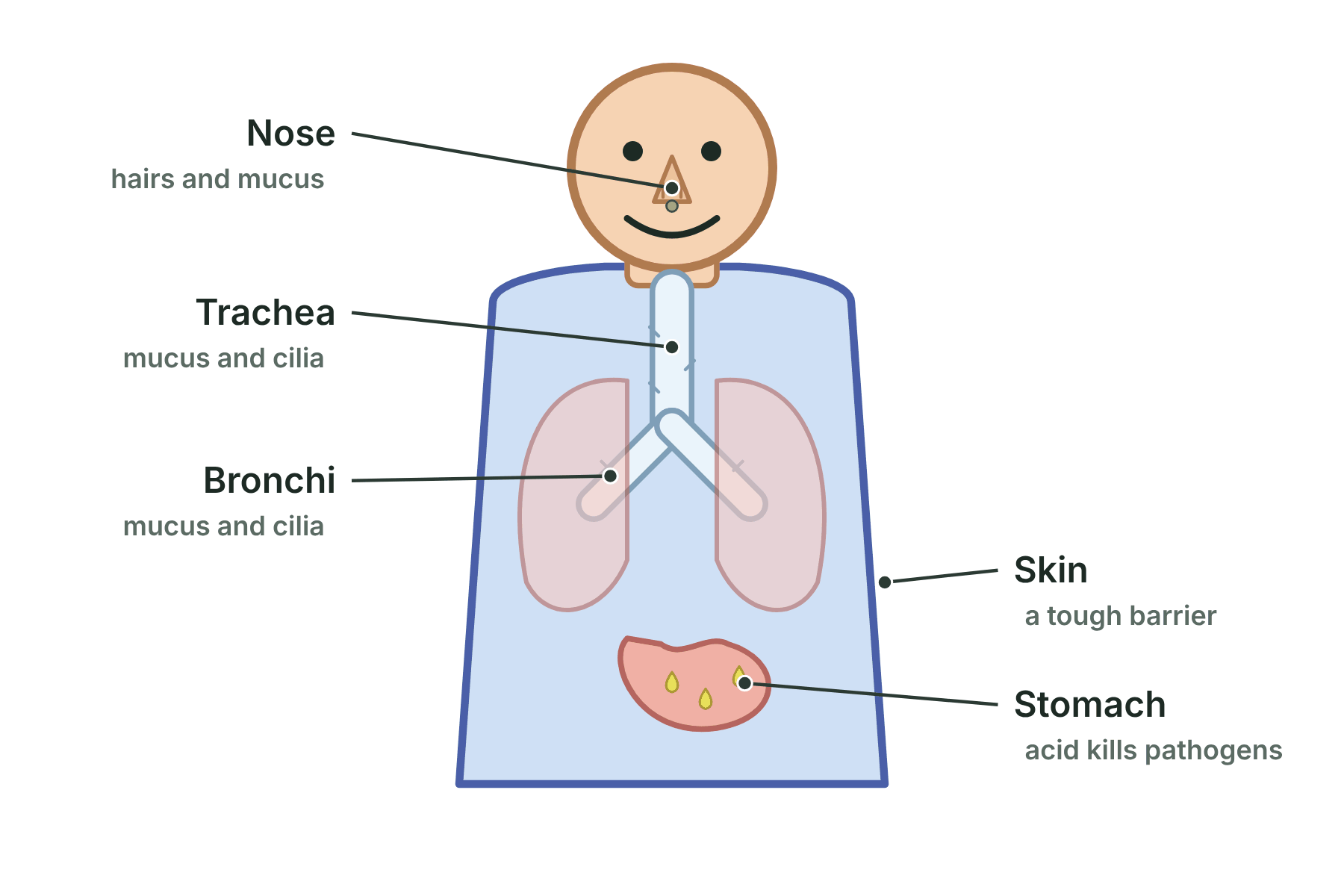
Skin (tough barrier), nose (hairs and mucus), trachea and bronchi (mucus and cilia) and stomach (hydrochloric acid).