Flashcards · Biology · Health, Disease and Cancer
Cancer
-
What is cancer?
A disease caused by changes in cells that lead to uncontrolled growth and division.
-
What is a tumour?
A lump of abnormal cells.
-
What is a benign tumour?
A growth of abnormal cells contained in one area, usually inside a membrane, that does not invade other parts of the body.
-
What is a malignant tumour?
A tumour whose cells invade neighbouring tissues and spread to other parts of the body in the blood.
-
Which type of tumour is cancer?
A malignant tumour.
-
What is a secondary tumour?
A new tumour formed in another part of the body by cancer cells that have spread.
-
How do cancer cells travel round the body?
In the blood.
-
Is cancer a communicable disease?
No. It is not caused by a pathogen and cannot be passed from person to person.
-
Name a lifestyle risk factor for cancer.
Smoking (also obesity, diet and lack of exercise).
-
Name a carcinogen.
Ionising radiation, or chemicals in tobacco smoke.
-
Can viruses cause cancer?
Some viruses that live in cells can trigger cancers, such as HPV and cervical cancer.
-
What is a genetic risk factor?
An inherited change in a gene that makes a person more likely to get a particular cancer.
-
Does a benign tumour spread?
No.
-
Why is a malignant tumour more dangerous than a benign one?
It spreads and forms secondary tumours in other organs.
-
Which process makes new cells in a tumour?
Mitosis, out of control.
-
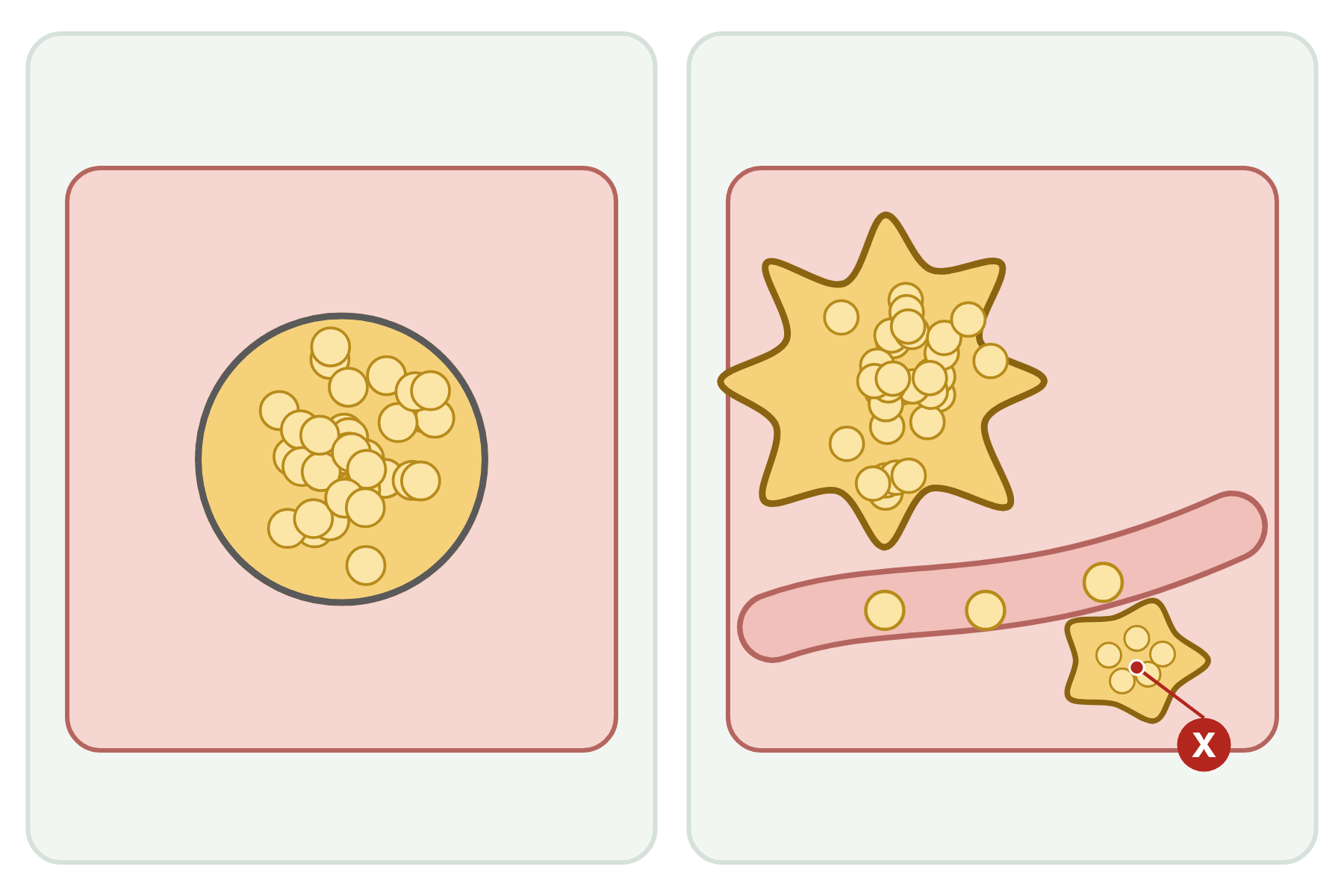 Name the part marked X and say why it is dangerous.
 A secondary tumour. It has grown from cancer cells that spread in the blood from the first malignant tumour.
-
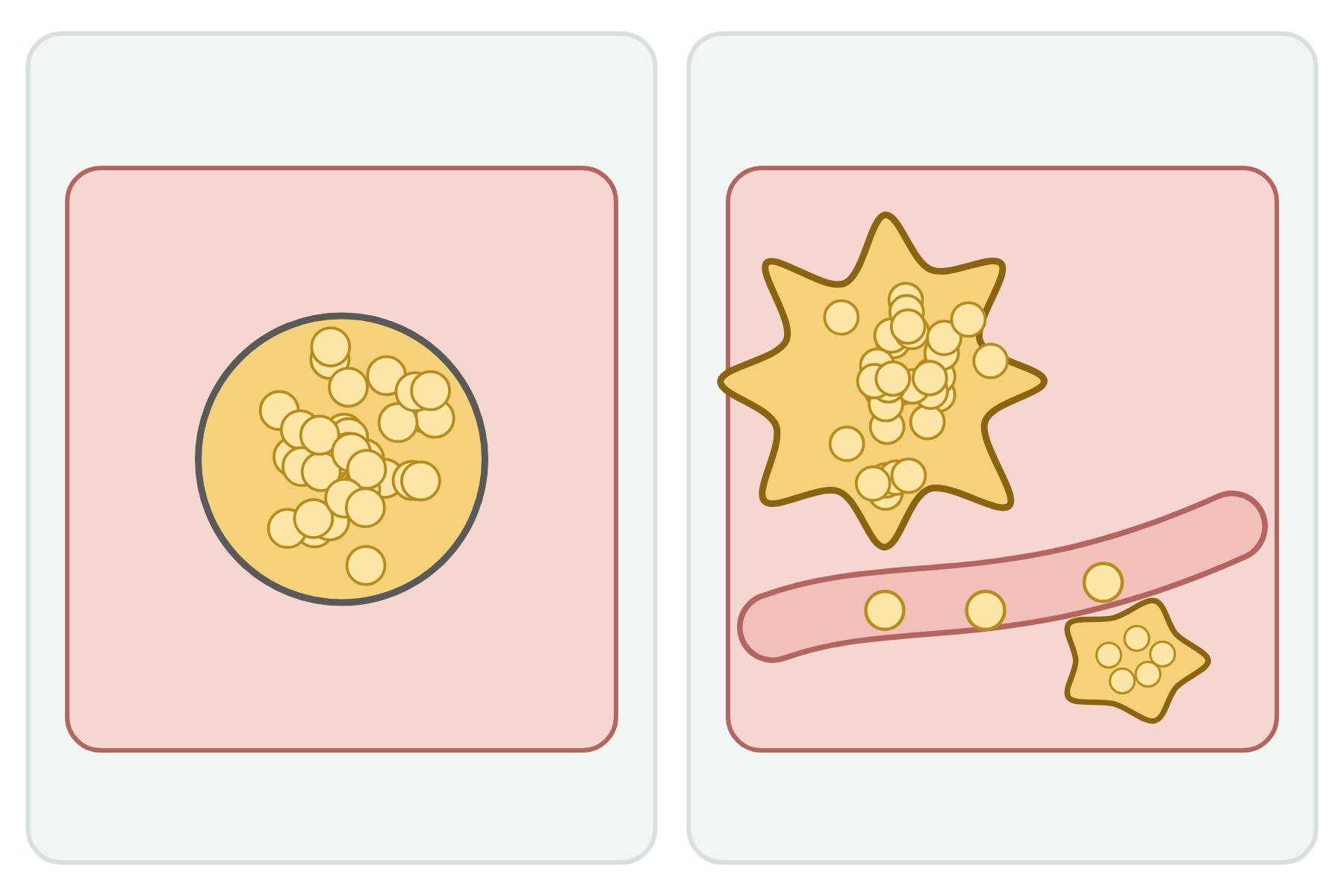 Label both tumours and the way cancer spreads.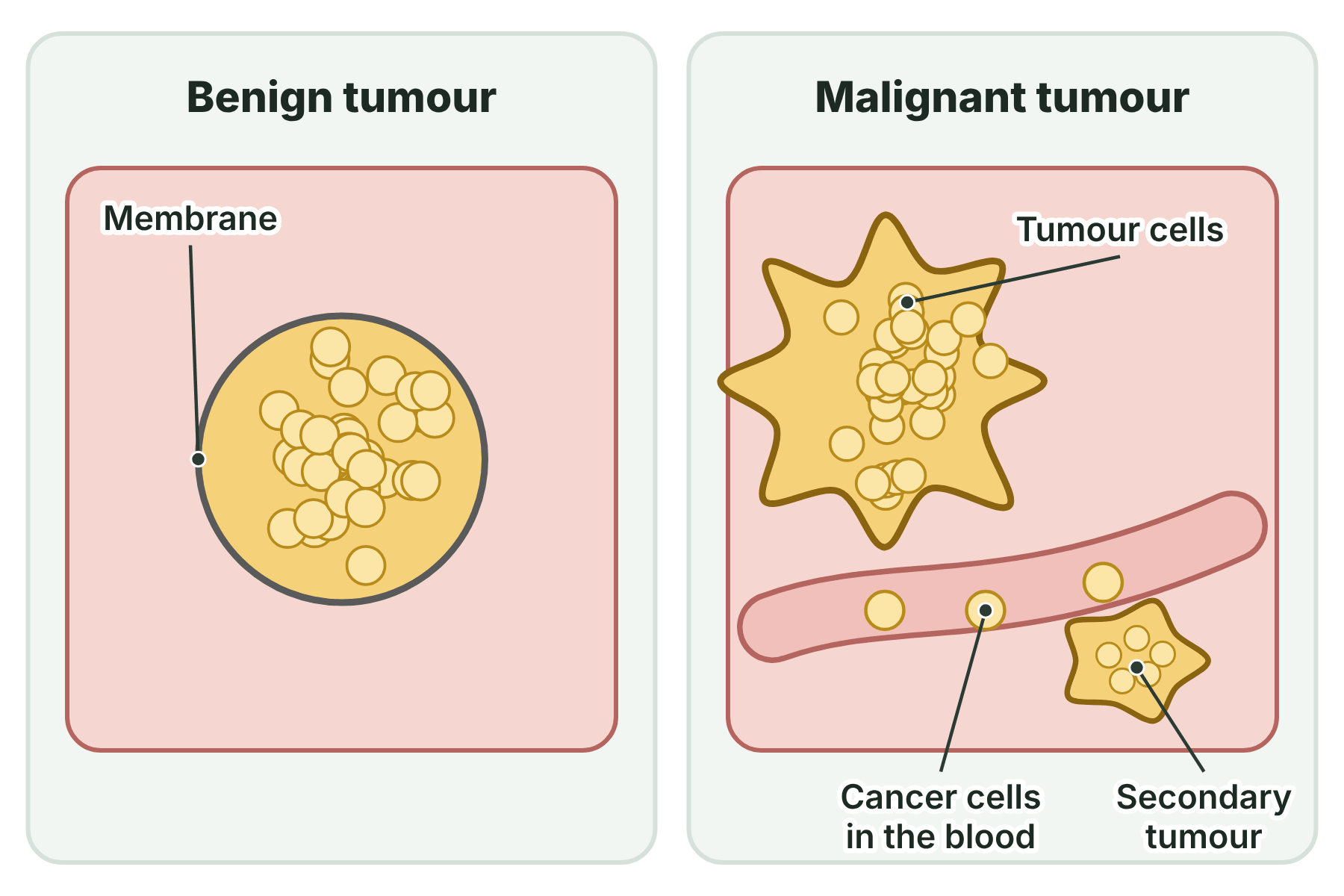
Benign tumour in a membrane, stays in one place. Malignant tumour invading the tissue. Cancer cells in the blood. Secondary tumour.