Flashcards · Biology · Monoclonal Antibodies
Producing Monoclonal Antibodies
-
What is a monoclonal antibody?
An antibody made by a single clone of cells that is specific to one binding site on one antigen.
-
Why are the antibodies identical?
They all come from a single clone of genetically identical cells.
-
Which animal's lymphocytes are used?
Mice.
-
How are the mouse lymphocytes stimulated?
By injecting the mouse with the antigen.
-
What are lymphocytes combined with?
A particular kind of tumour cell.
-
What is the new cell called?
A hybridoma cell.
-
What can a hybridoma cell do?
Both divide and make the antibody.
-
Why can't lymphocytes alone be used?
They cannot divide for long, so they cannot make much antibody.
-
Why are tumour cells used?
They divide rapidly and keep dividing.
-
What happens to single hybridoma cells?
They are cloned to produce many identical cells.
-
What is done with the antibody at the end?
It is collected and purified.
-
What is a clone?
A group of genetically identical cells.
-
What does specific mean for an antibody?
It binds to only one binding site on one antigen.
-
Give one drawback of using mouse cells.
Mouse antibodies can be seen as foreign by the human immune system.
-
Does a lymphocyte make many types of antibody?
No. Each lymphocyte makes one type.
-
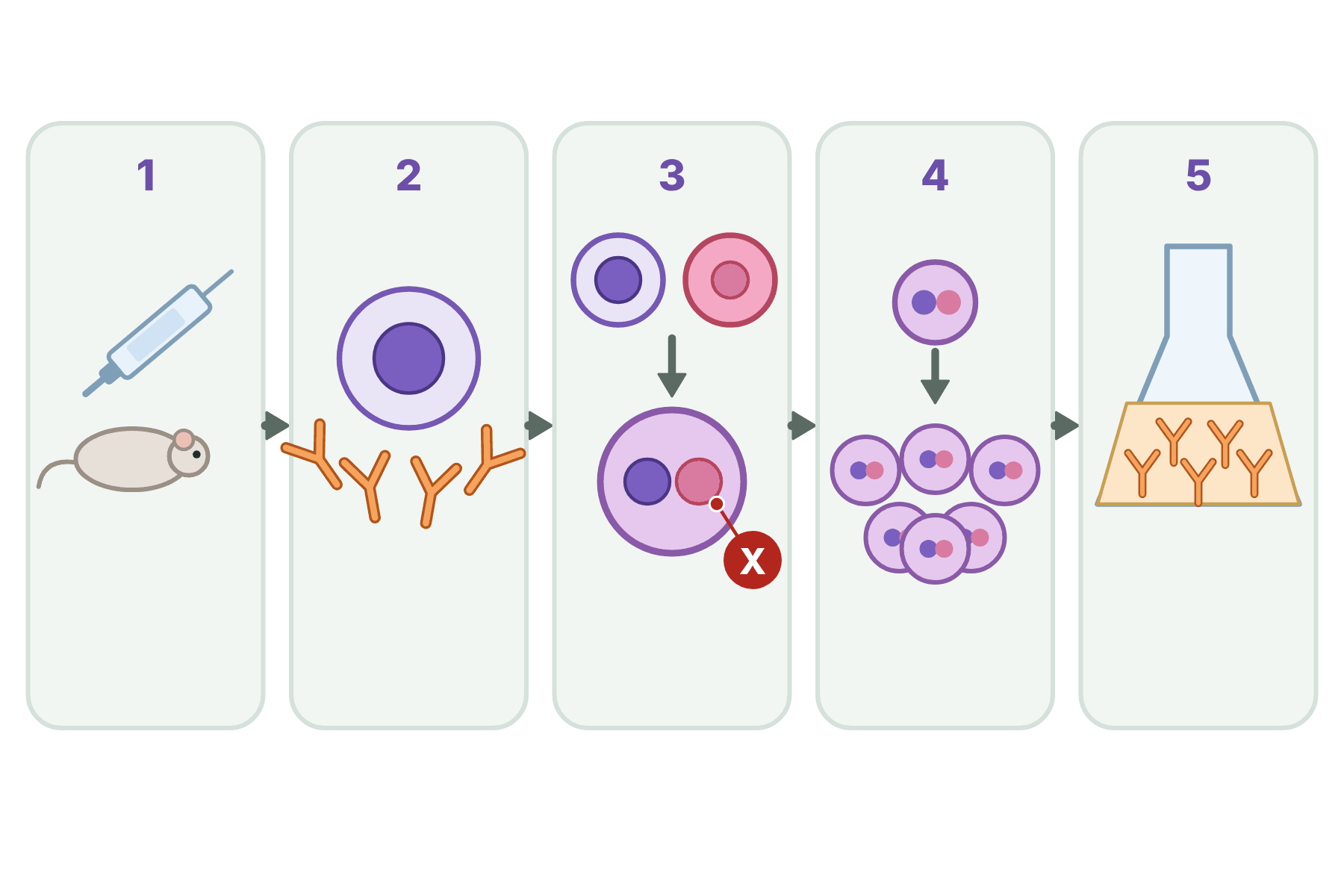 Name the cell marked X and say why it is useful.
 A hybridoma cell. It can both divide, like a tumour cell, and make the antibody, like a lymphocyte.
-
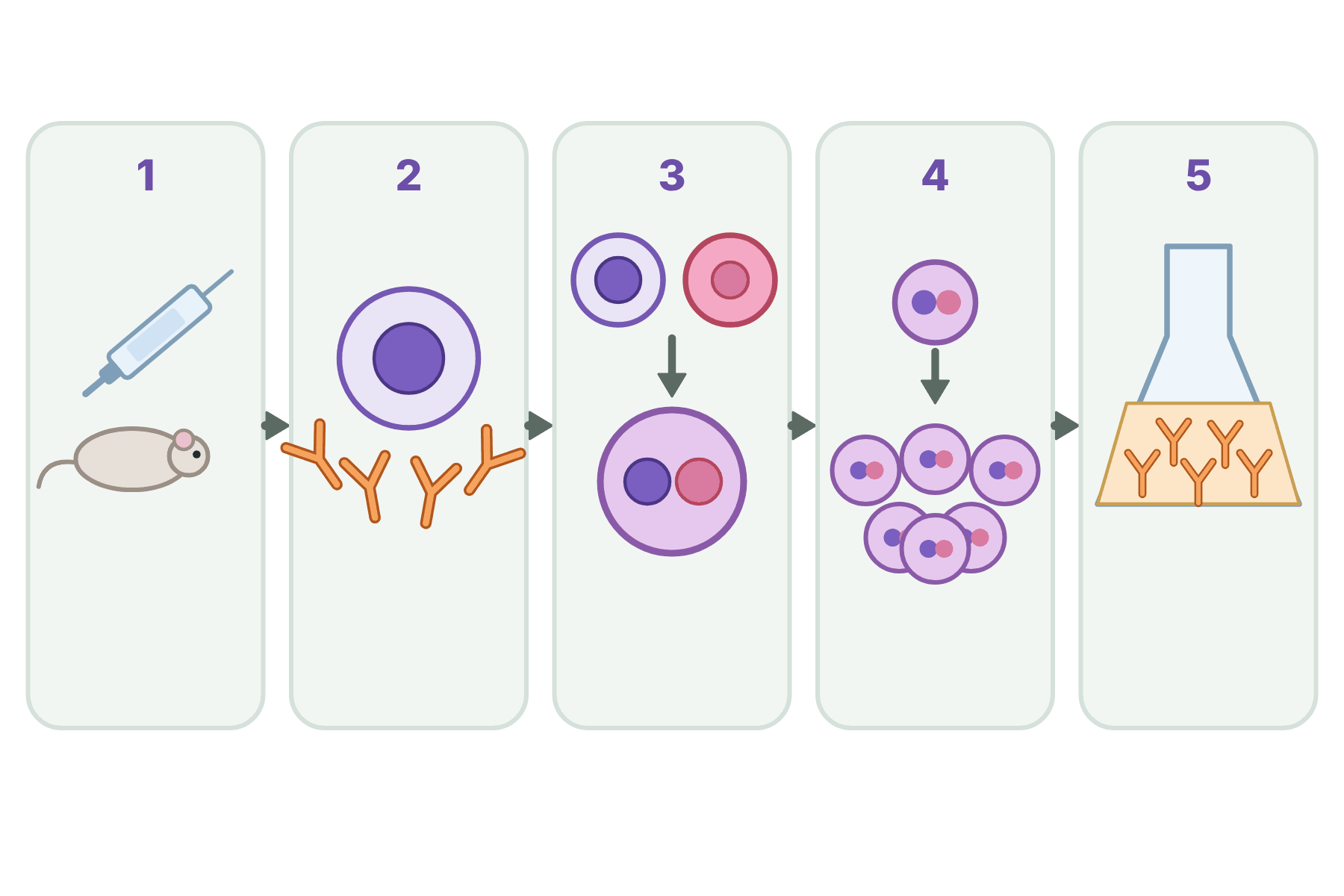 Describe each of the five steps.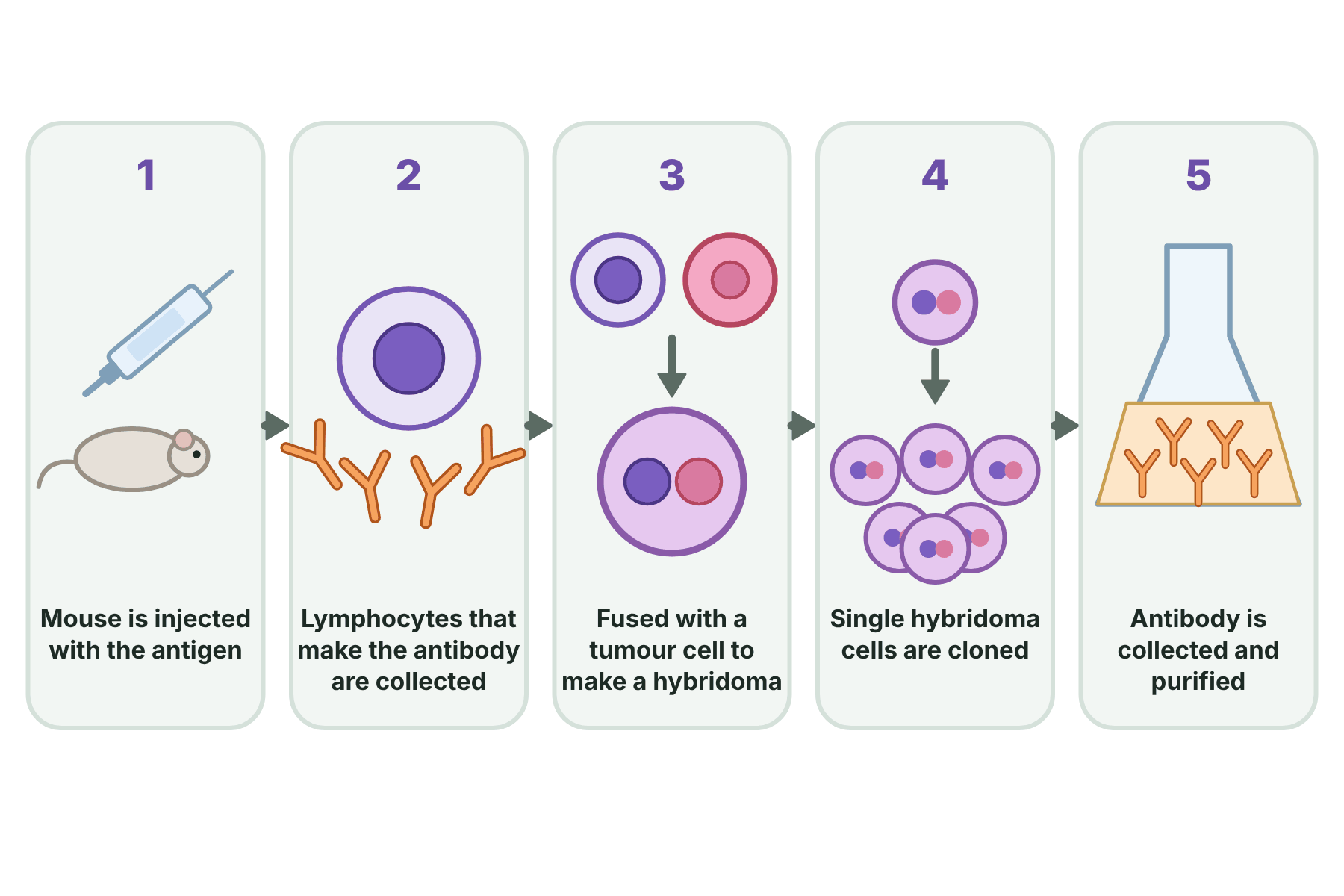
1 Inject the mouse with the antigen. 2 Collect the lymphocytes. 3 Fuse them with tumour cells to make hybridoma cells. 4 Clone single hybridoma cells. 5 Collect and purify the antibody.