Flashcards · Biology · Respiration and Metabolism
Response to Exercise
-
What happens to the heart rate during exercise?
It increases.
-
What happens to breathing rate during exercise?
It increases.
-
What is breath volume?
The volume of air taken in with each breath.
-
Why do the heart rate, breathing rate and breath volume increase in exercise?
To supply the muscles with more oxygenated blood.
-
Why do muscles need more oxygen during exercise?
They respire faster to transfer more energy.
-
What happens if insufficient oxygen reaches the muscles?
They respire anaerobically.
-
What is made in anaerobic respiration in muscles?
Lactic acid.
-
What does a build up of lactic acid create?
An oxygen debt.
-
What is muscle fatigue?
Muscles stop contracting efficiently after long periods of vigorous activity.
-
How can you measure the effect of exercise on the body?
Count the pulse and breathing rate before, during and after exercise.
-
What is the recovery time?
The time for the heart rate to return to its resting rate.
-
What happens to lactic acid after exercise? (Higher tier)
The blood carries it to the liver, where it is converted back to glucose.
-
What is oxygen debt? (Higher tier)
The extra oxygen the body needs after exercise to remove the accumulated lactic acid.
-
Why does the breathing rate stay high after exercise? (Higher tier)
To take in the extra oxygen needed to repay the oxygen debt.
-
How do you calculate the volume of air breathed each minute?
Breathing rate × breath volume.
-
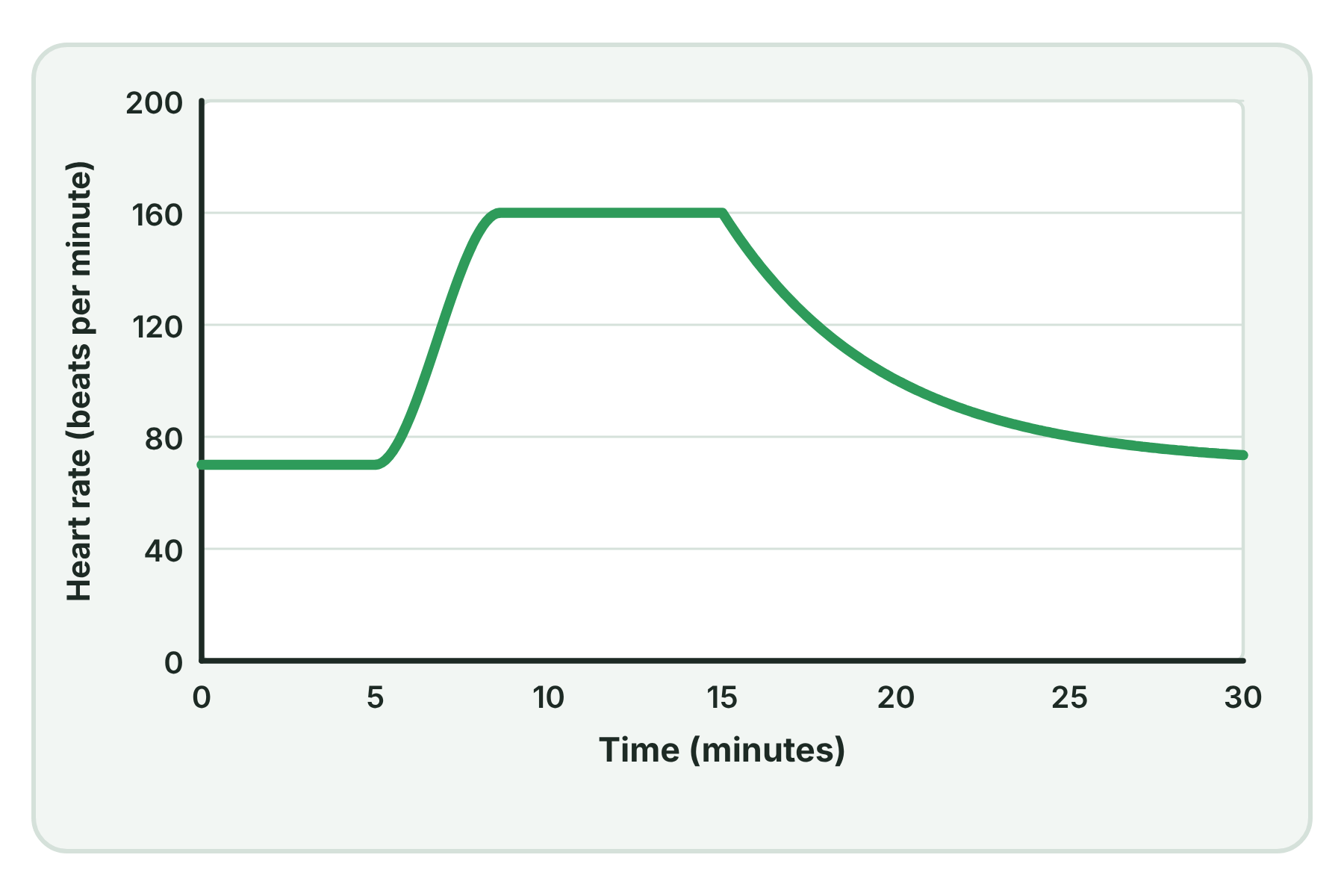 Describe what happens to the heart rate in each stage of the graph.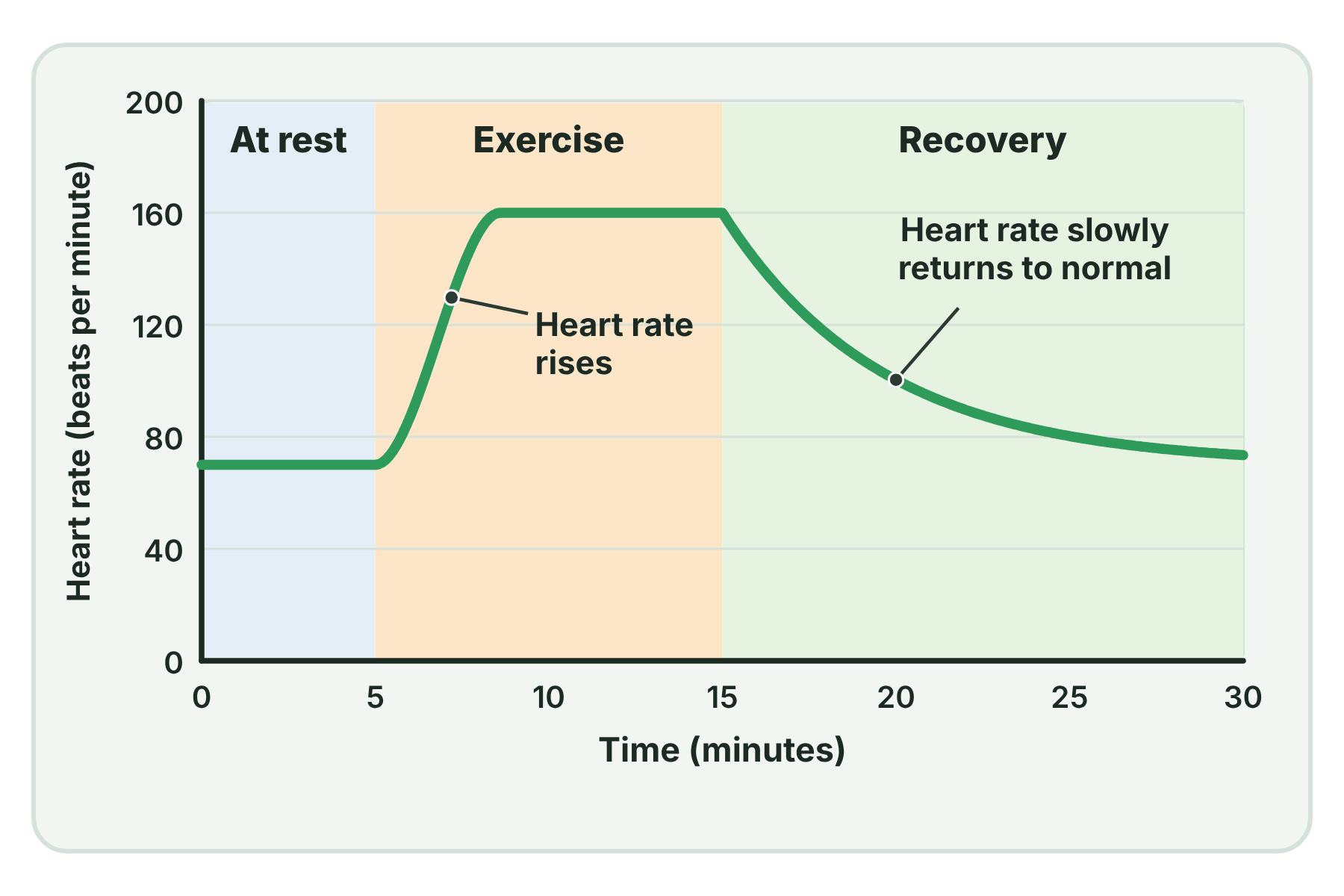
At rest the heart rate is steady. During exercise it rises steeply and stays high. In recovery it falls slowly back to the resting rate.
-
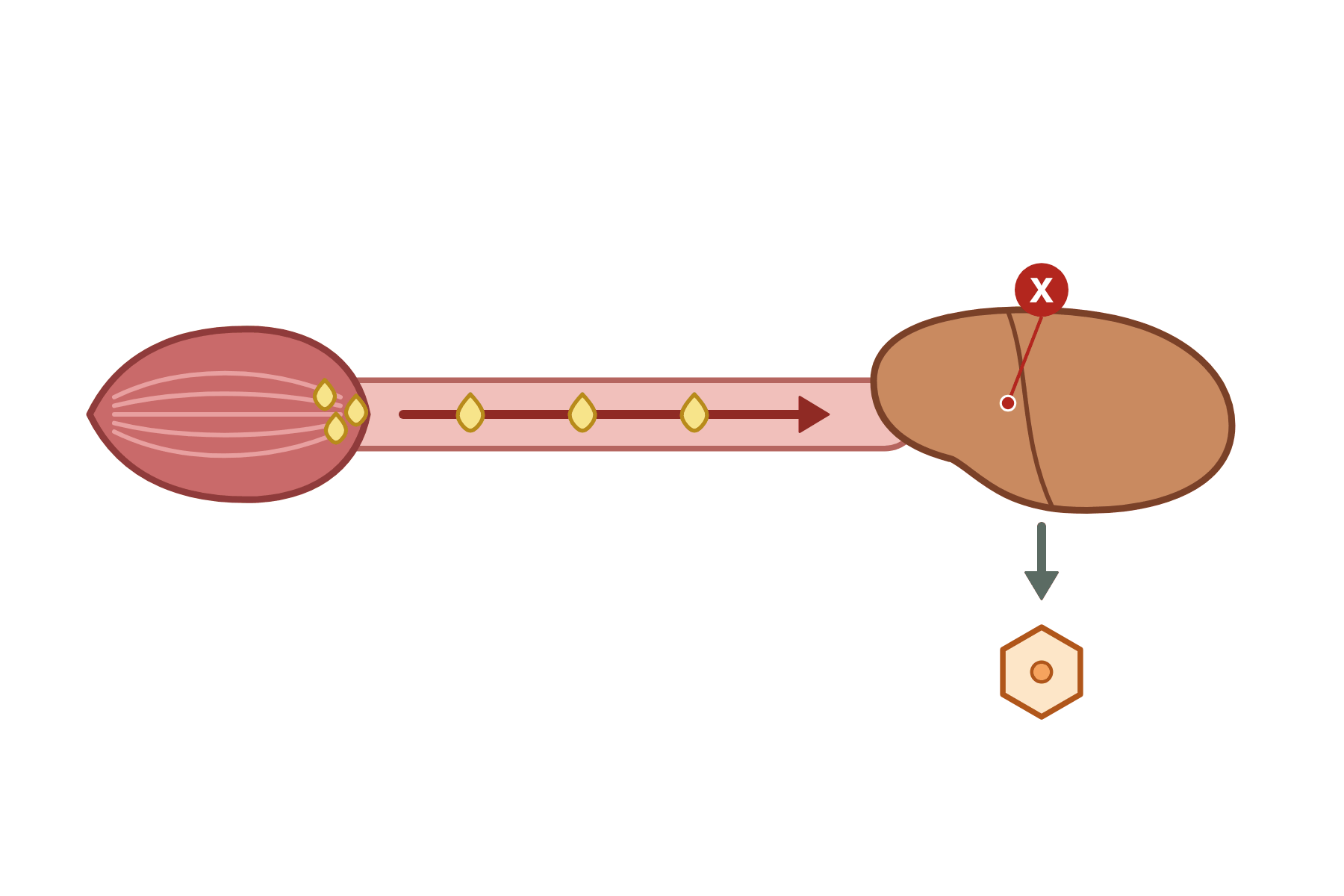 Name organ X and say what it does to lactic acid.
 The liver. It converts lactic acid back into glucose (Higher tier).
-
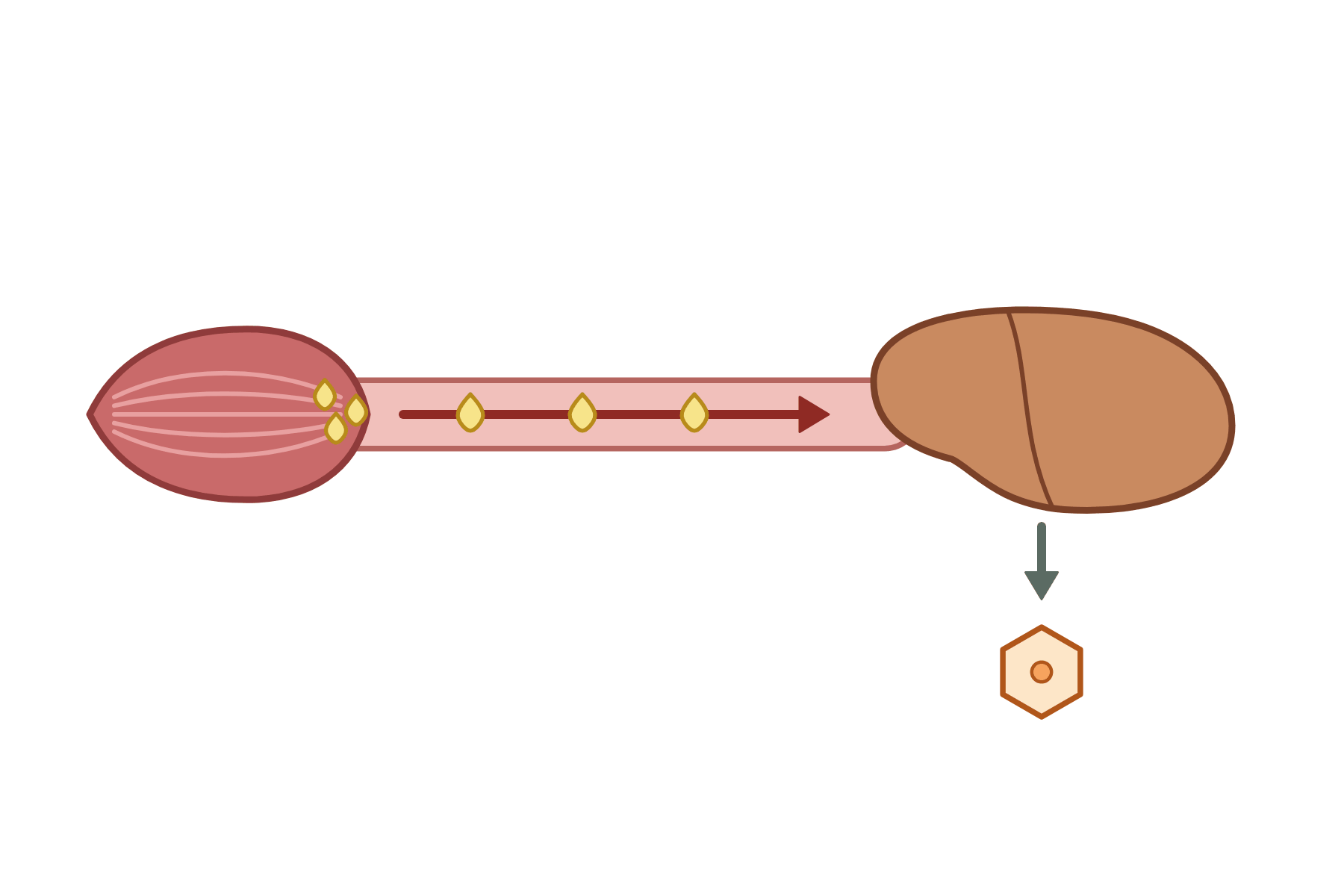 Describe what happens to lactic acid after vigorous exercise.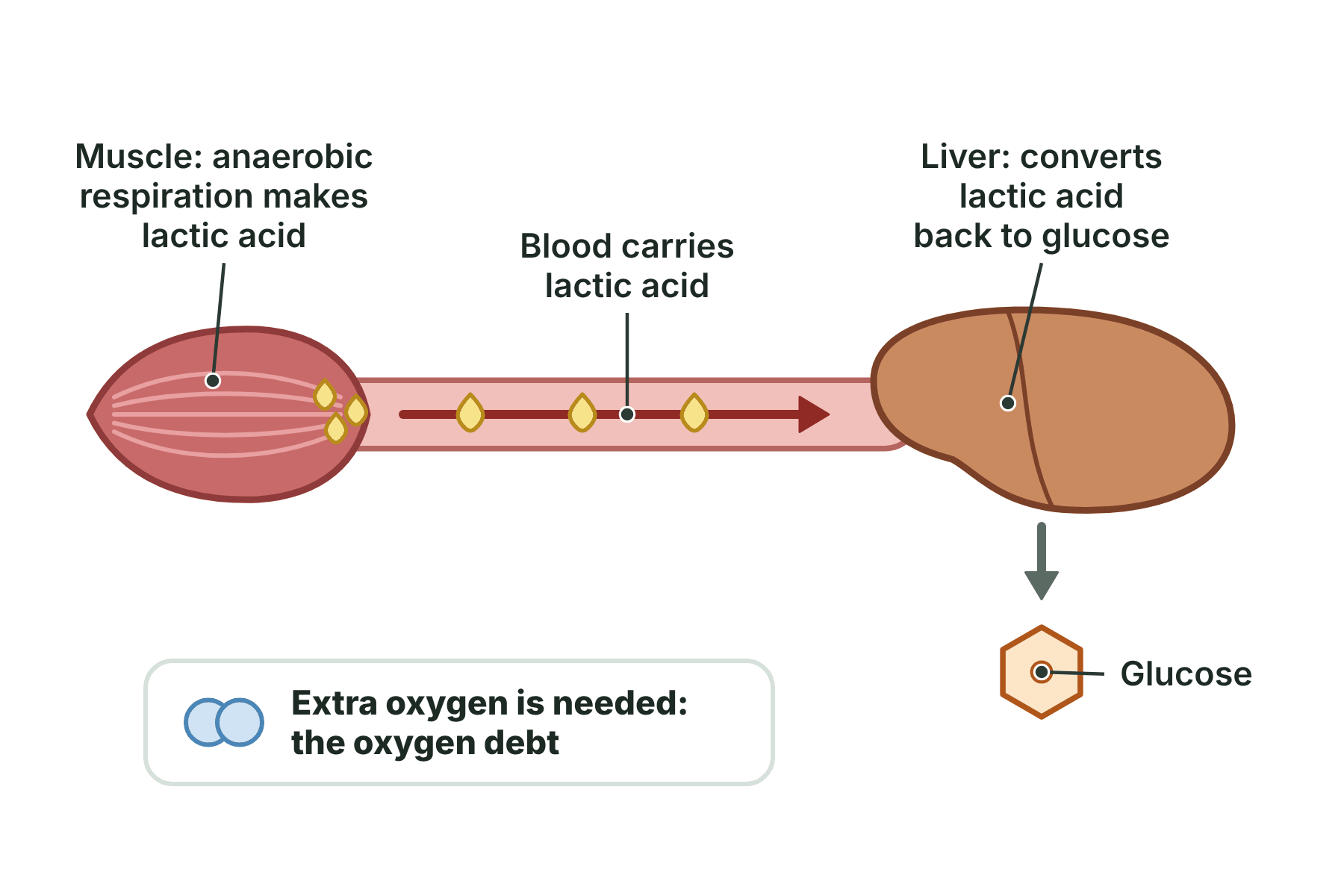
Anaerobic respiration in the muscles makes lactic acid. The blood carries it to the liver, which converts it back to glucose. This needs extra oxygen, so there is an oxygen debt to repay.