Flashcards · Biology · The Circulatory System
Coronary Heart Disease and Its Treatment
-
What is coronary heart disease?
A disease in which layers of fatty material build up inside the coronary arteries and narrow them.
-
Why is coronary heart disease a non-communicable disease?
It is not caused by a pathogen, so it cannot be passed from one person to another.
-
What happens when the coronary arteries narrow?
Less blood reaches the heart muscle, so it gets too little oxygen.
-
What is a stent?
A wire mesh tube put in a narrowed artery to hold it open.
-
What is a statin?
A drug that lowers blood cholesterol, which slows down the build-up of fatty deposits.
-
Give one advantage of a stent.
It keeps the artery open straight away, so blood flows freely again.
-
Give one disadvantage of a stent.
It needs surgery, and the artery can narrow again.
-
Give one disadvantage of statins.
They must be taken for a long time and can have side effects.
-
What can go wrong with a heart valve?
It may not open fully, or it may leak.
-
What can replace a faulty heart valve?
A biological valve or a mechanical valve.
-
Give one advantage of a mechanical valve.
It lasts a long time.
-
Give one disadvantage of a mechanical valve.
The patient needs drugs to stop the blood clotting.
-
When is a heart transplant used?
In heart failure, to replace the diseased heart with a donor heart (or heart and lungs).
-
Give two problems with heart transplants.
There are not enough donors, and the patient must take drugs for life to prevent rejection.
-
Why are artificial hearts used?
To keep a patient alive while they wait for a transplant, or to let the heart rest while it recovers.
-
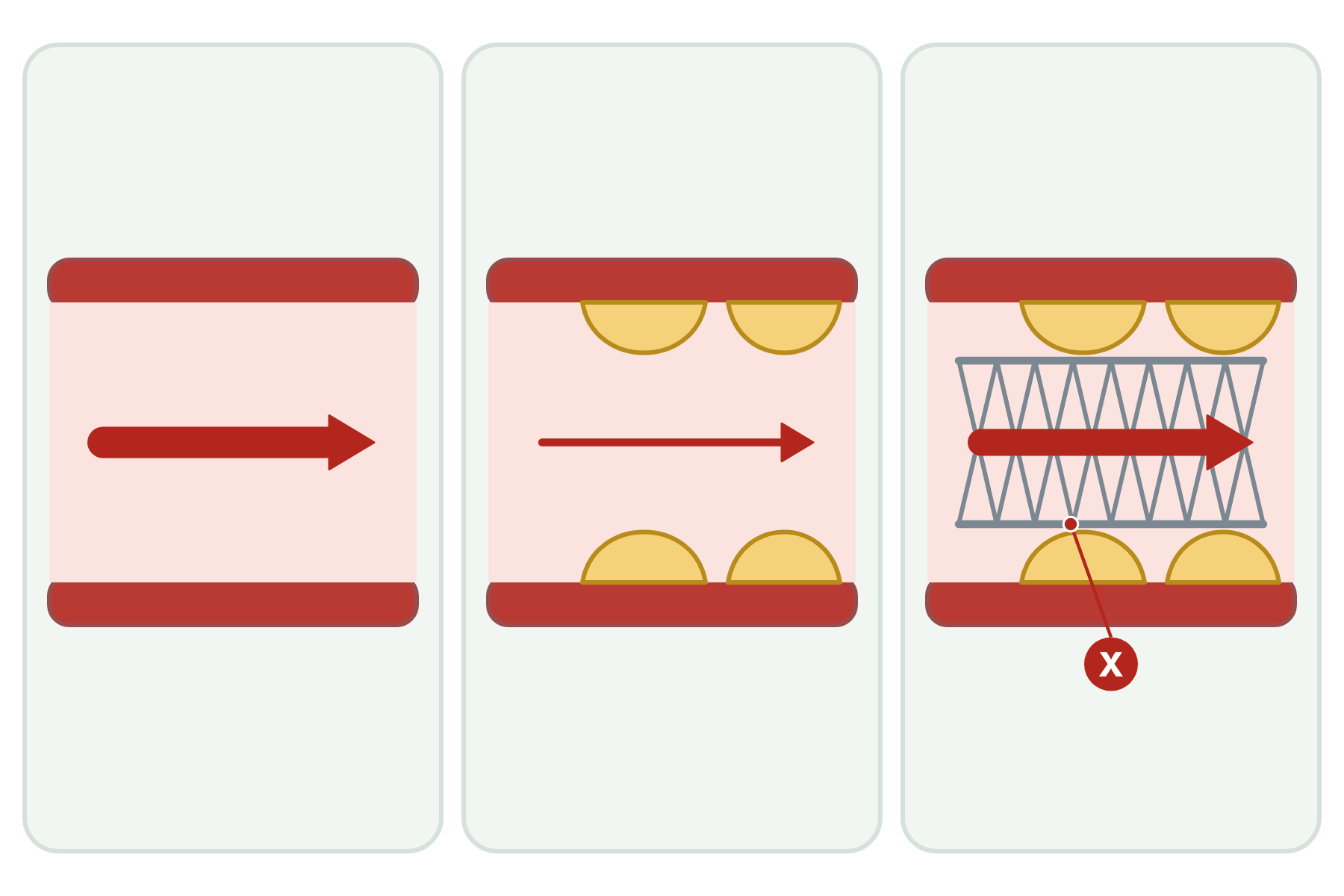 Name the structure marked X in this treated artery and say what it does.
 A stent. It is a mesh tube that holds the narrowed artery open so that blood can flow to the heart muscle.
-
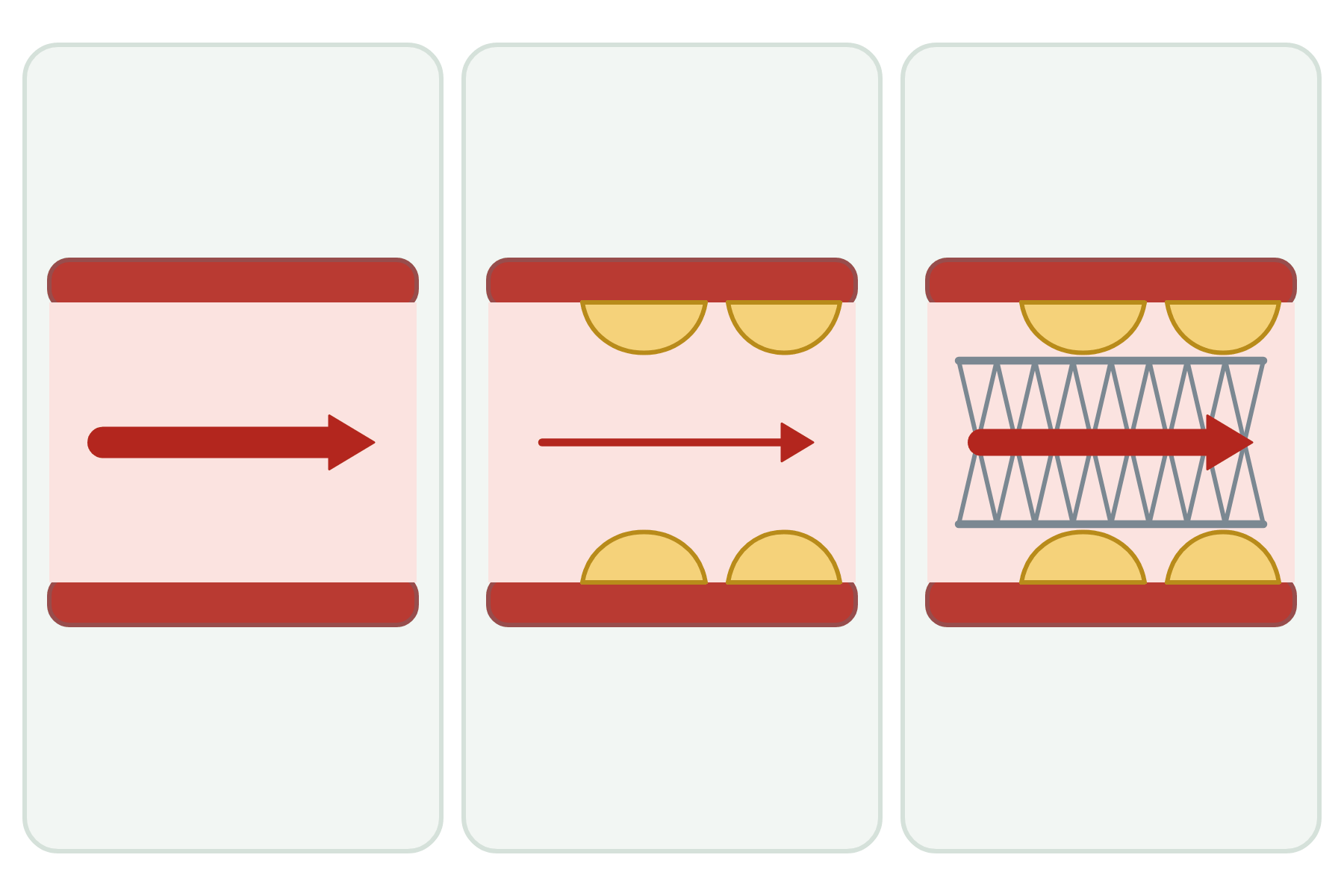 Label the three arteries and the features that matter.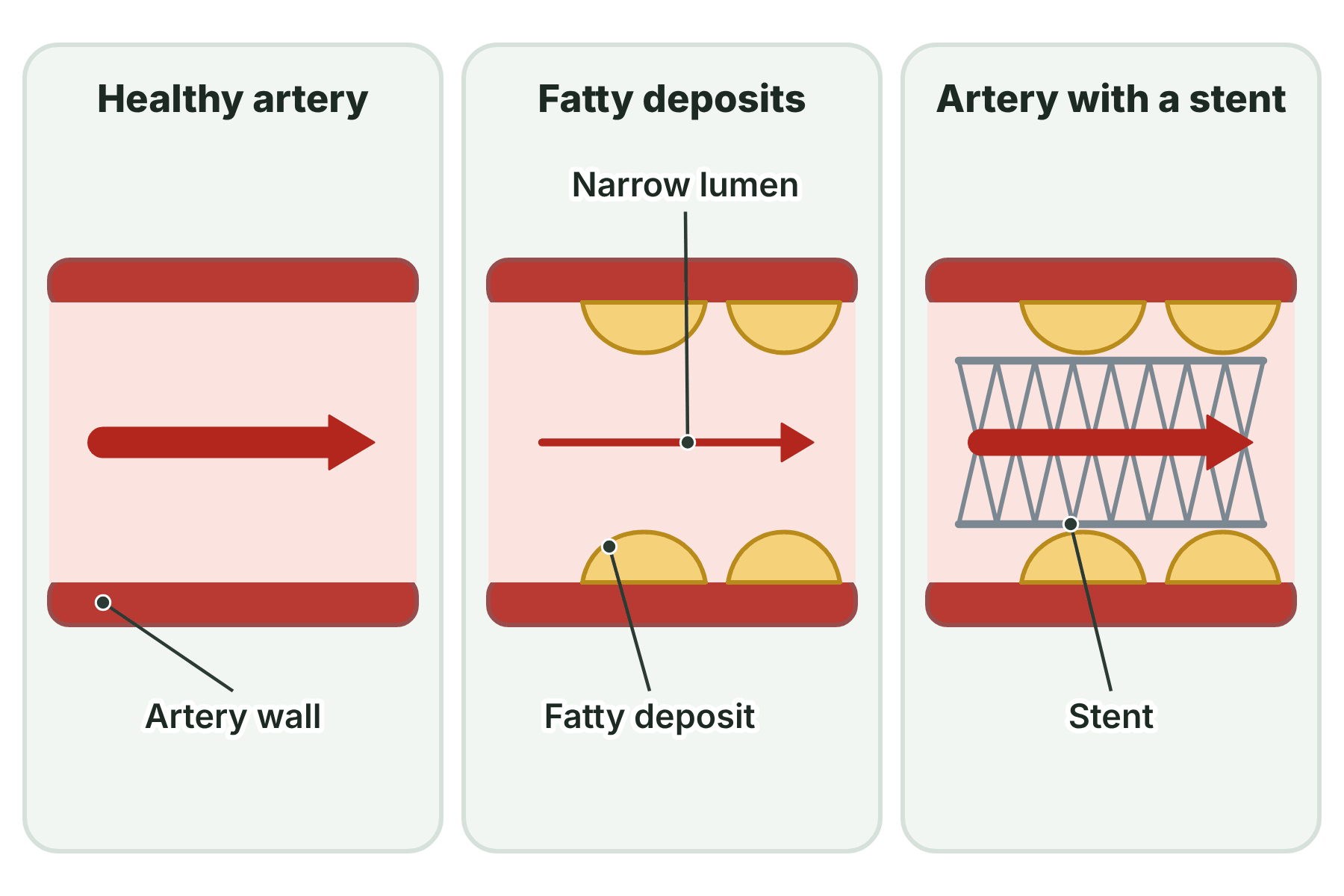
Healthy artery with a wide lumen. Artery wall with fatty deposit and narrow lumen. Artery with a stent holding the lumen open. Blood flow is restored.