Flashcards · Biology · DNA and the Genome
Mutations and Non-coding DNA (Higher tier)
-
What is a mutation? (Higher tier)
A change in the base sequence of DNA.
-
How often do mutations occur? (Higher tier)
Continuously.
-
What do most mutations do to the protein? (Higher tier)
Nothing, or they change it only slightly, so its function is not changed.
-
What can a few mutations do to a protein? (Higher tier)
Code for an altered protein with a different shape.
-
What can happen to an enzyme with an altered shape? (Higher tier)
The substrate may no longer fit its active site.
-
What can happen to a structural protein with an altered shape? (Higher tier)
It may lose its strength.
-
What is a substitution? (Higher tier)
One base is replaced by a different base.
-
Why does a deletion usually have a bigger effect than a substitution? (Higher tier)
It shifts the grouping of every triplet after it, so many amino acids can change.
-
Do all parts of DNA code for proteins? (Higher tier)
No.
-
What can non-coding DNA do? (Higher tier)
Switch genes on and off.
-
How can a variant in non-coding DNA affect an organism? (Higher tier)
It can alter how genes are expressed.
-
How can a variant in coding DNA affect an organism? (Higher tier)
It can alter the activity of a protein.
-
What can cause mutations? (Higher tier)
Chance errors when DNA is copied, ionising radiation and some chemicals.
-
Can a mutation ever be beneficial? (Higher tier)
Yes, very rarely, if the new phenotype suits the environment.
-
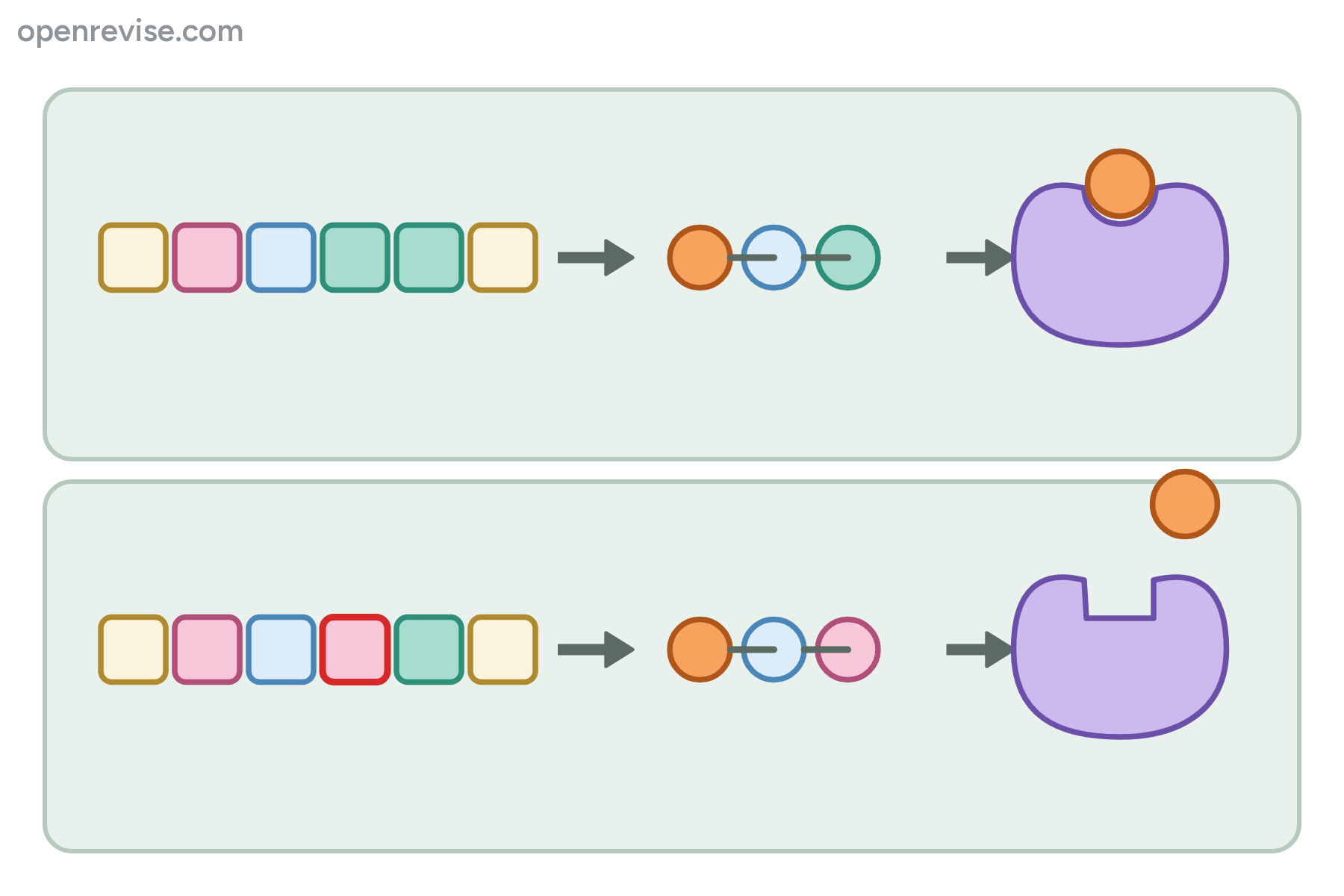 Explain what has gone wrong in the bottom row. (Higher tier)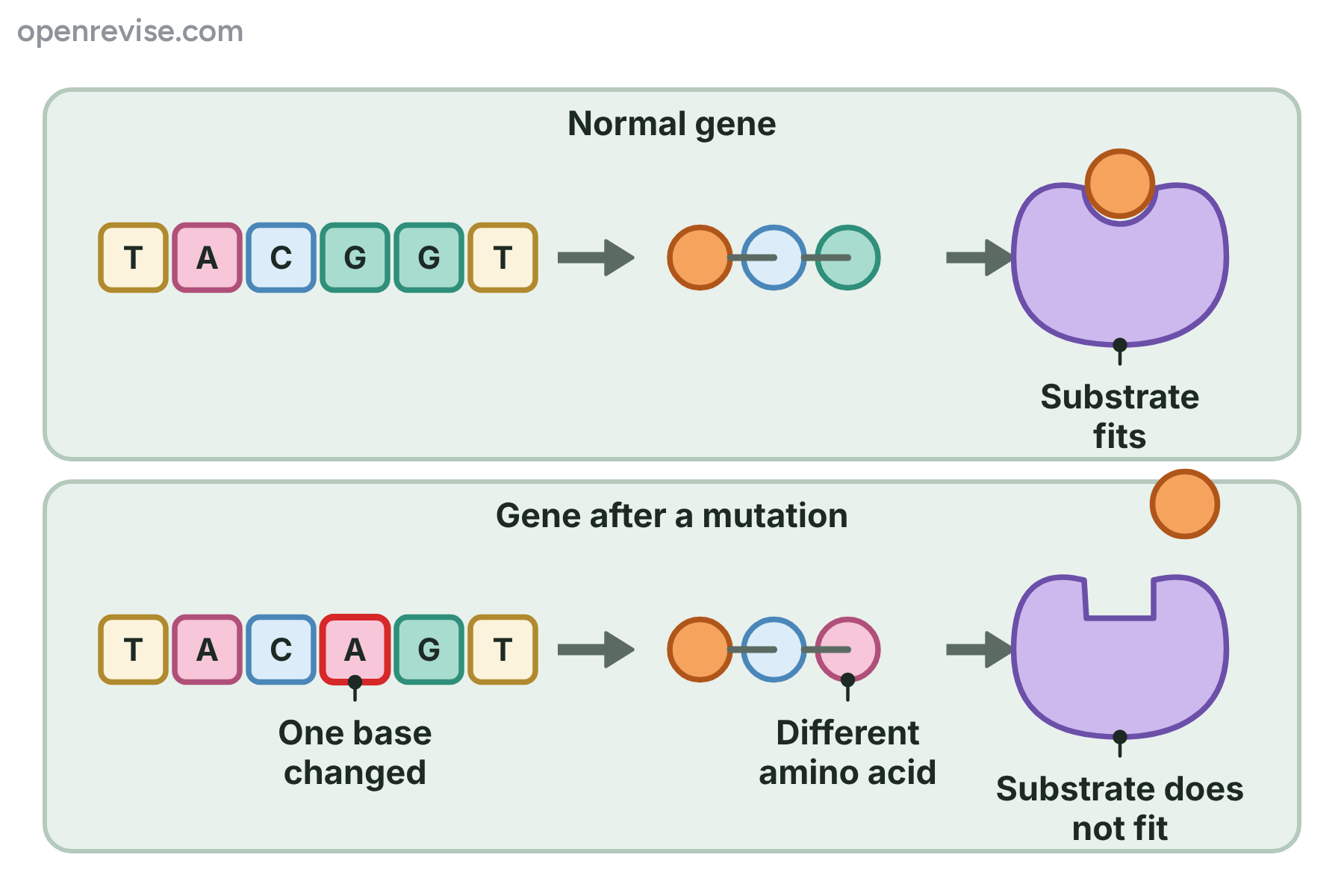
One base has changed, so one amino acid is different. The protein folds into a different shape, so the substrate no longer fits the active site and the enzyme cannot work.