Flashcards · Biology · DNA and the Genome
Protein Synthesis (Higher tier)
-
Where are proteins made in a cell? (Higher tier)
On ribosomes.
-
What does the template do in protein synthesis? (Higher tier)
It carries a copy of the gene's instructions to the ribosome.
-
What do carrier molecules do? (Higher tier)
They bring specific amino acids to the ribosome, in the correct order.
-
What happens when the protein chain is complete? (Higher tier)
It folds up to form a unique shape.
-
Why must a protein have the right shape? (Higher tier)
The shape lets it do its job, as an enzyme, a hormone or a structural protein.
-
What decides the order of the amino acids in a protein? (Higher tier)
The order of the bases in the gene.
-
How many bases specify one amino acid? (Higher tier)
Three.
-
What is collagen? (Higher tier)
A structural protein that makes strong fibres in tissues such as skin and tendons.
-
Where is DNA kept in the cell? (Higher tier)
In the nucleus.
-
Do you need to know the detailed structure of mRNA for the exam? (Higher tier)
No. You need only a simple description of protein synthesis.
-
What can happen to a protein if the DNA structure changes? (Higher tier)
The order of the amino acids may change, so a different protein may be made.
-
What kind of protein catalyses reactions? (Higher tier)
An enzyme.
-
Why does a mutation sometimes make a protein stop working? (Higher tier)
The changed amino acid order can change the shape, so it no longer does its job.
-
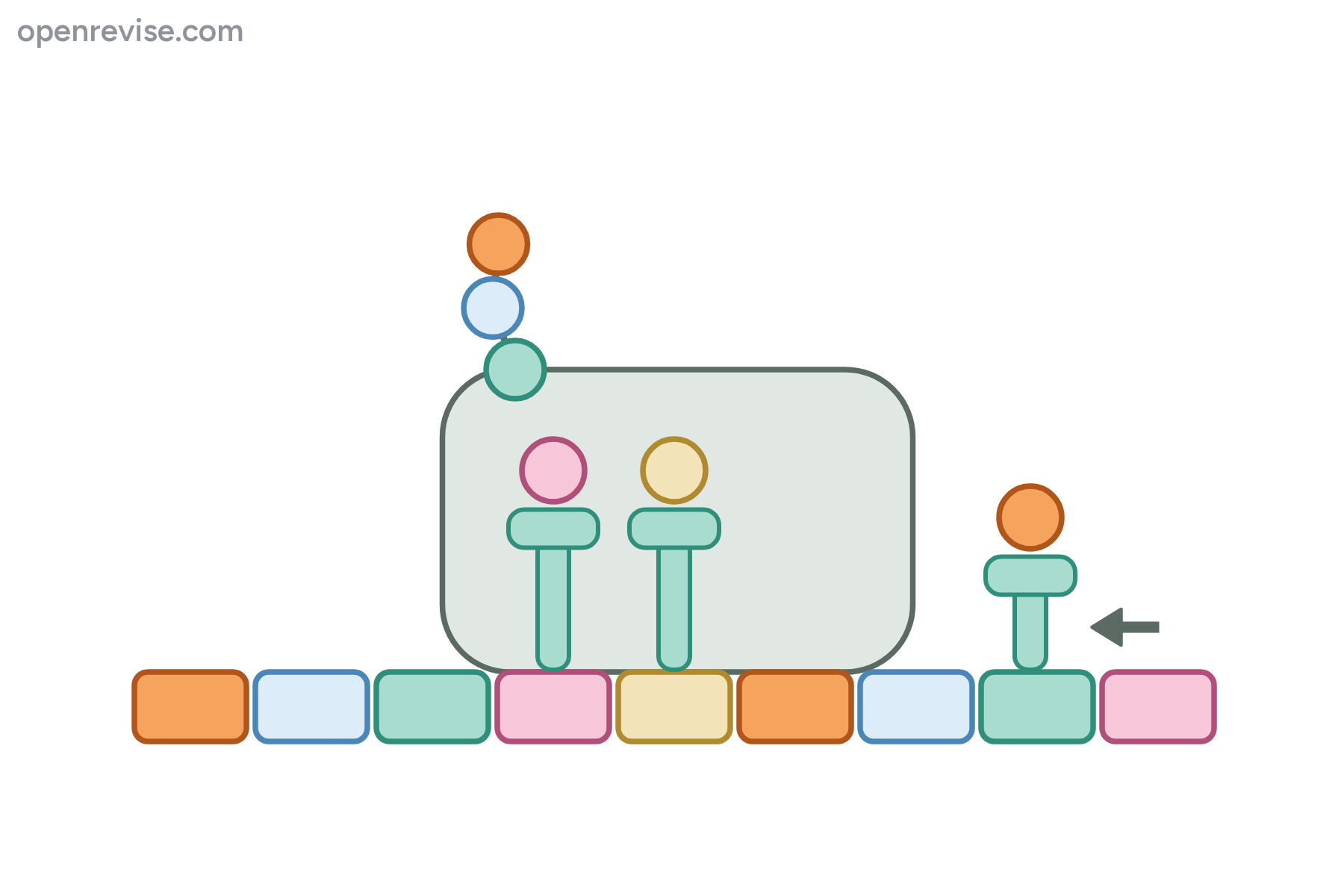 Describe what is happening in this diagram, from the template to the finished chain. (Higher tier)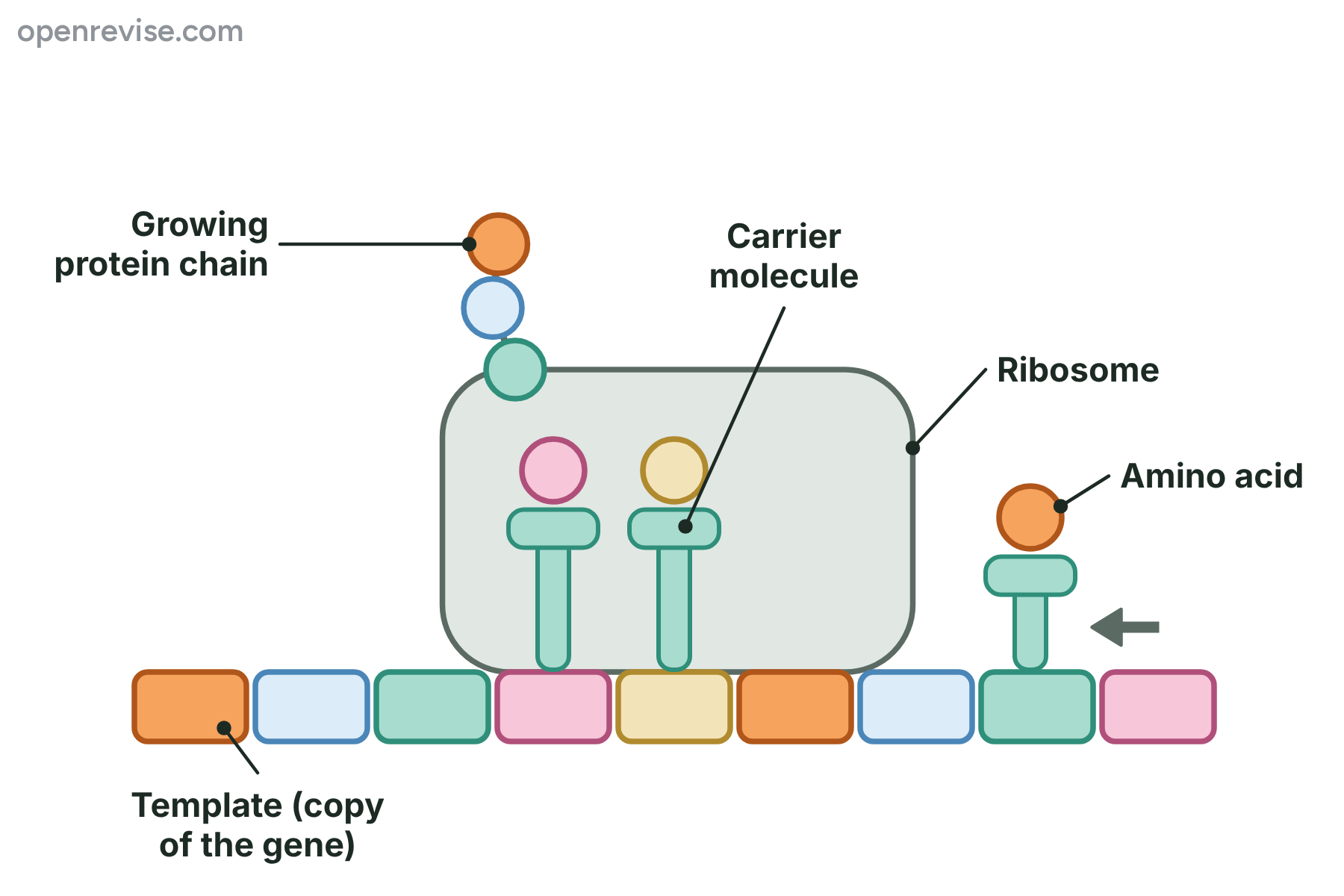
The ribosome reads the template. Carrier molecules bring specific amino acids in the correct order. The amino acids are joined into a growing protein chain, which folds into a unique shape when complete.