Flashcards · Biology · Homeostasis and the Nervous System
Control of Body Temperature
-
At what temperature is the body kept?
About 37 °C.
-
What monitors and controls body temperature?
The thermoregulatory centre in the brain.
-
What does the thermoregulatory centre contain?
Receptors that are sensitive to the temperature of the blood.
-
What do the temperature receptors in the skin do?
They send nervous impulses to the thermoregulatory centre.
-
Name the effectors for temperature control.
The sweat glands, the blood vessels in the skin and the skeletal muscles.
-
What happens to the blood vessels in the skin when the body is too hot?
They dilate (vasodilation).
-
What happens to the blood vessels in the skin when the body is too cold?
They constrict (vasoconstriction).
-
What happens to sweating when the body is too hot?
Sweat is produced.
-
What happens to sweating when the body is too cold?
It stops.
-
How does sweating cool the body?
The sweat evaporates and takes energy from the skin.
-
What happens to the skeletal muscles when the body is too cold?
They contract and relax rapidly (shiver).
-
How does shivering warm the body?
Respiration in the muscles releases energy.
-
Why does the skin look red when it is hot?
More blood flows close to the surface because the vessels dilate.
-
Why does the skin look pale when it is cold?
Less blood flows close to the surface because the vessels constrict.
-
Do blood vessels move closer to the skin when it is hot? (Higher tier)
No. They only get wider.
-
 Describe the body's responses to being too hot and too cold.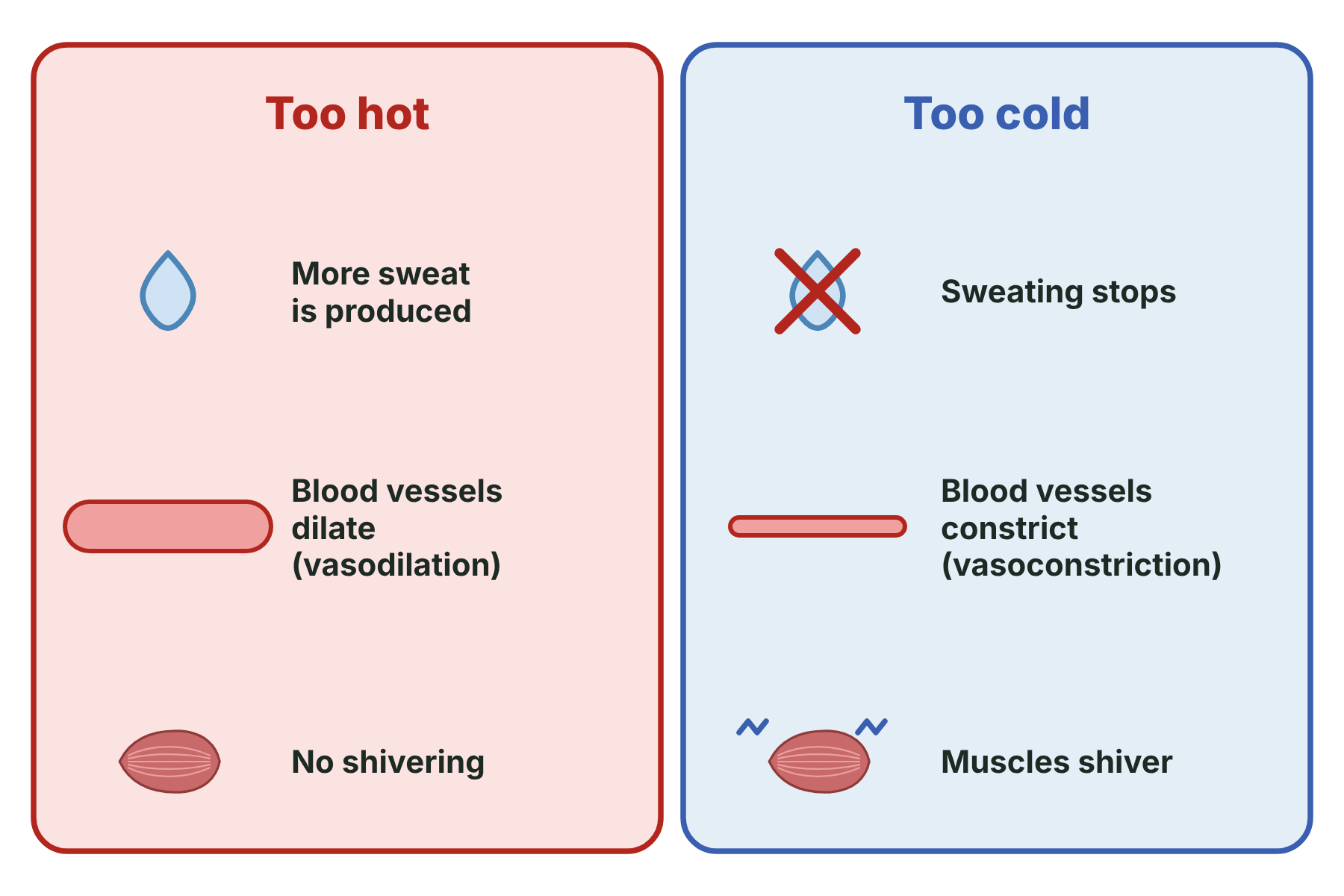
Too hot: sweat is produced, the blood vessels dilate and there is no shivering. Too cold: sweating stops, the blood vessels constrict and the muscles shiver.
-
 Name each stage in the control of body temperature.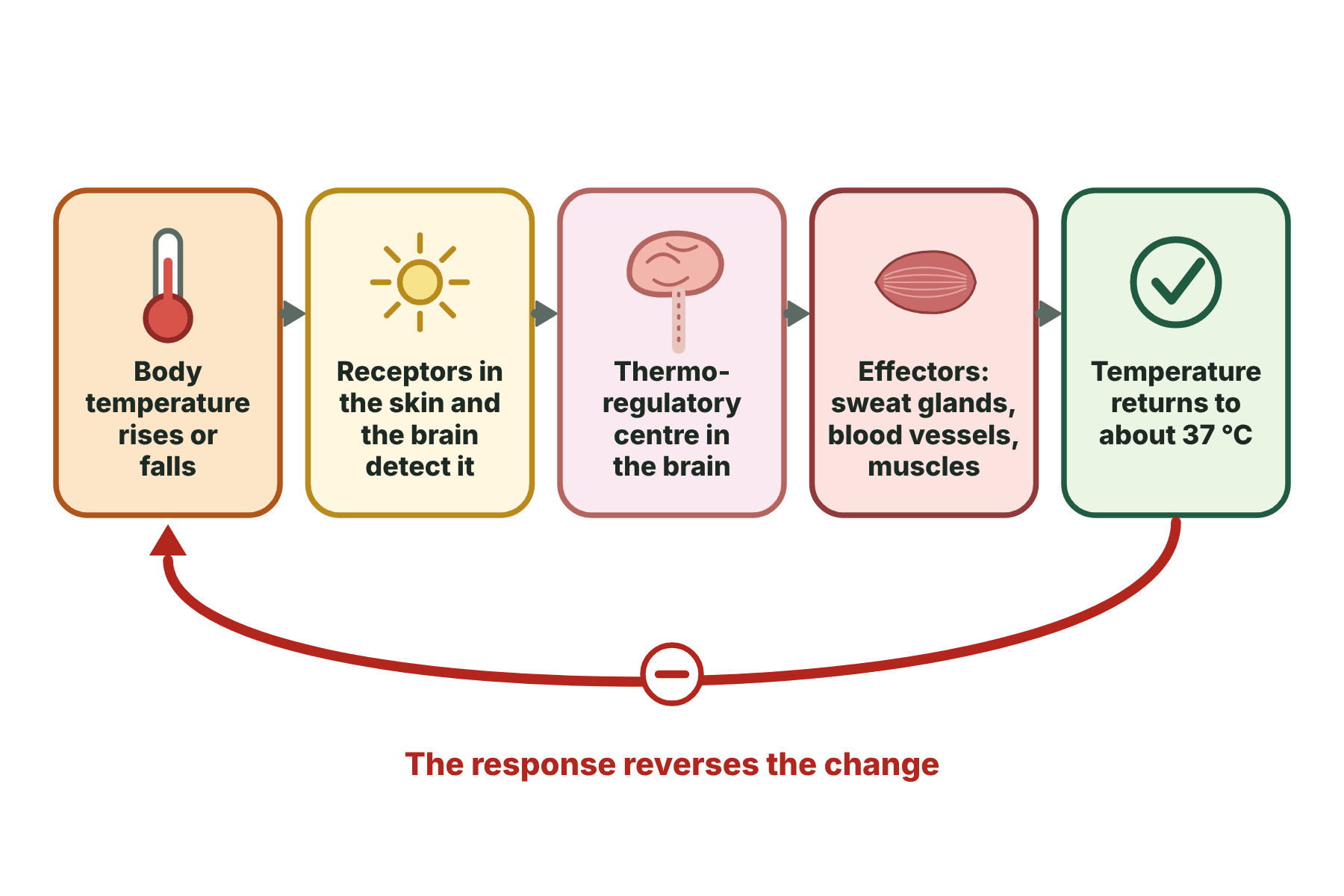
Change in temperature, receptors in the skin and brain, thermoregulatory centre, effectors (sweat glands, blood vessels, muscles), temperature returns to about 37 °C.