Flashcards · Biology · Hormonal Coordination in Humans
Kidney Failure, Dialysis and Transplants
-
What happens if both kidneys fail?
Urea and excess ions build up in the blood, and the water balance is lost.
-
Name two treatments for kidney failure.
Dialysis and a kidney transplant.
-
What does a dialysis machine do?
It removes urea and excess ions from the blood.
-
What separates the blood from the dialysis fluid?
A partially permeable membrane.
-
How does urea leave the blood in dialysis?
It diffuses through the membrane into the dialysis fluid.
-
Why does the dialysis fluid contain glucose?
So that the concentration is the same as in the blood and the patient does not lose glucose.
-
Why do blood cells stay in the blood in dialysis?
They are too big to cross the membrane.
-
Why does the dialysis fluid keep flowing?
It keeps the concentration of urea in the fluid low, so the urea keeps diffusing out.
-
How often is dialysis needed?
Several times a week, for a few hours each time.
-
What is a kidney transplant?
Replacing a failed kidney with a healthy one from a donor.
-
What is rejection?
The immune system attacks the transplanted kidney.
-
Why does a transplant patient take drugs for life?
To reduce the risk of rejection.
-
Give an advantage of dialysis.
It is available straight away, and keeps the patient alive while they wait for a donor.
-
Give a disadvantage of a transplant.
There are few donors, and the patient may reject the kidney.
-
Does dialysis cure kidney failure?
No, it has to be repeated.
-
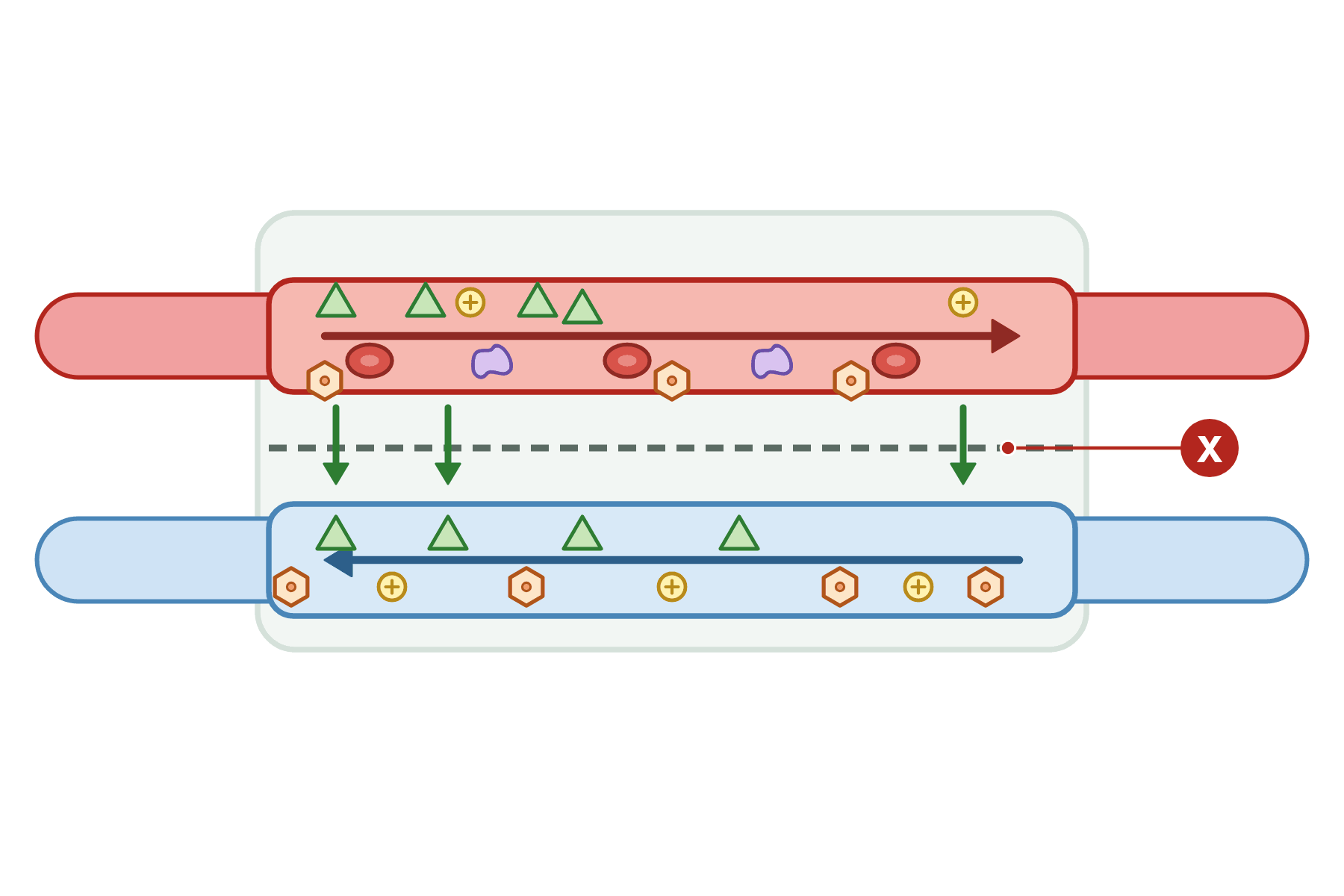 Name the part marked X and say what happens there.
 The partially permeable membrane. Urea and excess ions diffuse through it from the blood into the dialysis fluid, but blood cells and proteins cannot cross.
-
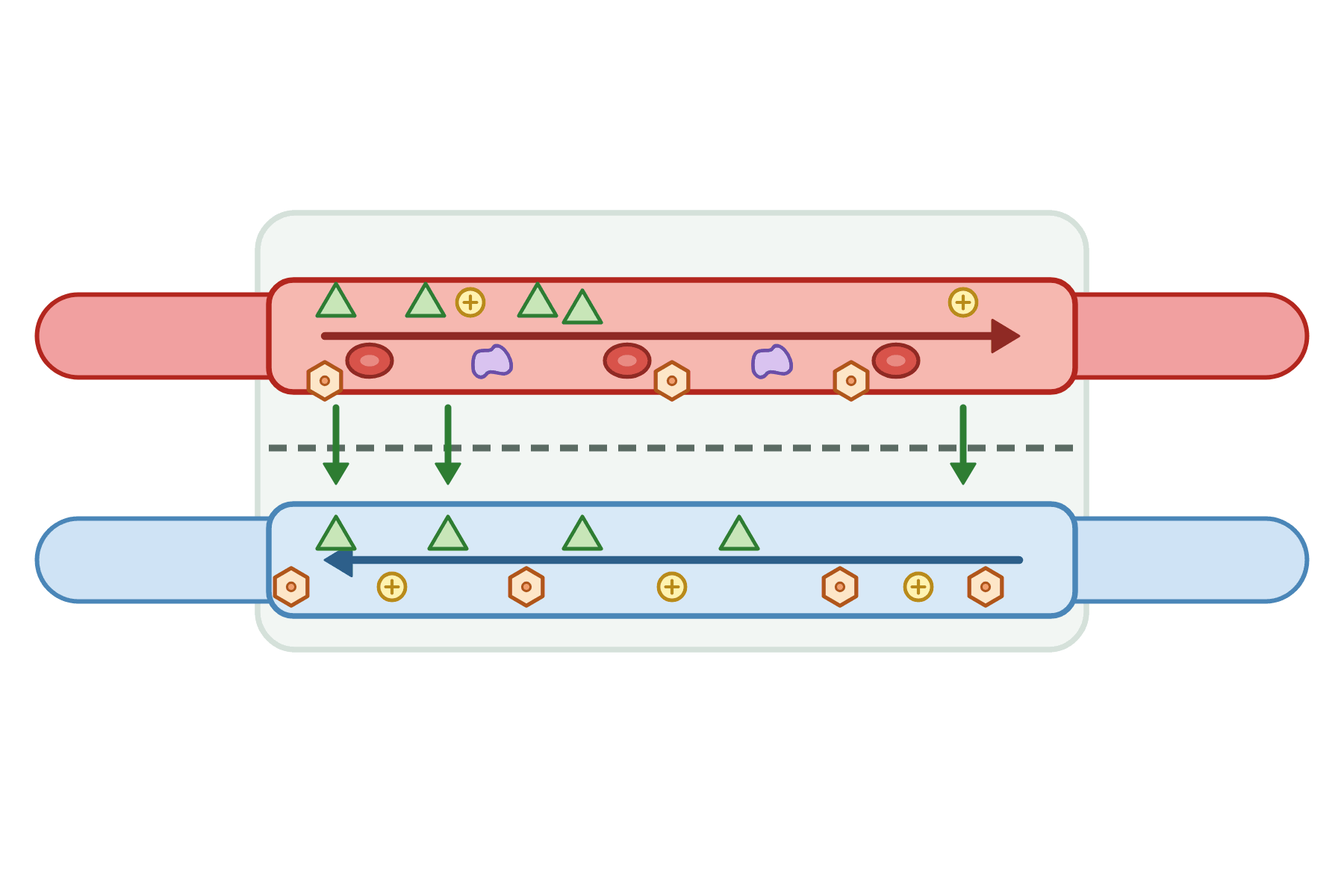 Describe how this machine cleans the blood.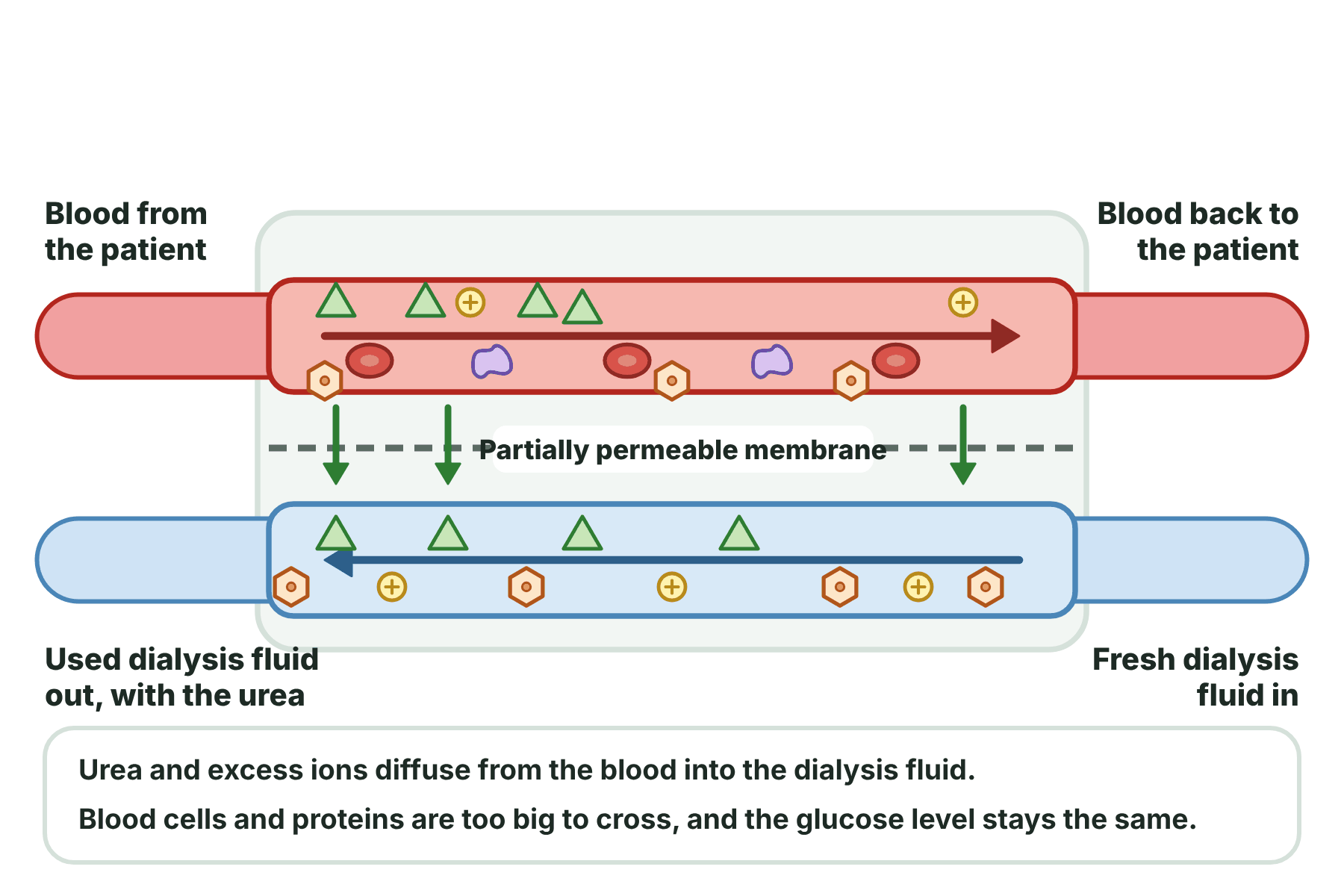
Blood flows on one side of a partially permeable membrane and dialysis fluid on the other. Urea and excess ions diffuse out of the blood into the fluid, while cells, proteins and glucose stay in the blood. The clean blood returns to the patient.