Flashcards · Biology · Hormonal Coordination in Humans
Water and Nitrogen Balance
-
What happens to an animal cell in a very dilute solution?
Water enters by osmosis and the cell may burst.
-
What happens to an animal cell in a very concentrated solution?
Water leaves by osmosis and the cell shrinks.
-
How does water leave the body through the lungs?
In the air that you breathe out.
-
What is lost from the skin in sweat?
Water, ions and urea.
-
Can the body control the loss of water, ions and urea by the lungs and skin?
No.
-
What do the kidneys remove in the urine?
Excess water, ions and urea.
-
What are the two stages of making urine?
Filtration and selective reabsorption.
-
What is filtered out of the blood in the kidney?
Small molecules such as water, glucose, ions and urea.
-
What stays in the blood during filtration?
Blood cells and proteins.
-
What is reabsorbed?
All the glucose, some ions and some water.
-
Why is there no glucose in the urine?
All of it is reabsorbed into the blood.
-
What happens to amino acids that are in excess? (Higher tier)
They are deaminated in the liver to form ammonia.
-
Why is ammonia changed to urea? (Higher tier)
Ammonia is toxic, and urea can be excreted safely.
-
What does ADH do? (Higher tier)
It makes the kidney tubules more permeable, so more water is reabsorbed.
-
When is ADH released? (Higher tier)
When the blood is too concentrated.
-
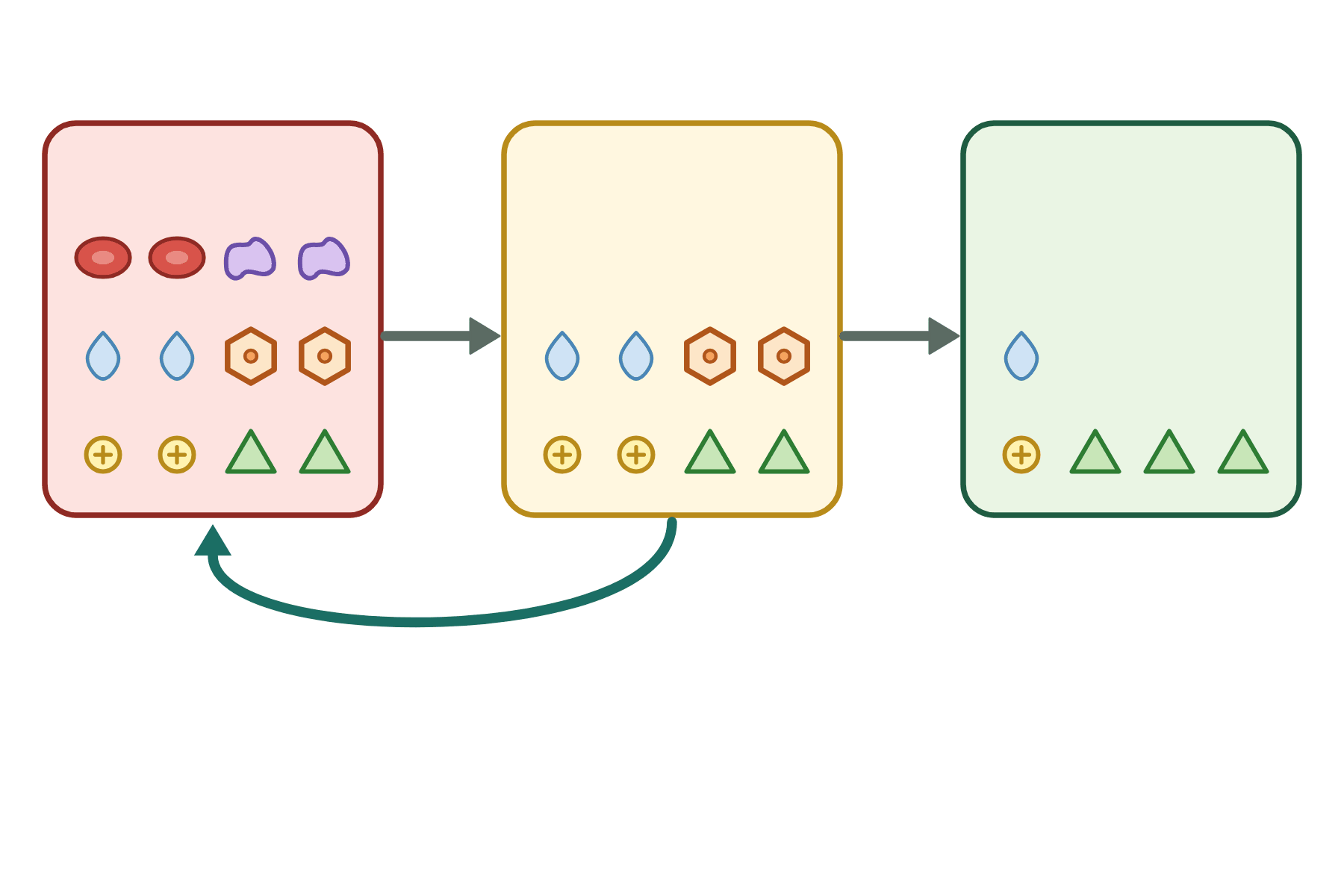 Describe what happens at each stage in the diagram.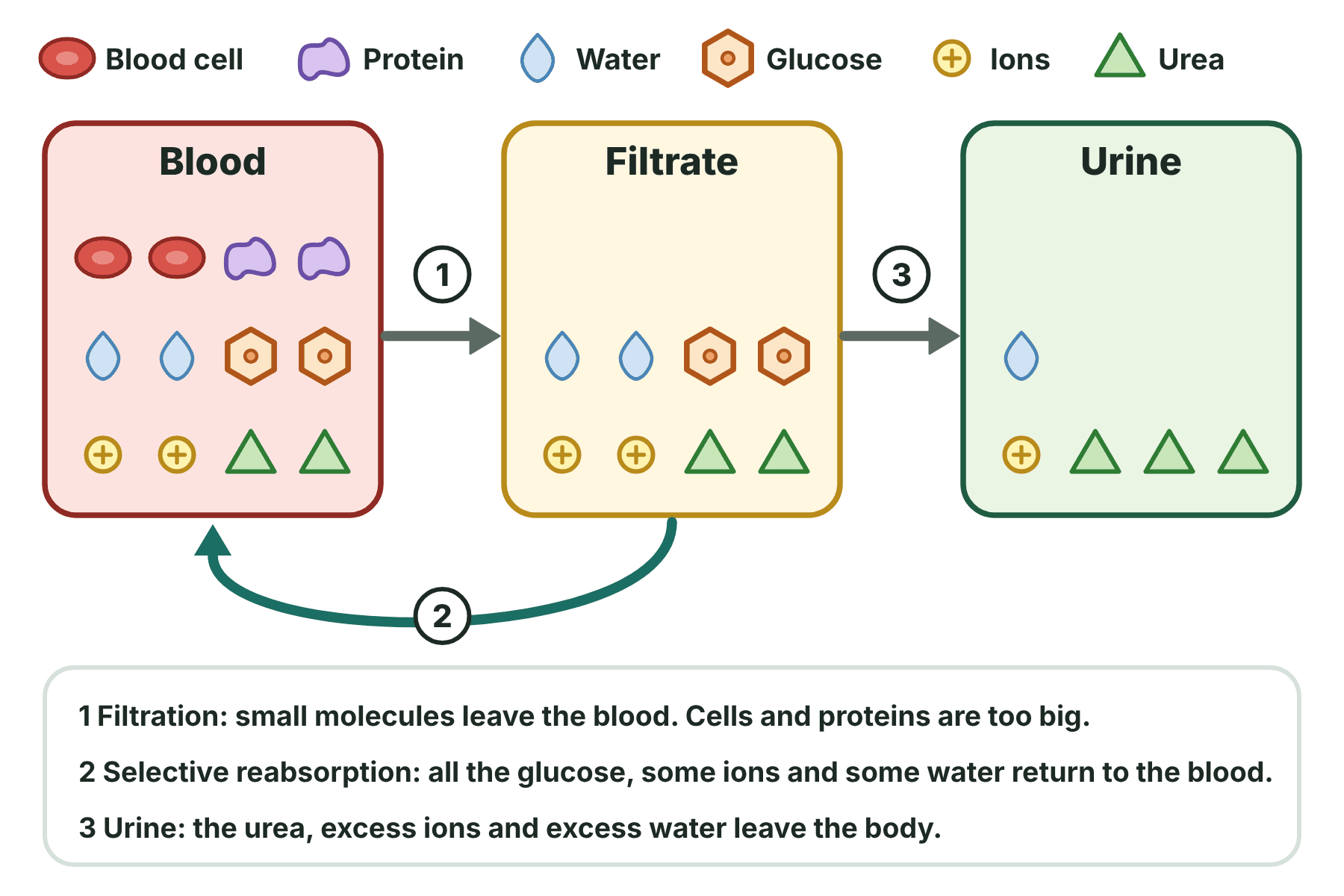
1 Filtration: small molecules leave the blood, and cells and proteins stay. 2 Selective reabsorption: all the glucose, some ions and some water return to the blood. 3 Urine: urea, excess ions and excess water leave the body.
-
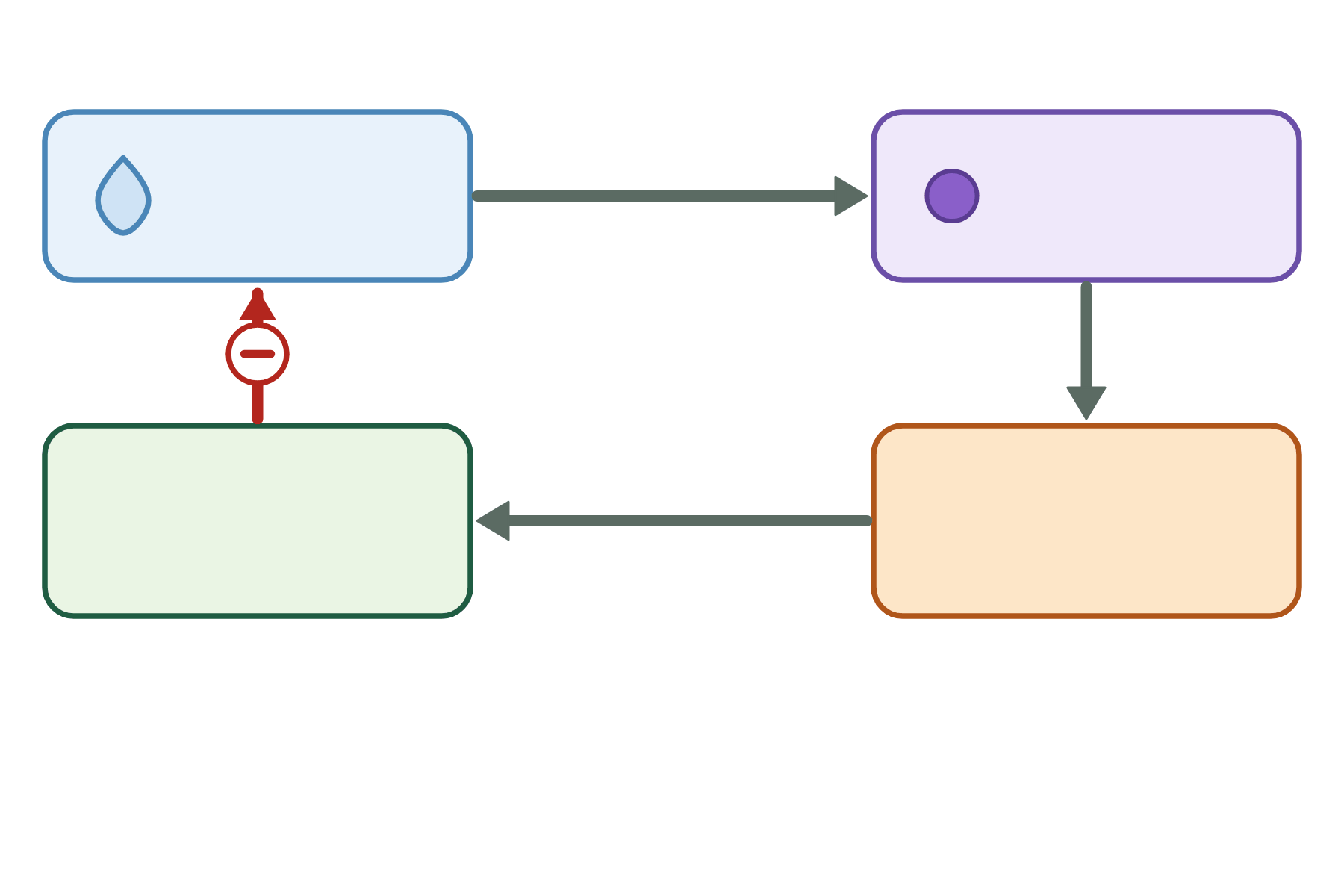 Describe how ADH keeps the water content of the blood constant.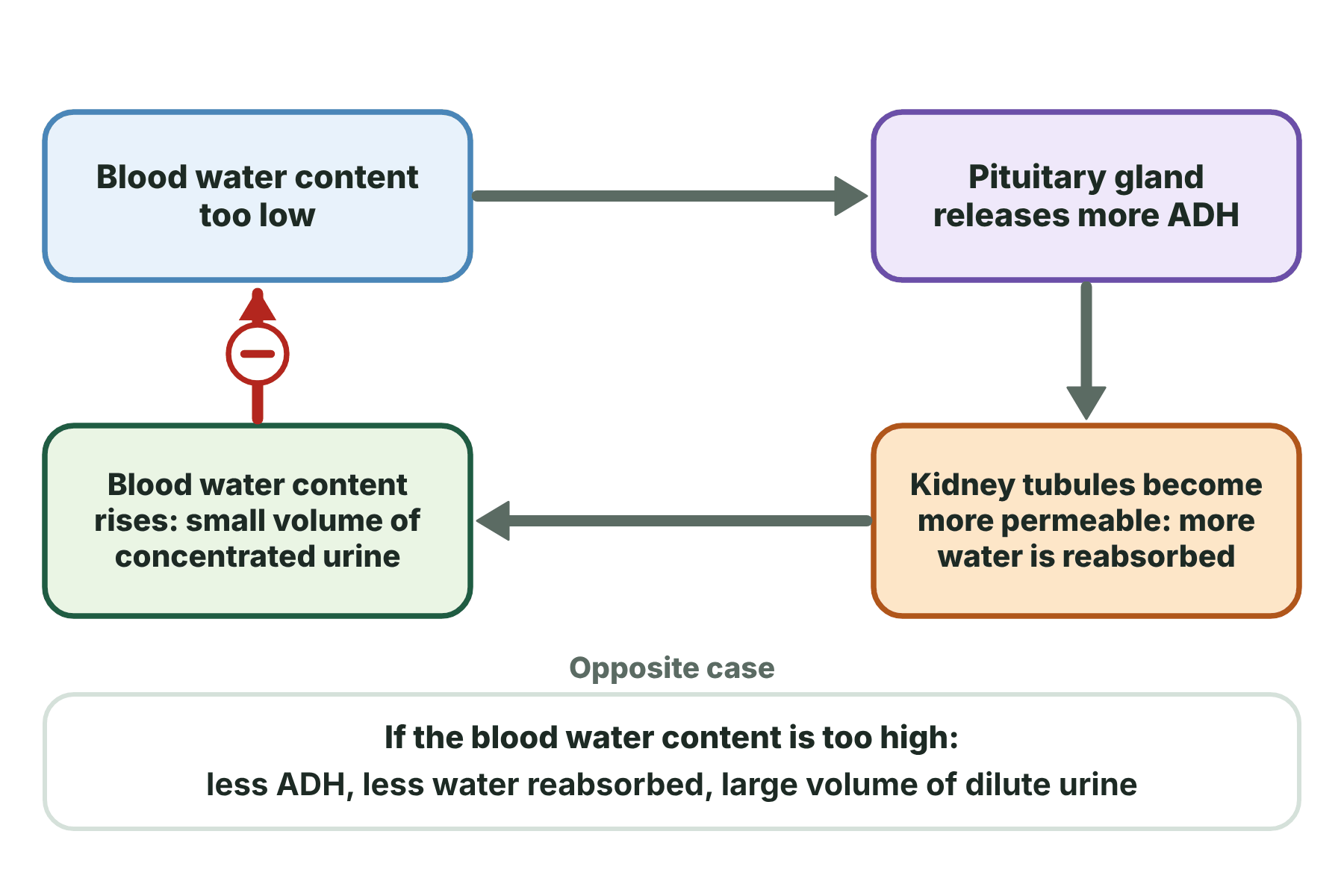
If the blood is too concentrated the pituitary releases more ADH. The kidney tubules are more permeable, so more water is reabsorbed and the blood becomes less concentrated. If the blood is too dilute less ADH is released (Higher tier).