Flashcards · Biology · Blood, Blood Vessels and the Heart
The Structure and Functions of Blood
-
What are the four components of blood?
Plasma, red blood cells, white blood cells and platelets.
-
What is plasma mostly made of?
Water.
-
Name four things that plasma carries.
Any four of: carbon dioxide, glucose, amino acids, urea, hormones, mineral ions, heat.
-
What is the job of a red blood cell?
To carry oxygen from the lungs to the cells.
-
What is haemoglobin?
A red protein containing iron that combines with oxygen.
-
What does haemoglobin form in the lungs?
Oxyhaemoglobin, by combining with oxygen.
-
Why does a red blood cell have no nucleus?
To make more room for haemoglobin, so it can carry more oxygen.
-
Why is a red blood cell a biconcave disc?
It has a large surface area for its volume, so oxygen diffuses in and out quickly.
-
Why can red blood cells squeeze through capillaries?
They are small and flexible.
-
Does a white blood cell have a nucleus?
Yes.
-
What do phagocytes do?
They engulf and digest pathogens, which is called phagocytosis.
-
Why can a phagocyte surround a pathogen?
It can change shape.
-
What do lymphocytes make?
Antibodies.
-
What are platelets?
Small fragments of cells with no nucleus.
-
What is the job of platelets?
To help the blood to clot at a wound.
-
Why is a clot useful?
It stops blood loss and keeps pathogens out of the wound.
-
Which is more numerous, red or white blood cells?
Red blood cells, about 5 million per cubic millimetre against about 7000.
-
What is the formula for magnification?
\(\text{magnification} = \text{image size} \div \text{actual size}\).
-
Which mineral ion is needed to make haemoglobin?
Iron.
-
What is the common mistake about red blood cells?
Saying they have a nucleus, or that they carry carbon dioxide. They have no nucleus and mainly carry oxygen.
-
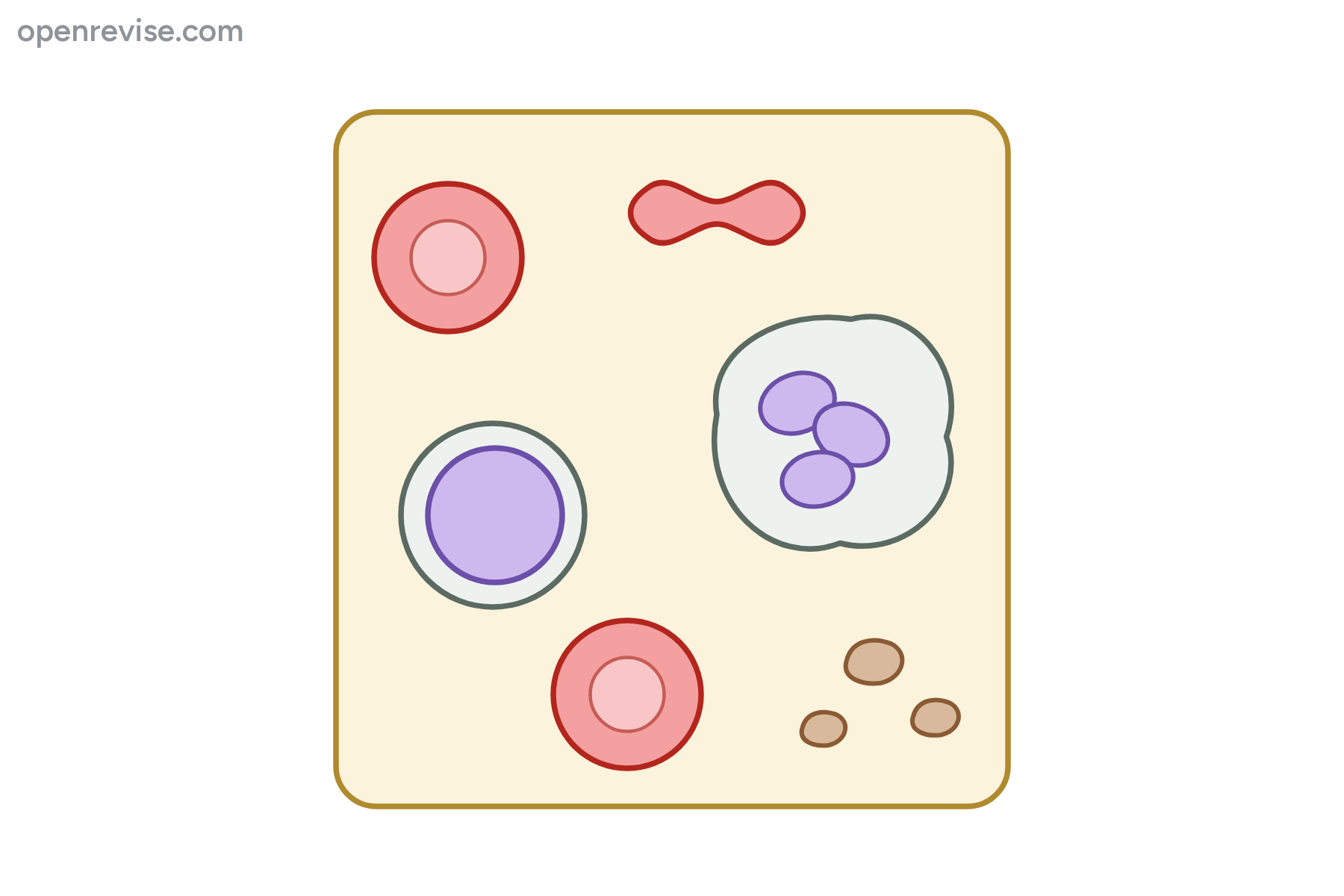 Name each type of blood cell in this diagram and say what each does.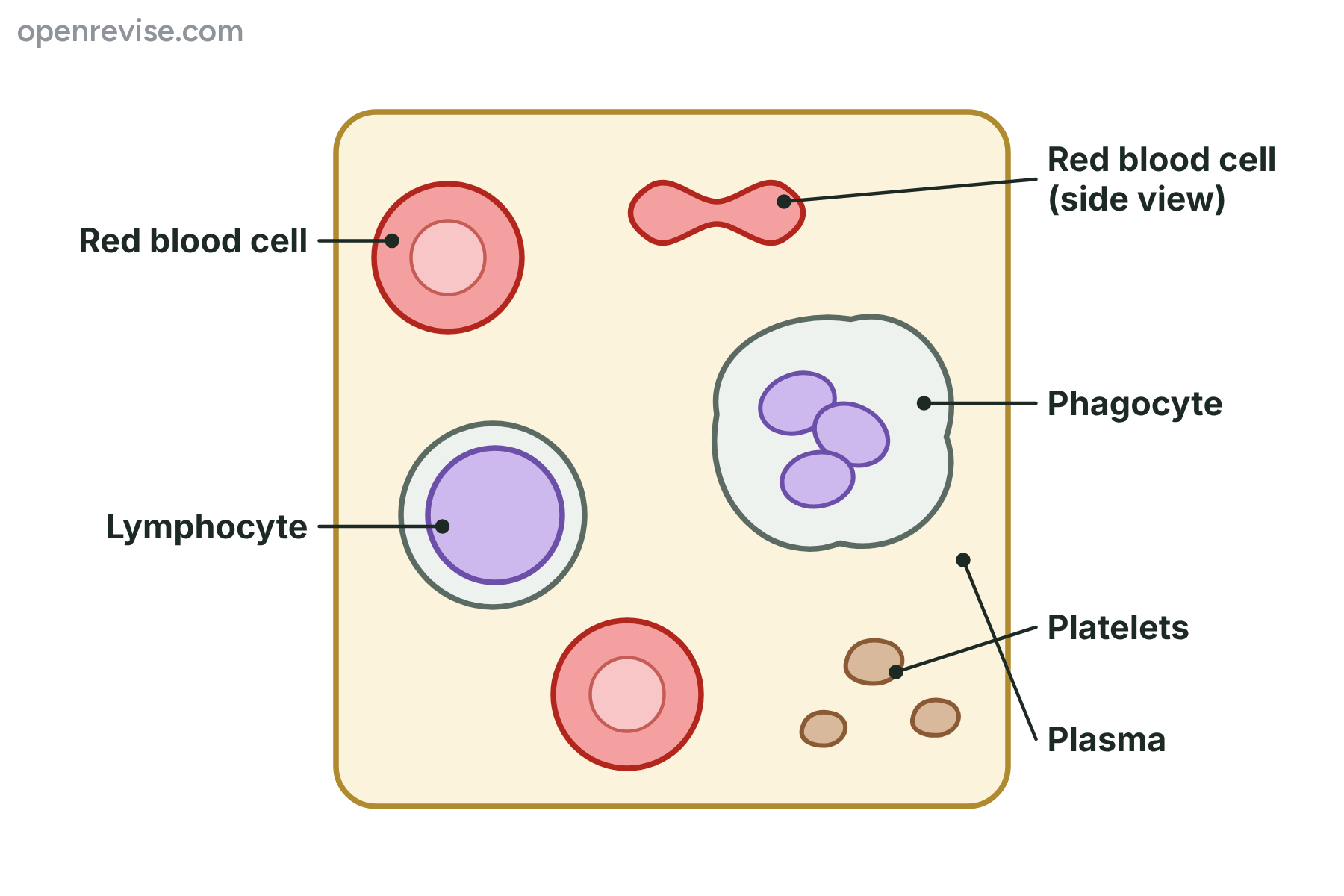
The red cells carry oxygen using haemoglobin. The cell with the lobed nucleus is a phagocyte, which engulfs pathogens. The cell with the large round nucleus is a lymphocyte, which makes antibodies. The small fragments are platelets, which help the blood to clot.
-
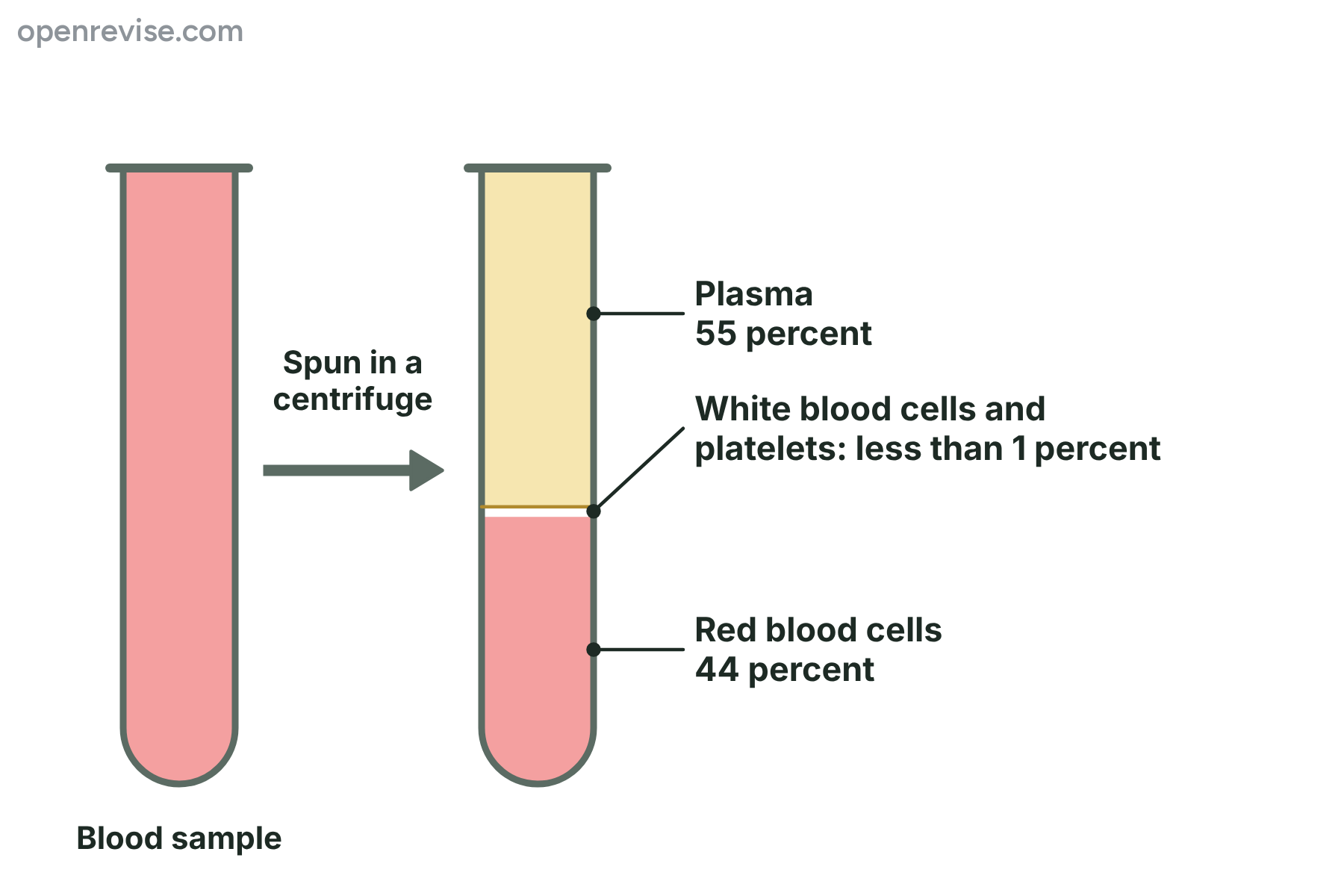 What percentage of the blood is plasma, and what makes up the rest?
 About 55 percent is plasma. About 44 percent is red blood cells, and less than 1 percent is white blood cells and platelets.