Flashcards · Biology · Blood, Blood Vessels and the Heart
The Heart and Double Circulation
-
How many chambers does the human heart have?
Four: two atria and two ventricles.
-
What do the atria do?
They receive blood from the veins and pass it to the ventricles.
-
What do the ventricles do?
They pump blood out of the heart into the arteries.
-
Why are the walls of the atria thin?
They only push blood a short distance into the ventricles.
-
What is the septum?
The wall of muscle between the two sides of the heart.
-
What does the septum prevent?
The mixing of oxygenated and deoxygenated blood.
-
Which chamber has the thickest wall?
The left ventricle.
-
Why is the wall of the left ventricle thick?
It pumps blood at high pressure all round the body.
-
Why is the wall of the right ventricle thinner?
It only pumps blood to the lungs, which needs a lower pressure.
-
Where does the vena cava take blood?
It brings deoxygenated blood from the body to the right atrium.
-
Where does the pulmonary artery take blood?
From the right ventricle to the lungs, and it is deoxygenated.
-
Where does the pulmonary vein take blood?
From the lungs to the left atrium, and it is oxygenated.
-
Where does the aorta take blood?
From the left ventricle to the body, and it is oxygenated.
-
What do the coronary arteries do?
They supply the heart muscle with oxygen and glucose.
-
What do the atrioventricular valves do?
They stop blood flowing back from the ventricles into the atria.
-
What do the semilunar valves do?
They stop blood flowing back from the arteries into the ventricles.
-
Why does the heart have valves?
To make the blood flow one way only.
-
Name the route of blood through the heart.
Vena cava, right atrium, right ventricle, pulmonary artery, lungs, pulmonary vein, left atrium, left ventricle, aorta.
-
Why is the circulation described as double?
Blood passes through the heart twice on each complete trip, once to the lungs and once to the body.
-
Why is a double circulation better than a single one?
Blood pressure is raised again after the lungs, so oxygen reaches the body faster, and oxygenated blood is kept apart.
-
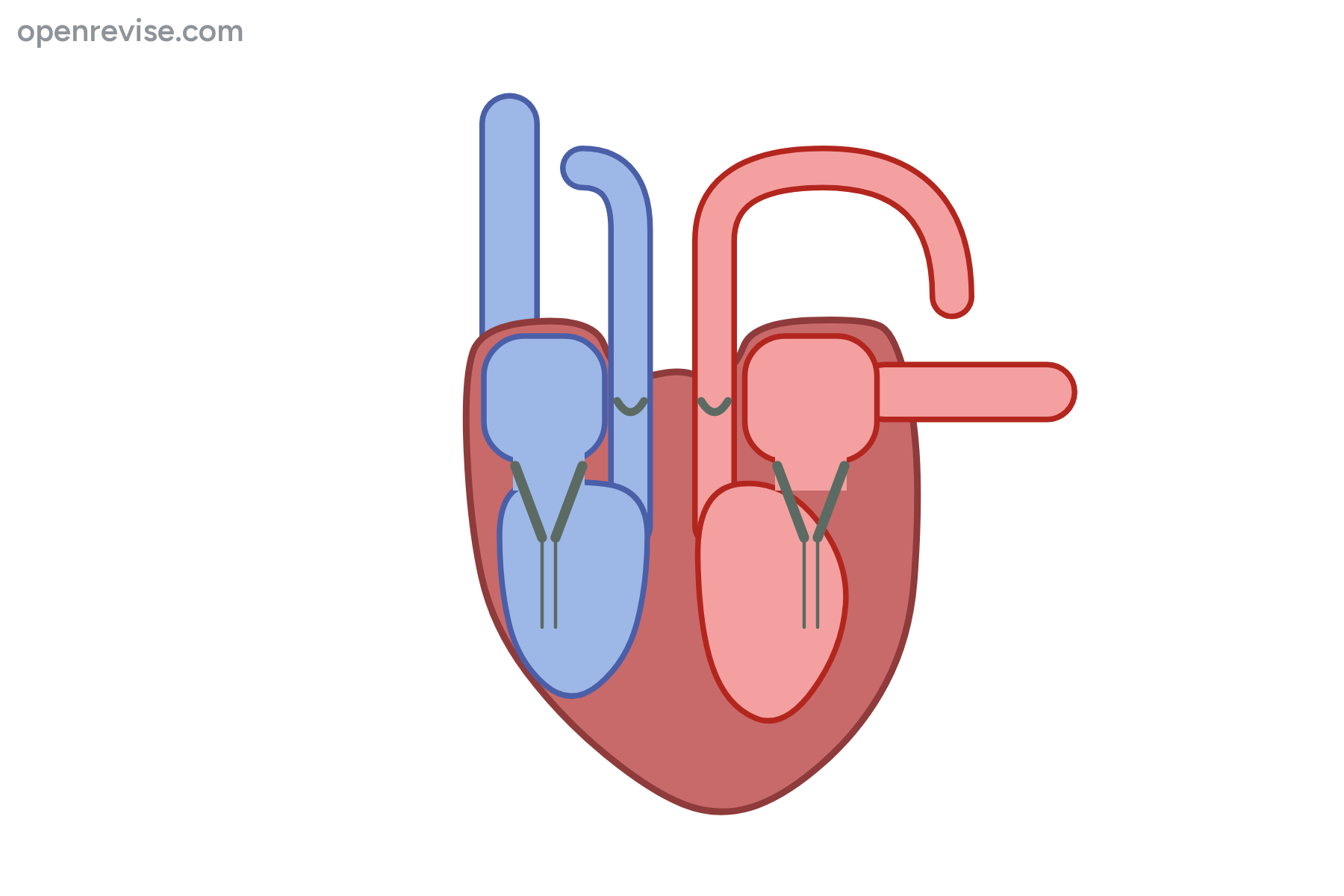 Name the labelled chambers, vessels and valves in this diagram, and say which wall is thickest.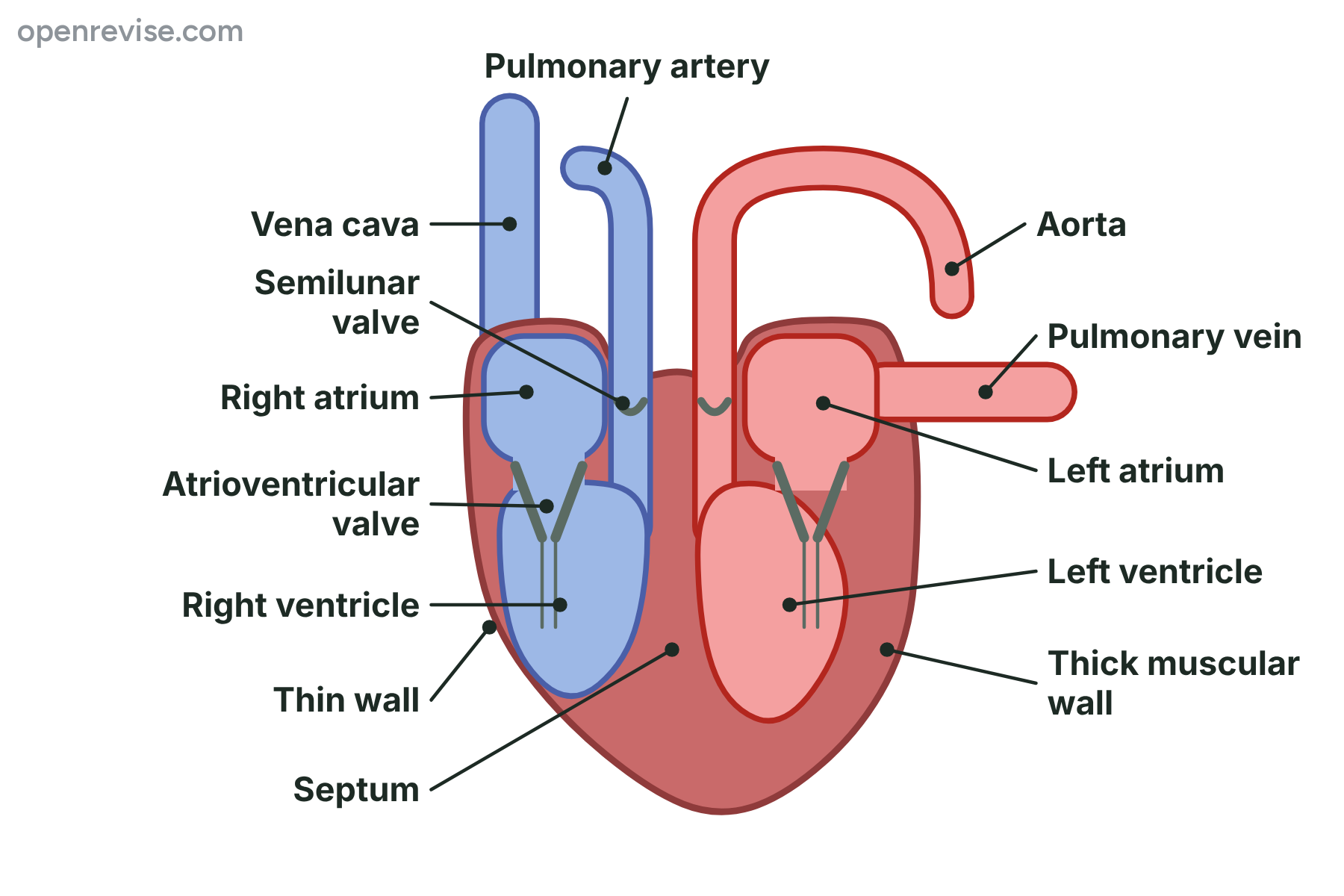
The blue chambers on the left are the right atrium and right ventricle, with the vena cava and pulmonary artery. The pink ones on the right are the left atrium and left ventricle, with the pulmonary vein and aorta. The left ventricle has the thickest wall.
-
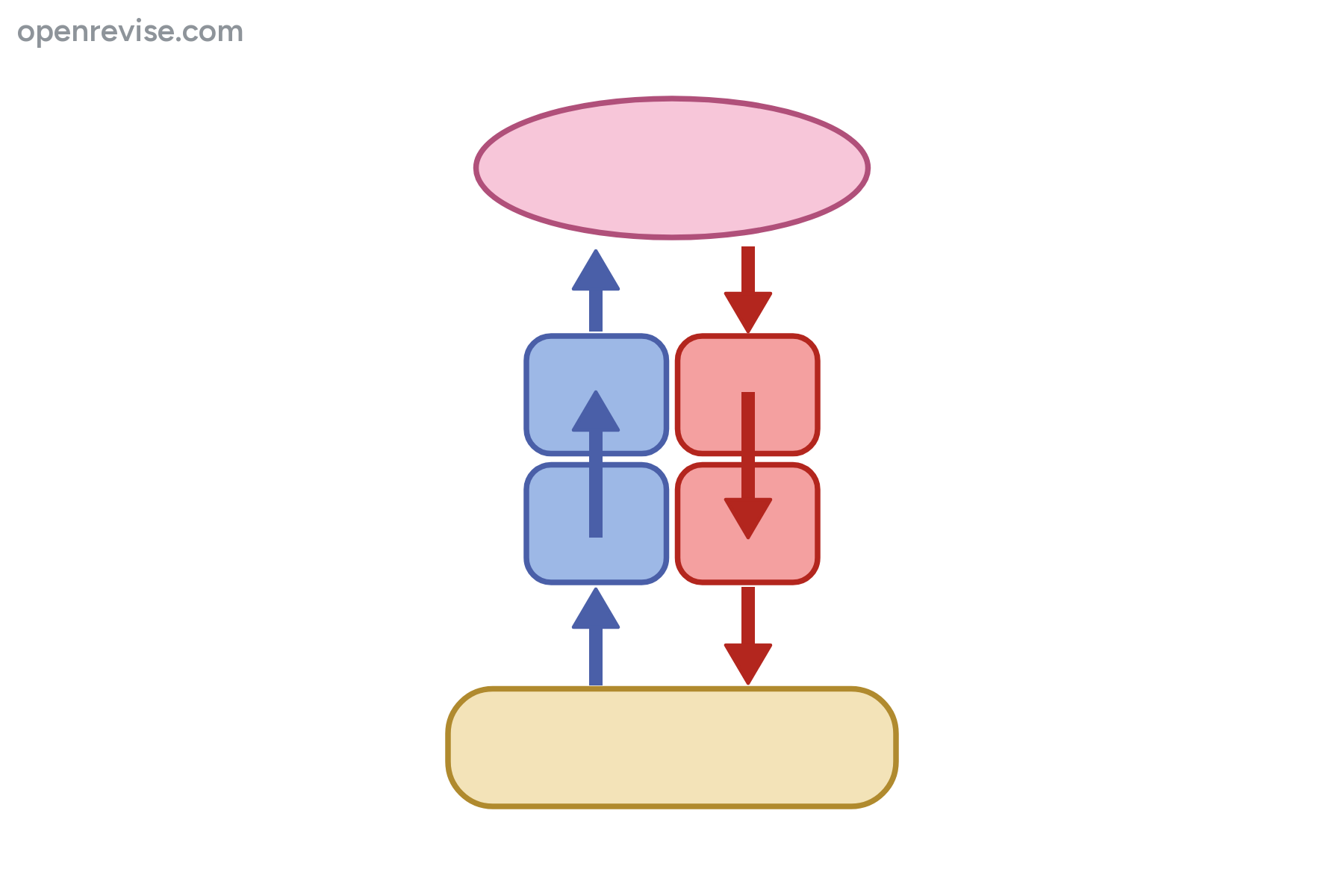 Describe the route of the blood in this diagram, and say where gas exchange happens.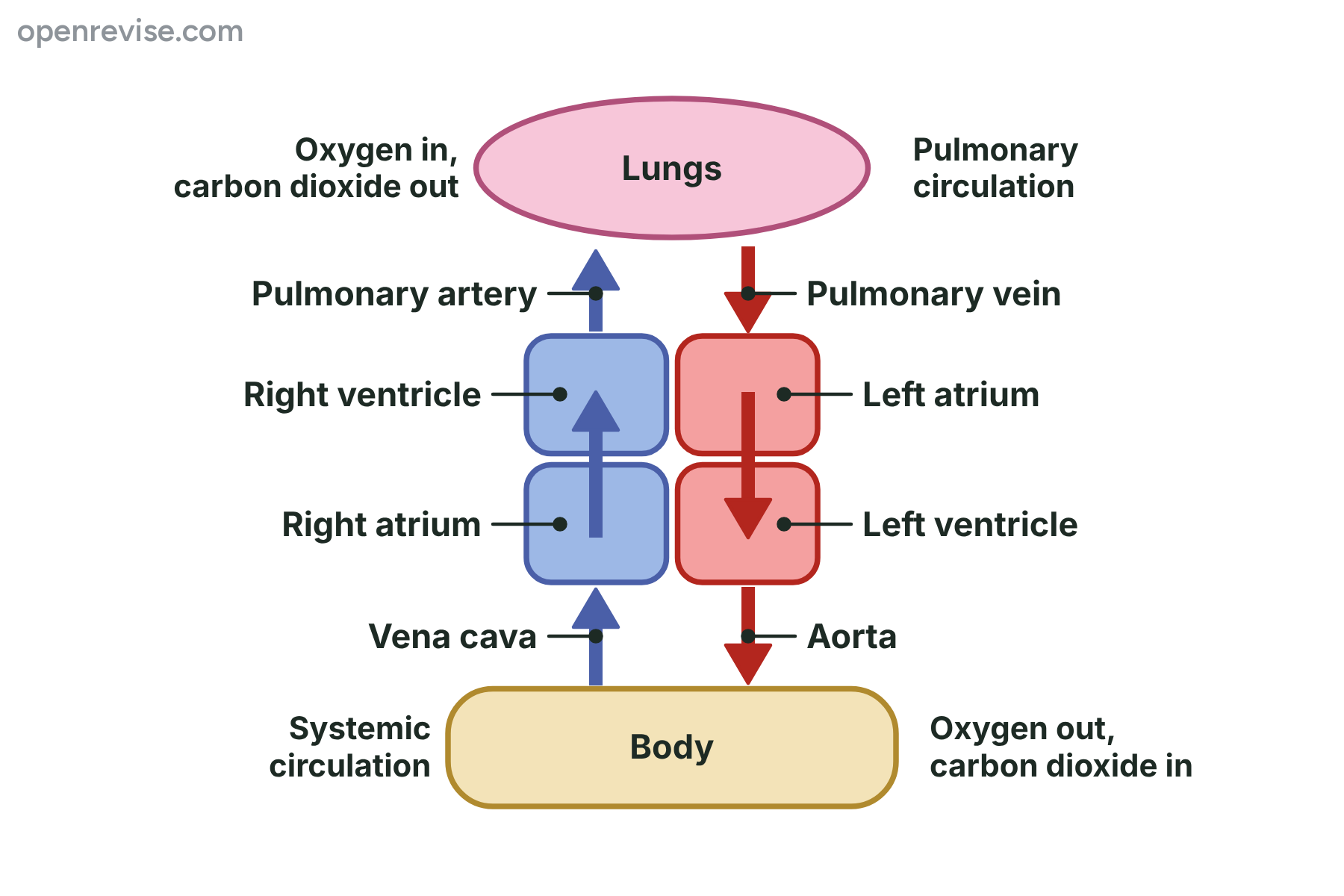
Blood goes from the body in the vena cava to the right atrium and right ventricle, then in the pulmonary artery to the lungs, where it picks up oxygen. It returns in the pulmonary vein to the left atrium and left ventricle, then goes out in the aorta to the body.