Flashcards · Biology · Ecosystems and Communities
Abiotic and Biotic Factors
-
What is an abiotic factor?
A non-living part of the environment.
-
What is a biotic factor?
A living part of the environment, such as a predator or a competitor.
-
Name the four abiotic factors on the specification.
Temperature, light, water and pollutants.
-
Name two biotic factors on the specification.
Competition and predation.
-
Why does light affect the number of consumers in an ecosystem?
Light limits photosynthesis and so the number of producers, and consumers depend on producers.
-
How can a pollutant change a community?
Sensitive species die, so the number of species falls.
-
What do plants compete for?
Light, water, mineral ions and space.
-
What do animals compete for?
Food, water, mates, territory and shelter.
-
What usually happens to the weaker of two competing species?
Its population declines and it may die out from the area.
-
What is a predator?
An animal that kills and eats other animals.
-
In a predator-prey cycle, which population peaks first?
The prey population.
-
Why does the predator peak come after the prey peak?
Predators need time to breed and increase once the food supply has increased.
-
Why are there usually fewer predators than prey?
Energy is lost at each trophic level, so the prey cannot support as many predators.
-
Why do prey numbers fall after predators increase?
More predators eat more prey.
-
What is the formula for percentage change?
Change divided by the original value, multiplied by 100.
-
Why do the populations in a stable community stay roughly constant?
Factors that increase them balance the ones that decrease them.
-
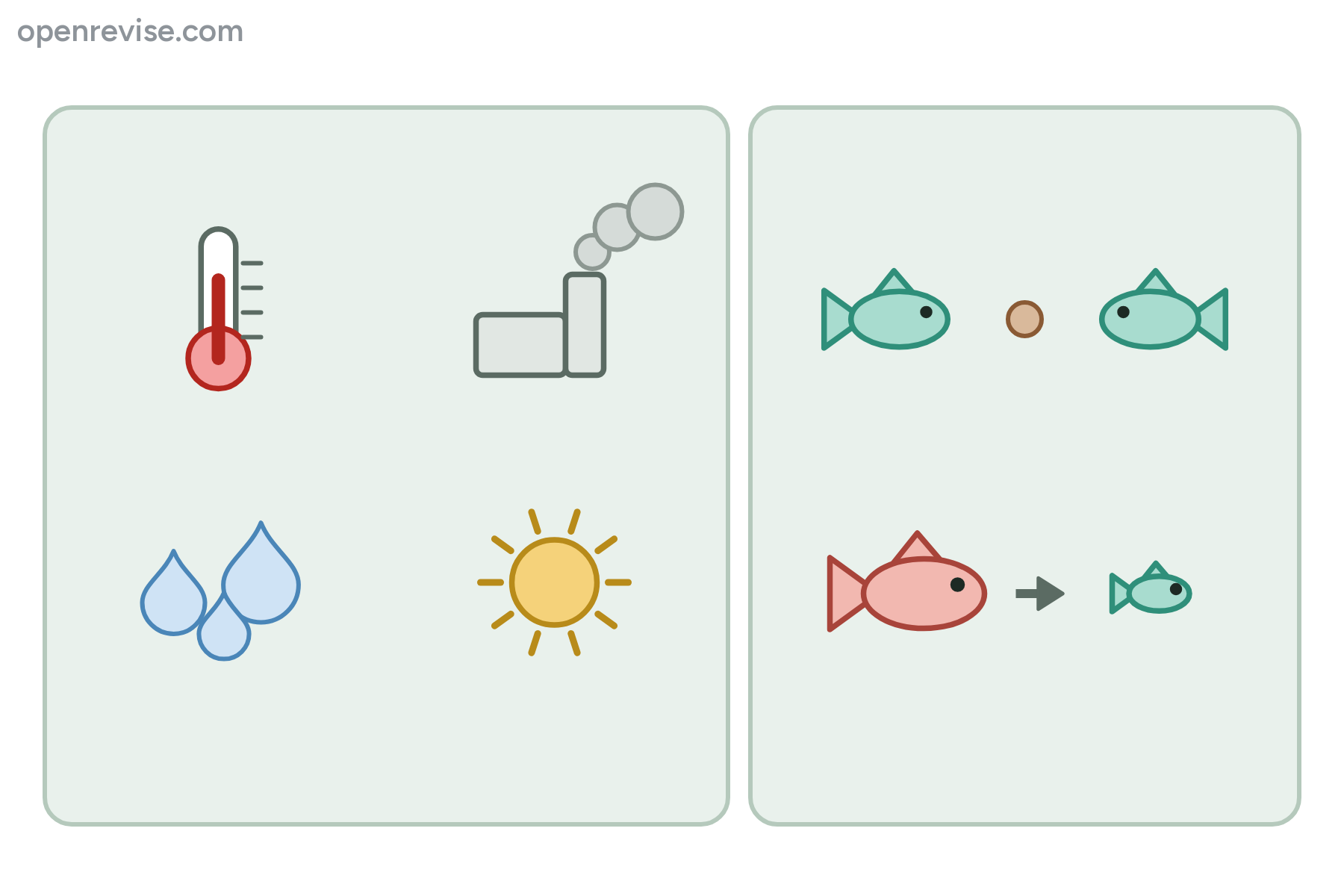 Sort the factors in the picture into abiotic and biotic, and name each one.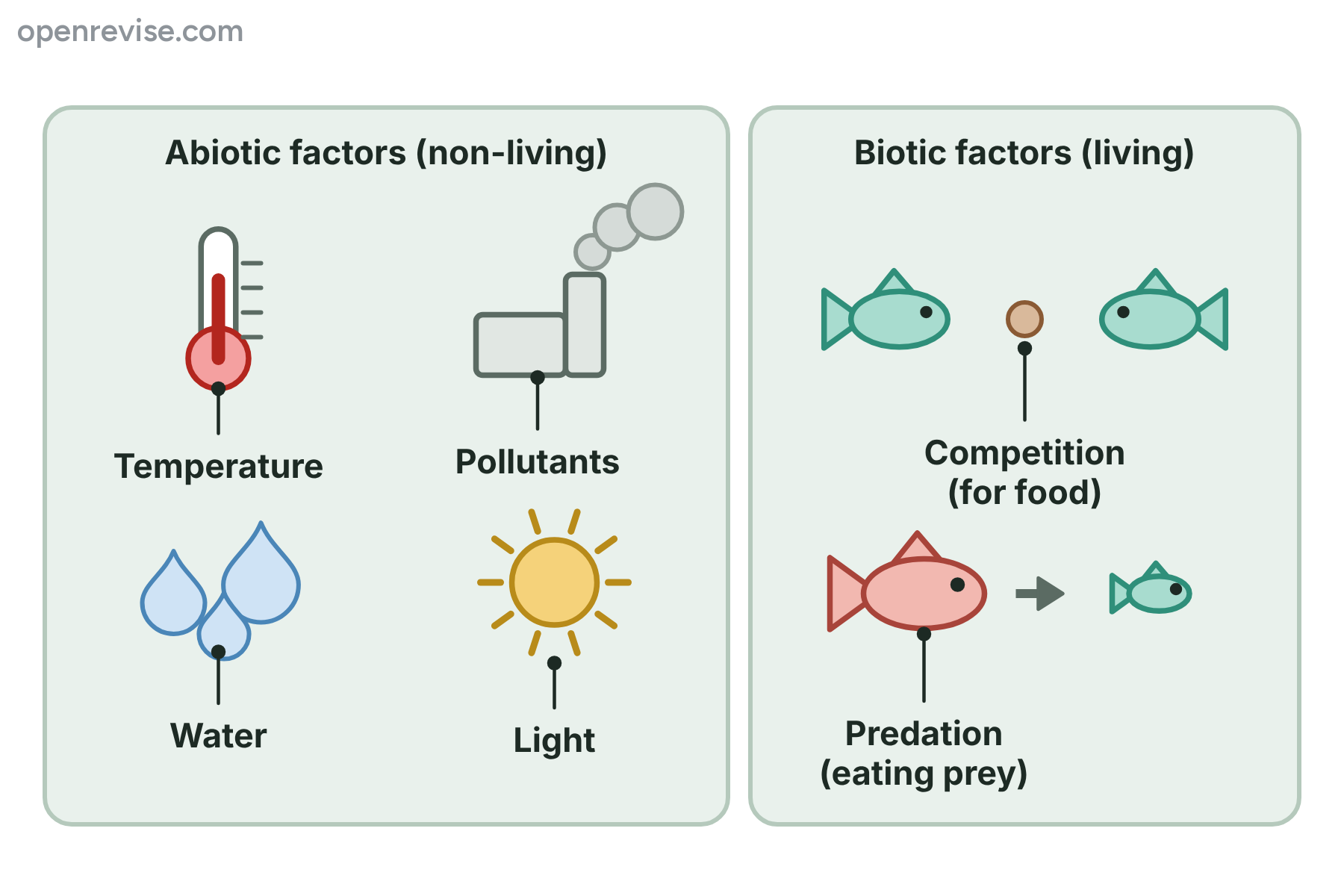
Abiotic (non-living): temperature, pollutants, water and light. Biotic (living): competition (for food) and predation (a predator eating prey).
-
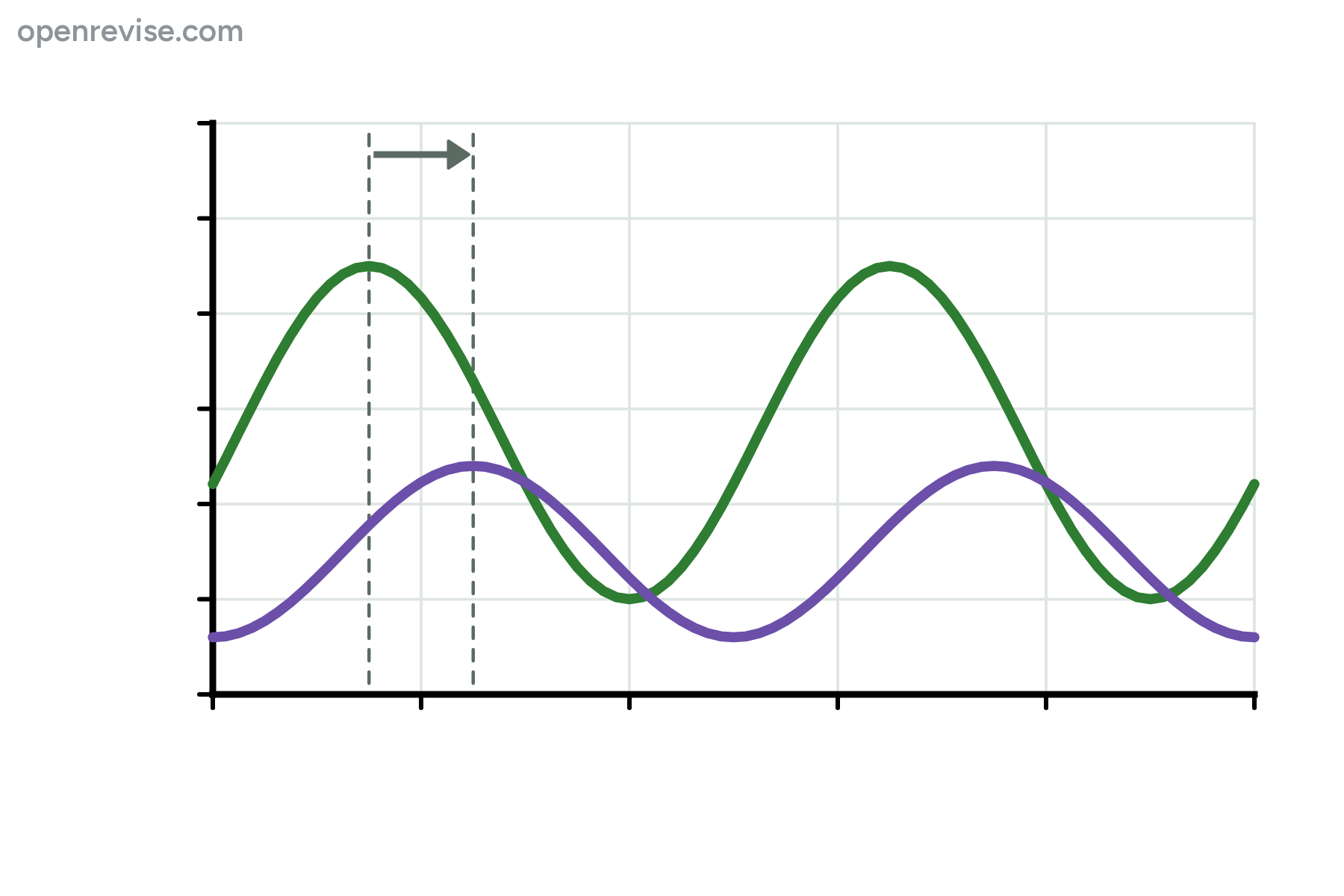 Describe and explain the pattern in the graph.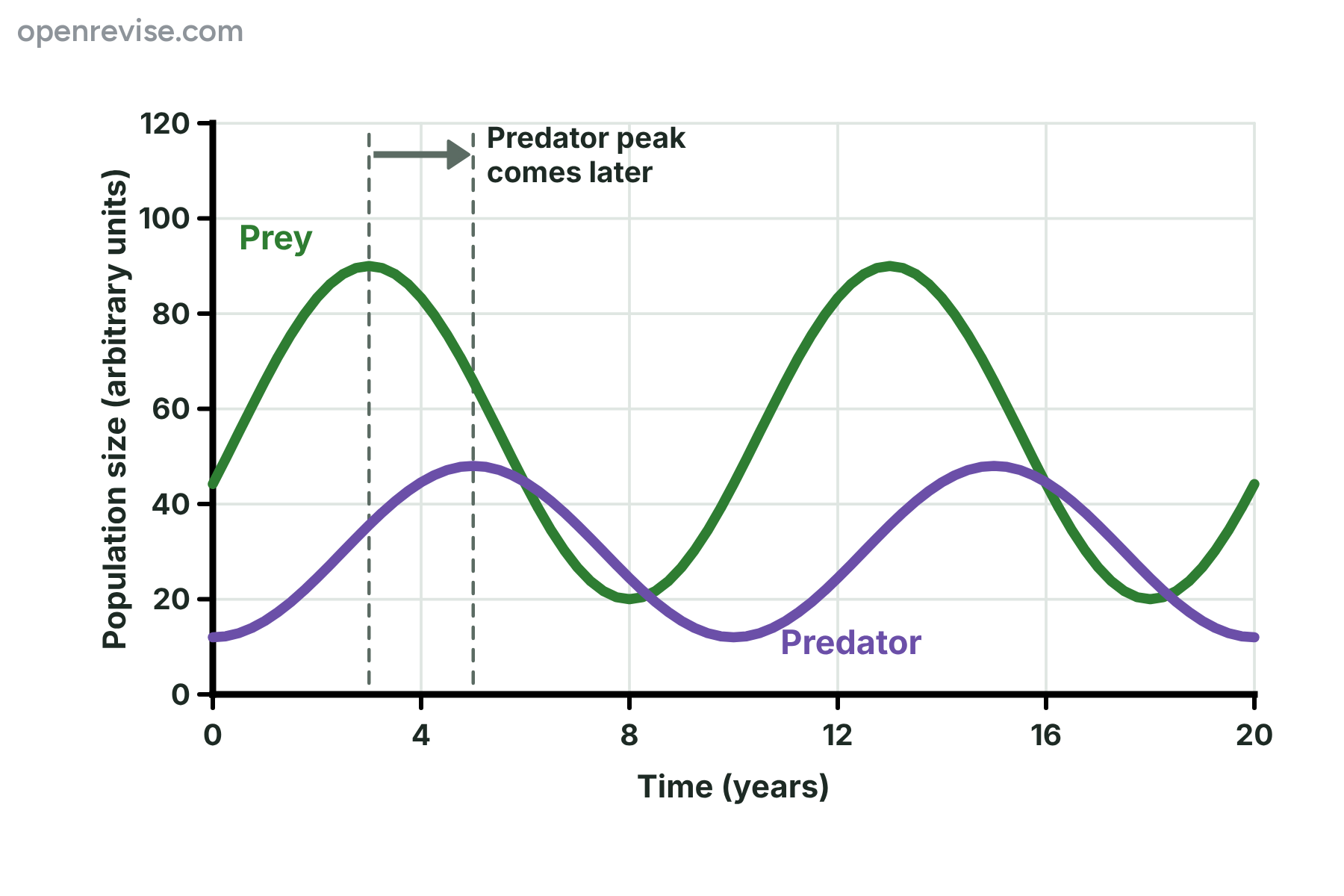
The prey peak comes first and the predator peak comes later, because predators increase once there is plenty of prey. More predators then eat more prey, so the prey fall, and then the predators fall as food runs short. The cycle repeats, and there are fewer predators than prey.