Flashcards · Biology · Ecosystems and Communities
Levels of Organisation and Interdependence
-
What is an individual organism?
One single living thing.
-
What is a population?
All the organisms of the same species living in the same place at the same time.
-
What is a community?
All the populations of the different species living in the same place.
-
What is an ecosystem?
A community of living organisms together with the non-living parts of their surroundings.
-
Name the four levels of organisation, smallest first.
Individual organism, population, community, ecosystem.
-
A pond contains frogs, fish and plants. Is that a population or a community?
A community, because it has several species.
-
What does interdependence mean?
Organisms in a community depend on each other, for example for food, shelter and pollination.
-
Why might losing one species damage a whole community?
Other species depend on it for food or other needs, so the effects spread.
-
What is parasitism?
A relationship in which the parasite benefits and the host is harmed.
-
Name two animal parasites.
Tapeworms and fleas.
-
How does mistletoe harm its host tree?
It takes water and mineral ions from the tree, weakening it.
-
What is mutualism?
A relationship in which both organisms benefit.
-
What do nitrogen-fixing bacteria in root nodules gain from the plant?
Sugars (a food supply) and a home.
-
What does the plant gain from nitrogen-fixing bacteria?
Nitrogen compounds that it can use to make proteins.
-
How do cleaner fish and the larger fish both benefit?
The cleaner gets food, and the larger fish loses its parasites.
-
What does a flower gain from a pollinating bee, and what does the bee gain?
The flower is pollinated, and the bee gets nectar and pollen.
-
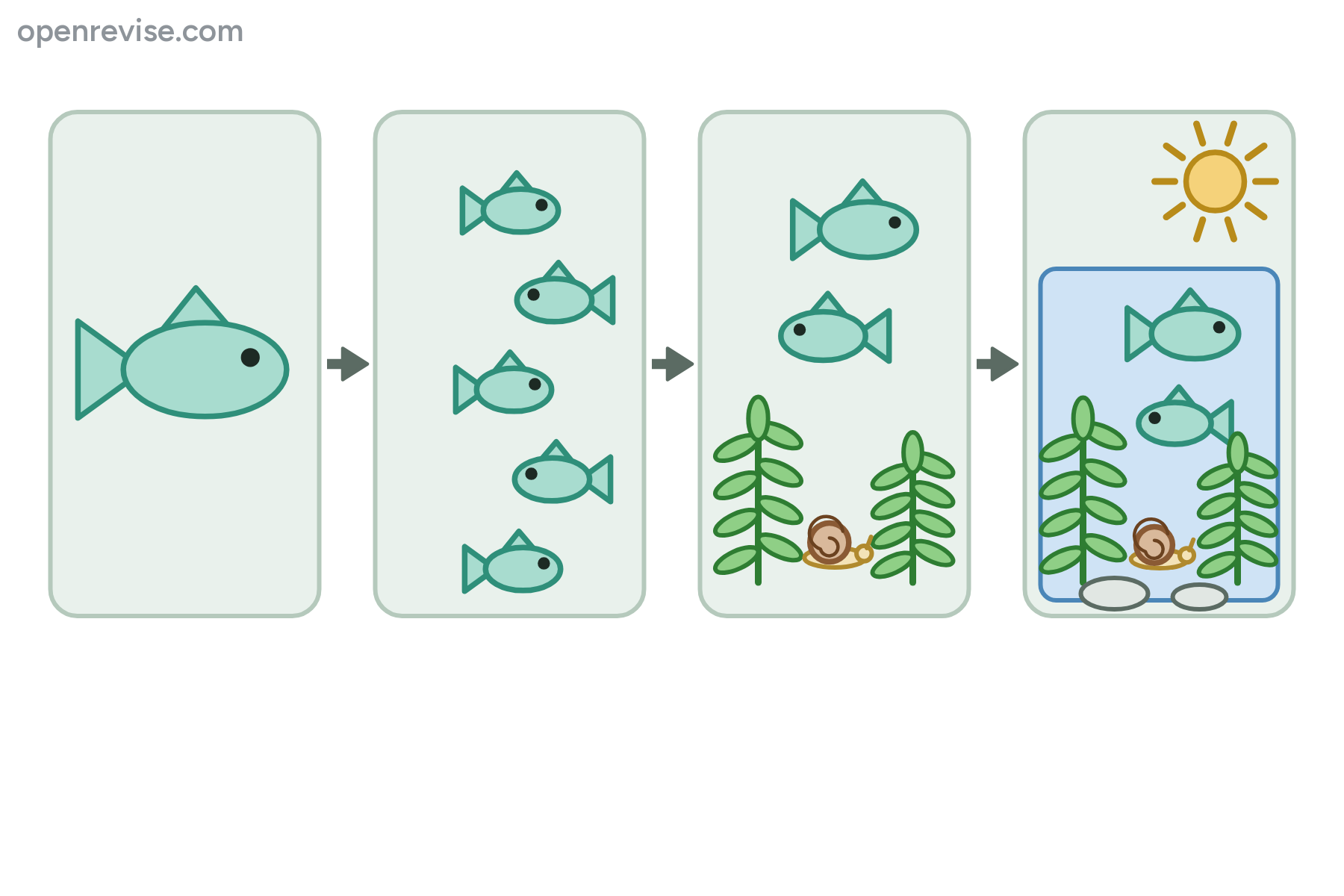 Name each level of organisation shown, and say what each contains.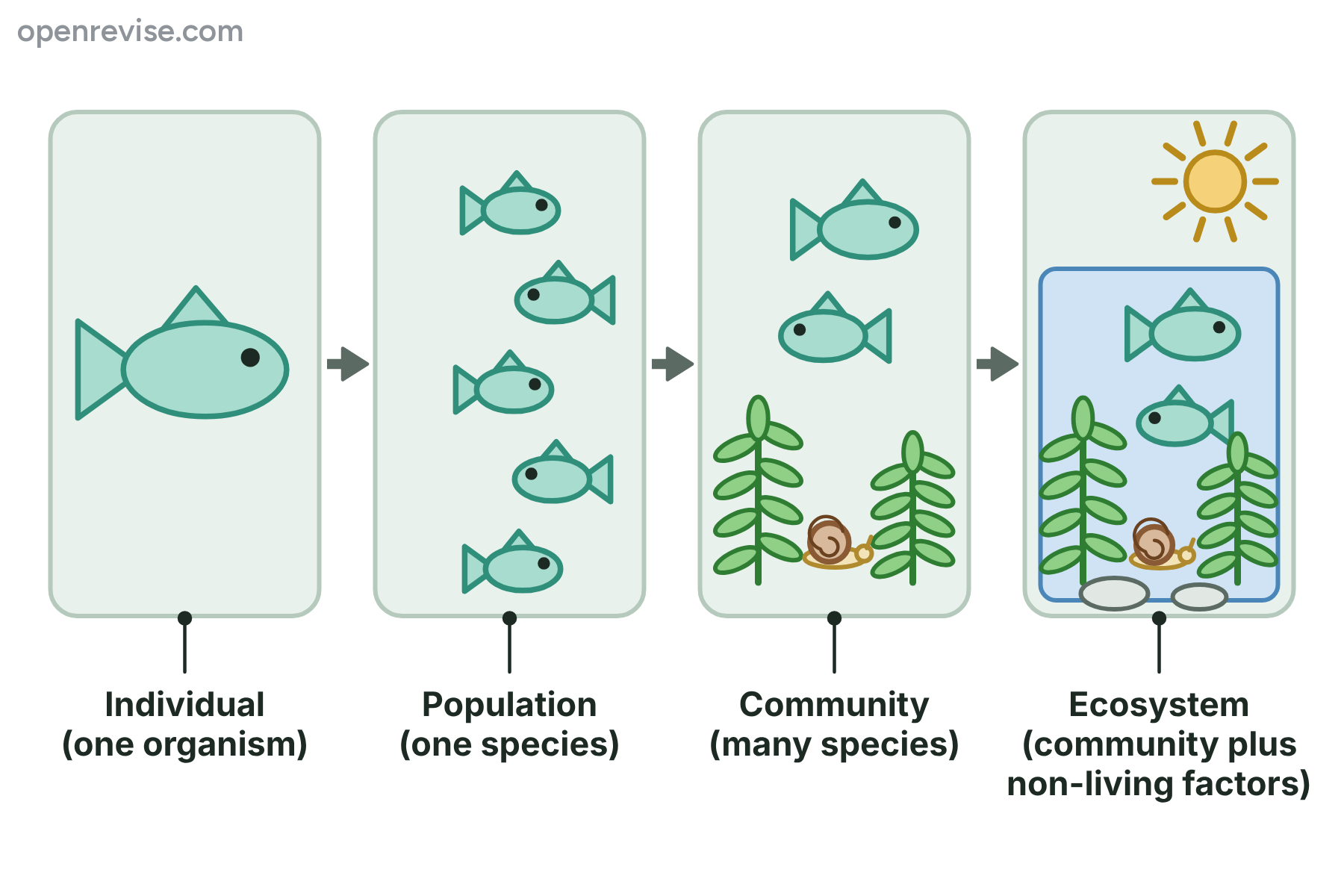
Individual: one organism. Population: all the organisms of one species in the same place. Community: all the populations of the different species in the same place. Ecosystem: the community plus the non-living factors such as light, water and temperature.
-
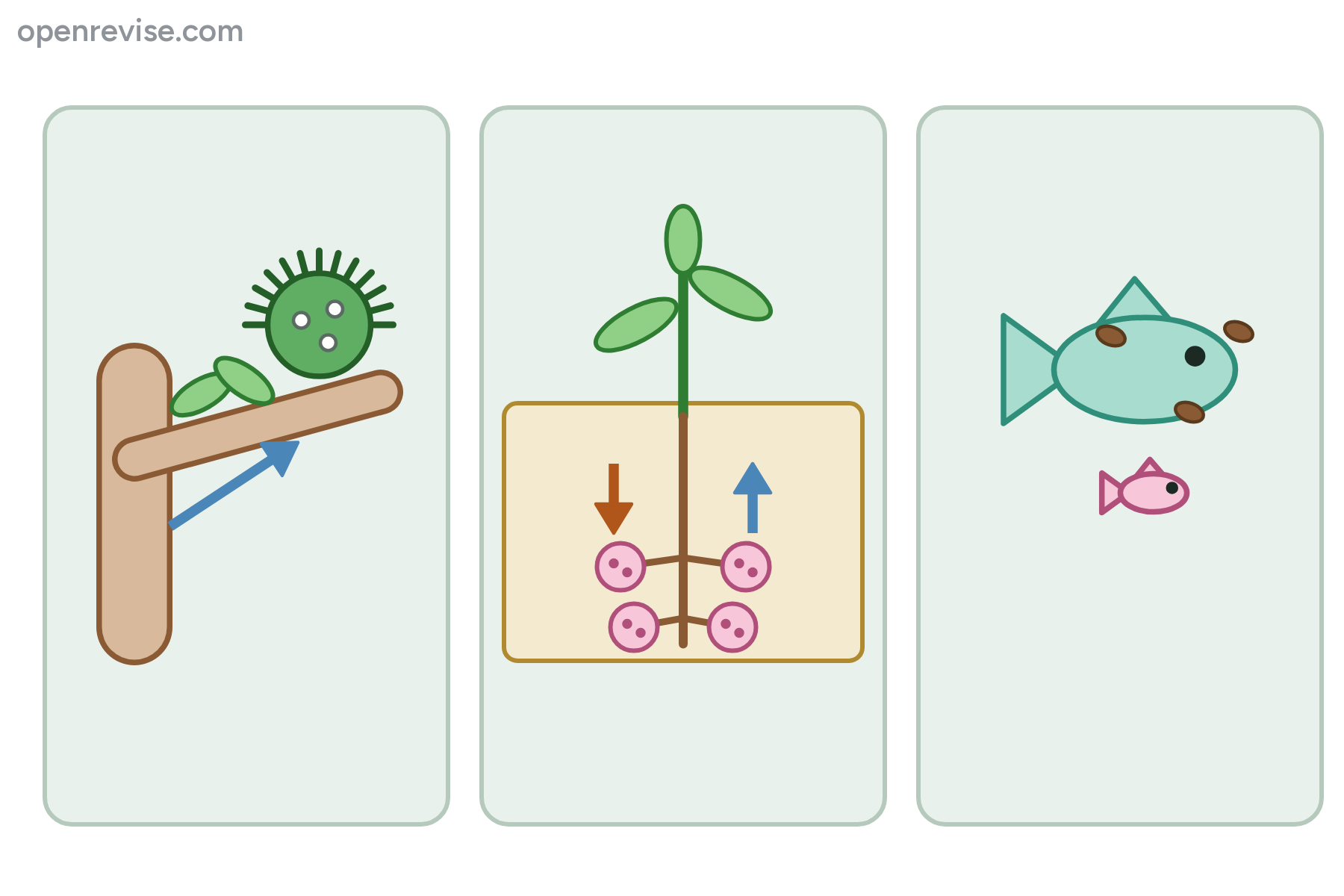 Name each relationship, and say which organisms benefit and which are harmed.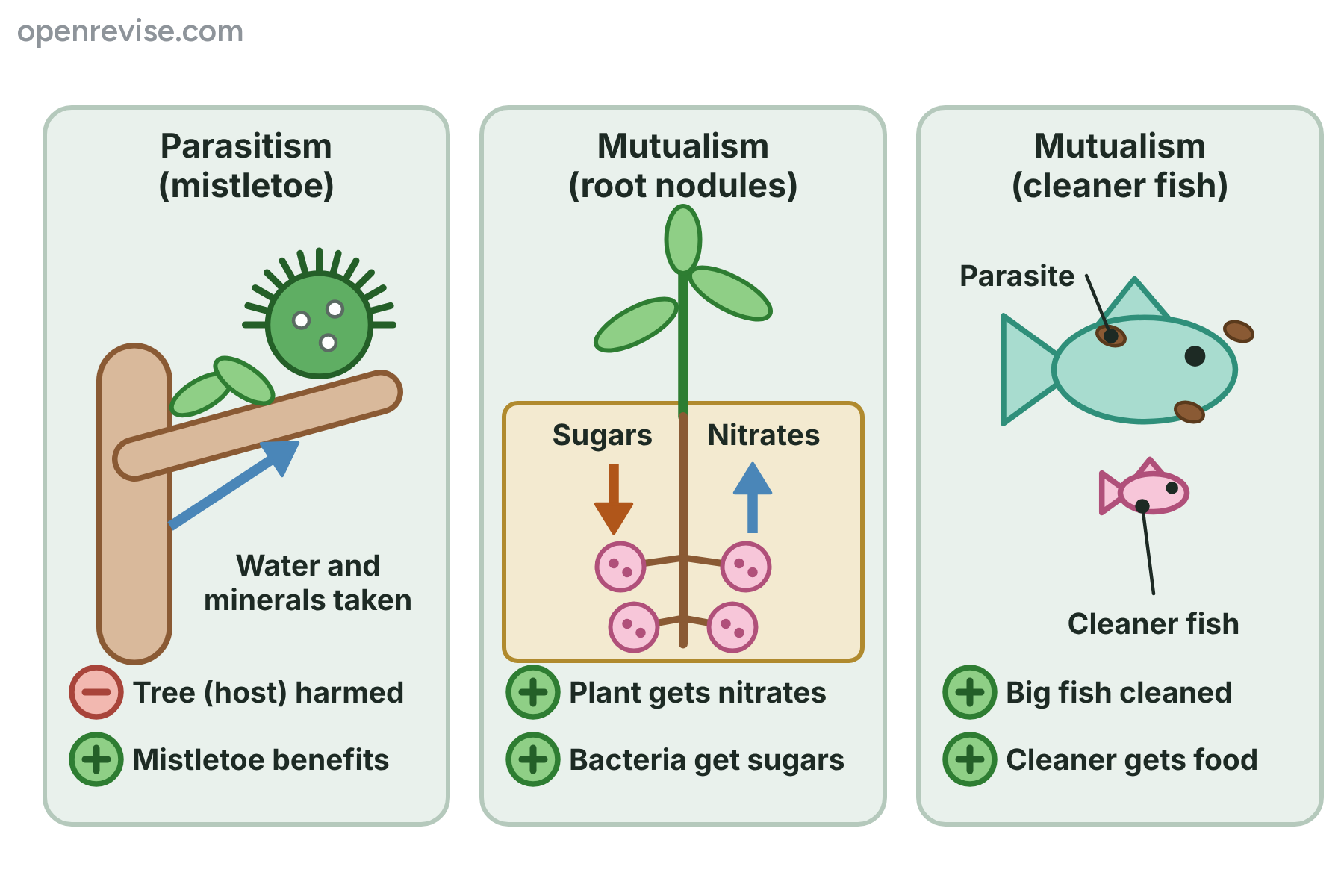
Mistletoe on a tree is parasitism: the mistletoe benefits and the tree is harmed. Root nodules are mutualism: the plant gets nitrates and the bacteria get sugars. A cleaner fish and a big fish are mutualism: the big fish is cleaned and the cleaner gets food.