Flashcards · Biology · Exchange Surfaces and Gas Exchange
Alveoli and Gas Exchange
-
What are the tiny air sacs in the lungs called?
Alveoli.
-
Name the airways in order, from the mouth to the gas exchange surface.
Trachea, bronchus, bronchiole, alveolus.
-
What keeps the trachea open?
Rings of cartilage.
-
How many bronchi are there?
Two, one to each lung.
-
Which gas diffuses into the blood in the alveoli?
Oxygen.
-
Which gas diffuses out of the blood in the alveoli?
Carbon dioxide.
-
Does gas exchange in the alveoli need energy?
No. It happens by diffusion.
-
Why does oxygen diffuse into the blood and not out of it?
The oxygen concentration in the alveolus is higher than in the blood arriving from the body.
-
What do red blood cells use to carry oxygen?
Haemoglobin.
-
How thick is the wall of an alveolus?
One cell thick.
-
How thick is the wall of a capillary?
One cell thick.
-
Why do thin walls make gas exchange faster?
The diffusion distance is shorter, so the gases cross more quickly.
-
Why does a large number of alveoli help?
It gives a large surface area, so more gas can diffuse at once.
-
How does the blood supply keep the concentration gradient steep?
Flowing blood carries oxygen away and brings in carbon dioxide, so the gradients are kept up.
-
How does ventilation keep the concentration gradient steep?
It brings fresh air with a high oxygen concentration and removes air with carbon dioxide.
-
Roughly what percentage of inhaled air is oxygen, and of exhaled air?
About 21 percent inhaled and about 16 percent exhaled.
-
Why is a moist lining useful?
Oxygen dissolves in the film of water before it diffuses across the wall.
-
What is the common mistake about gas exchange?
Saying that the lungs make oxygen or that gases are pumped across. They simply diffuse down concentration gradients.
-
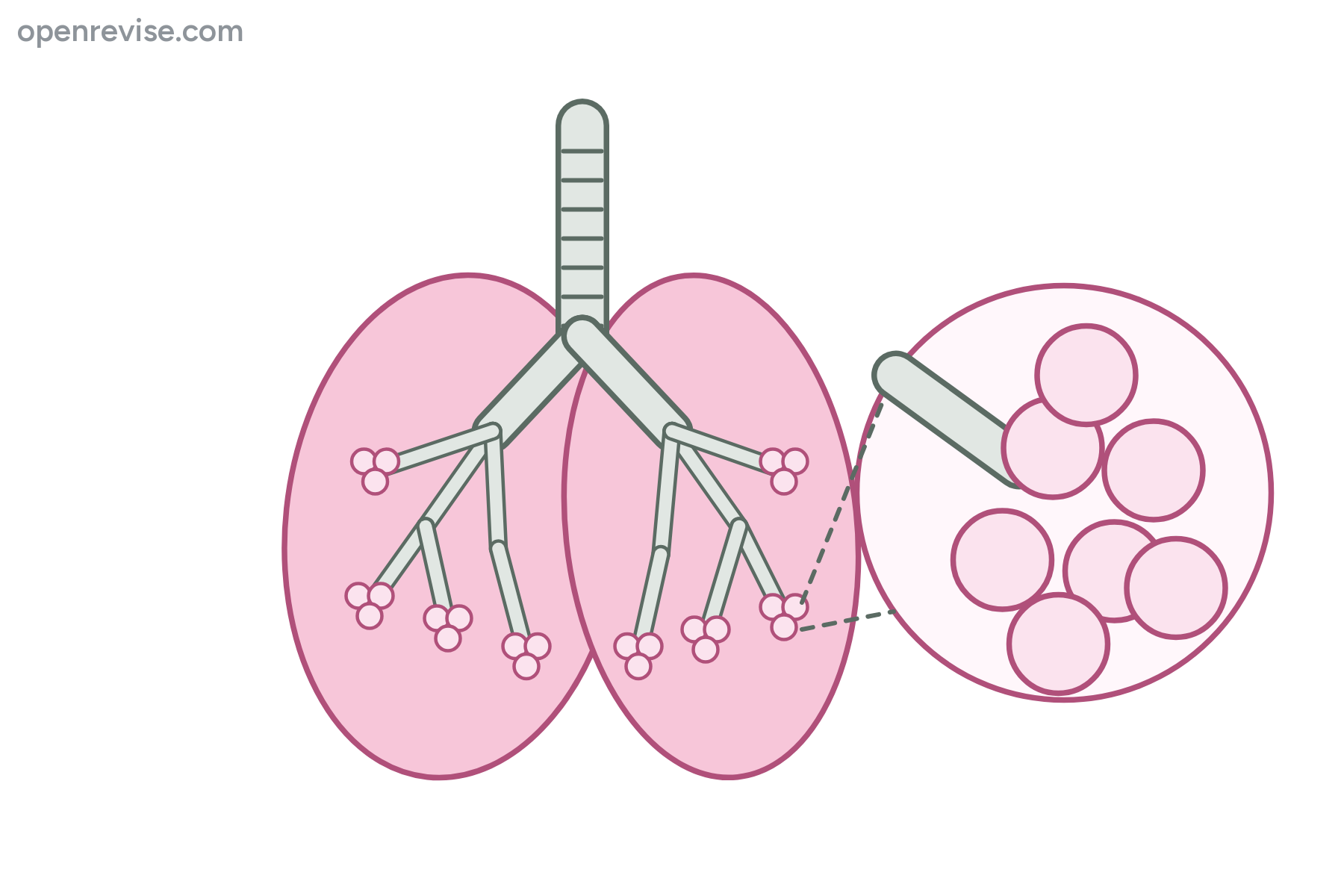 Name the structures of the airways in this diagram, and say where gas exchange happens.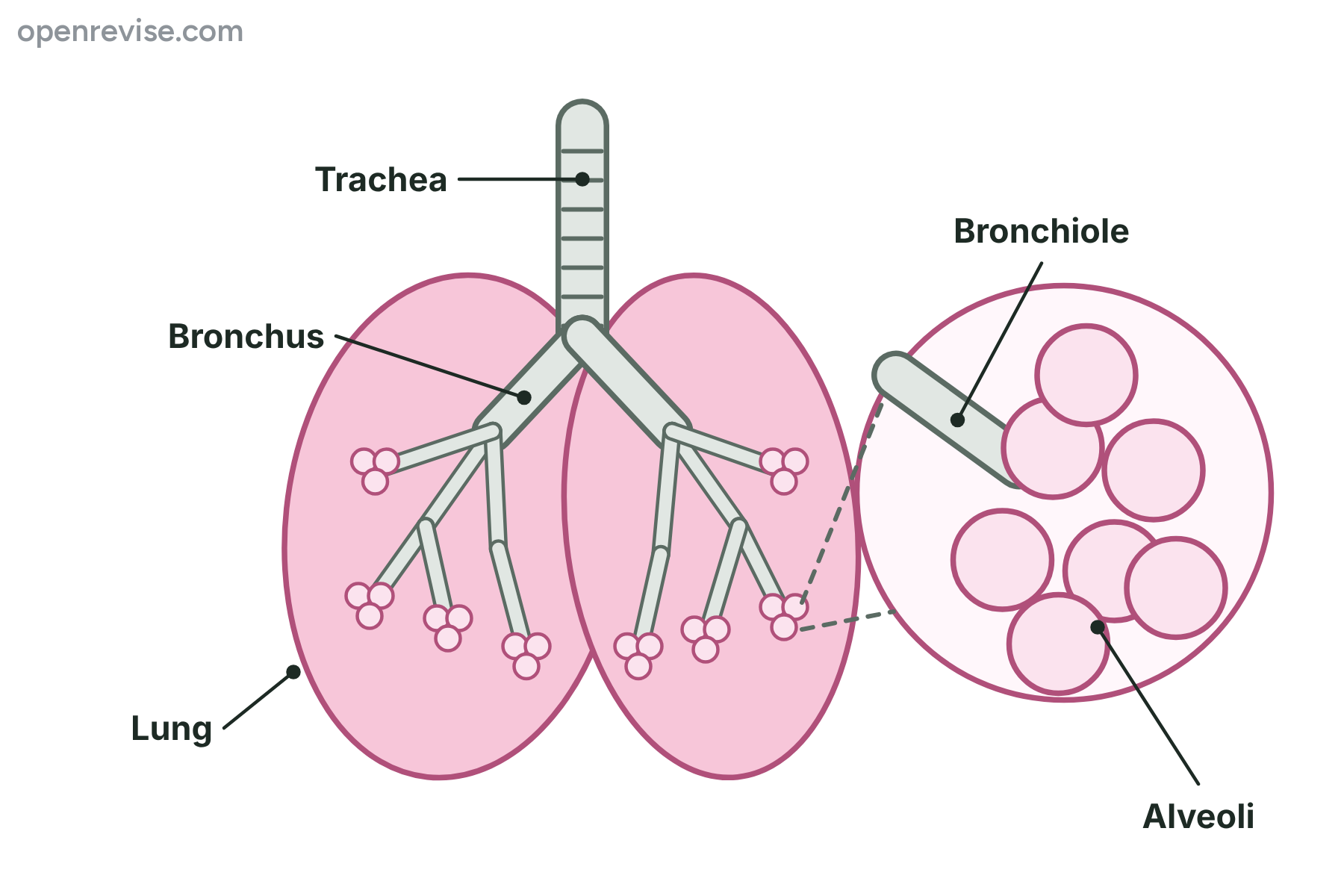
The tube down the middle is the trachea, which splits into two bronchi. The bronchi branch into bronchioles, which end in alveoli. Gas exchange happens in the alveoli.
-
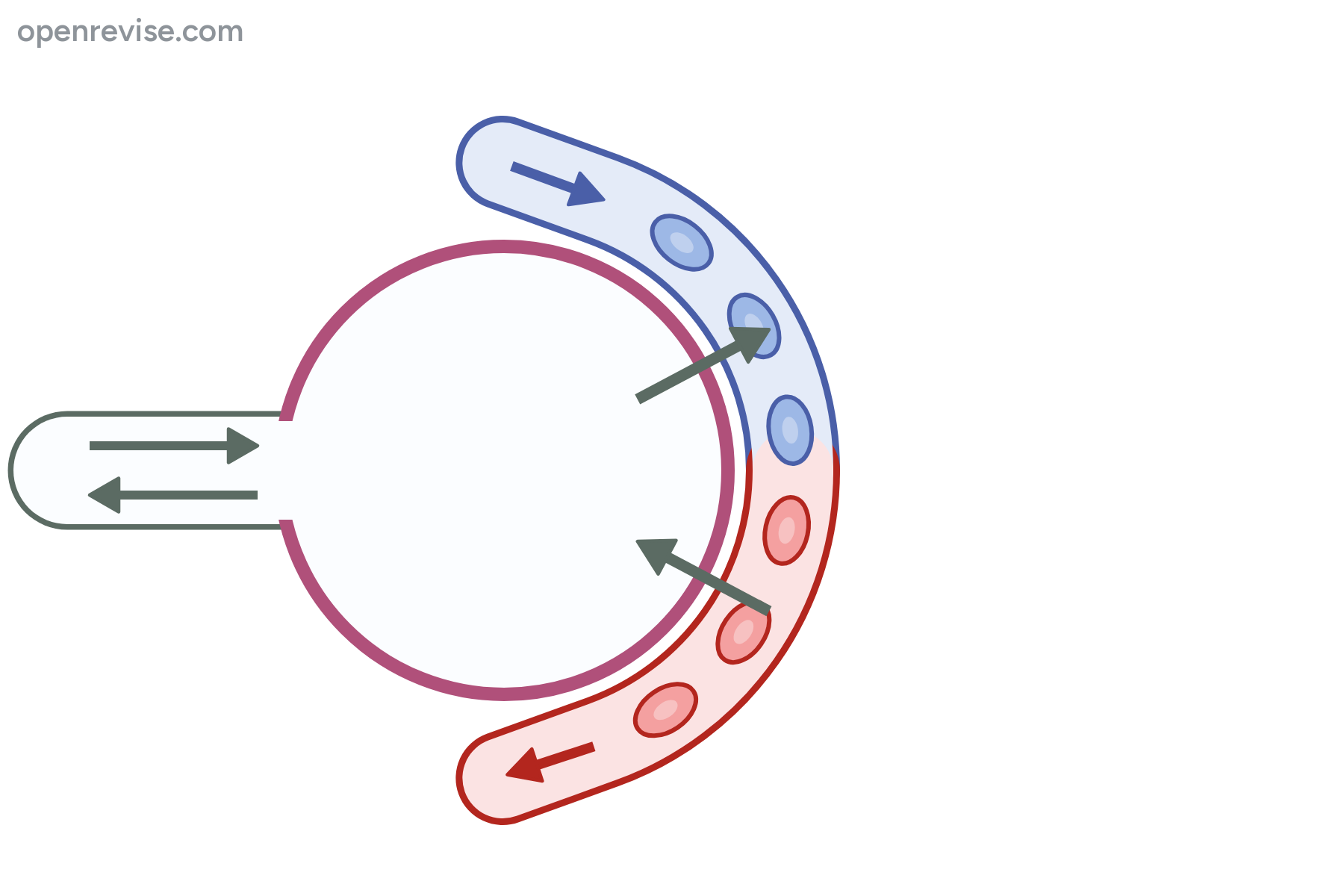 Describe how oxygen and carbon dioxide move in this diagram, and say why the walls are drawn so thin.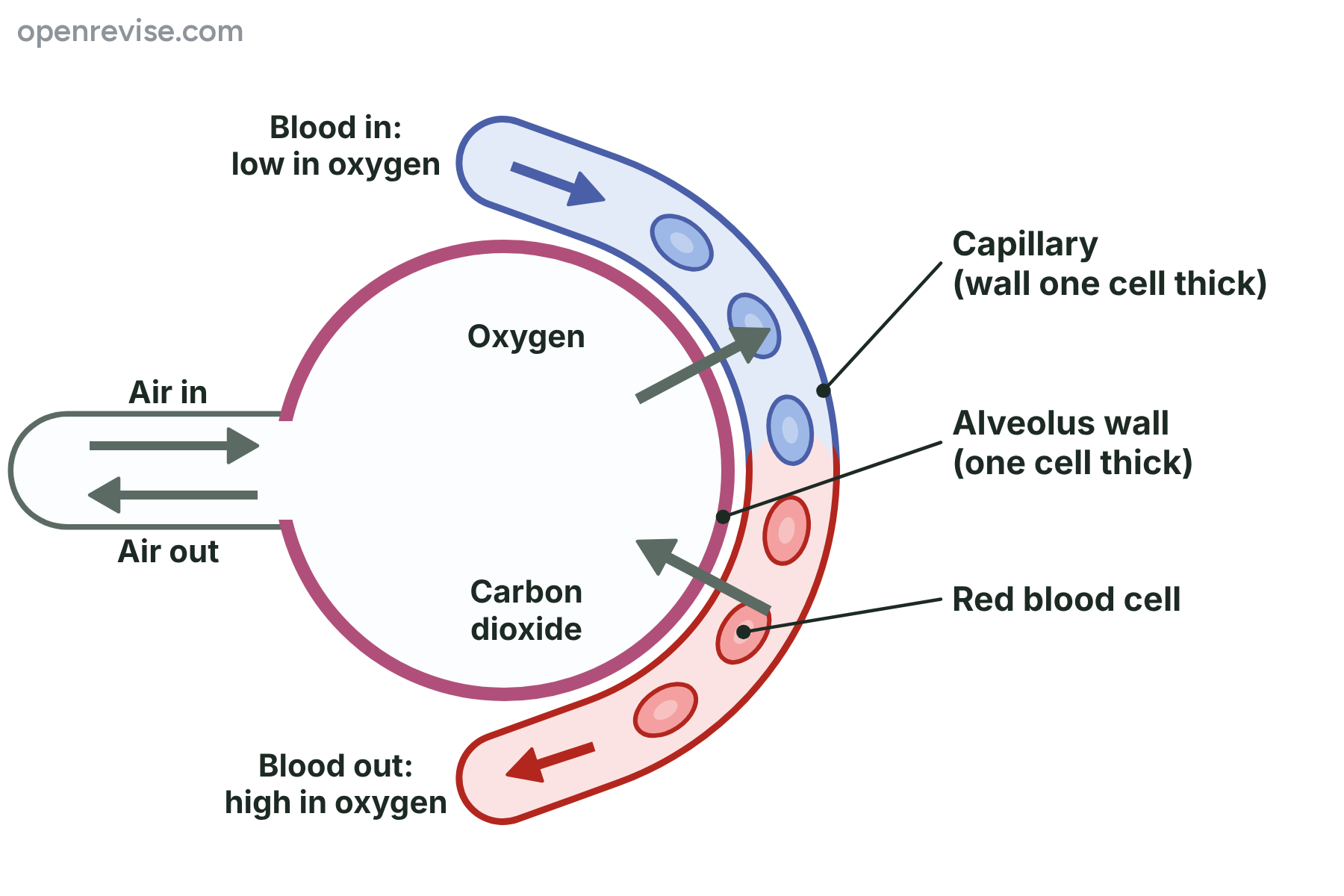
Oxygen diffuses from the air in the alveolus into the blood, and carbon dioxide diffuses from the blood into the alveolus. The walls of the alveolus and capillary are one cell thick, so the diffusion distance is very short.