Flashcards · Biology · Material Cycles
Decomposition, Food Preservation and Composting
-
Which three factors affect the rate of decomposition?
Temperature, water content and oxygen availability.
-
Why does decay speed up as the temperature rises?
The enzymes of the decomposers work faster, until the optimum temperature.
-
Why do very high temperatures stop decay?
The decomposers' enzymes are denatured and the microorganisms are killed.
-
Why do decomposers need water?
Their enzymes work in solution and they absorb nutrients dissolved in water.
-
Why do decomposers need oxygen?
Most respire aerobically, which releases the most energy for growth.
-
Why does a fridge slow down food spoilage?
At about 1 to 5 degrees Celsius the enzymes of microorganisms work slowly.
-
Why does a freezer stop food spoilage?
The water is frozen, so the microorganisms cannot grow.
-
How does drying preserve food?
It removes the water that the microorganisms need.
-
How do salt and sugar preserve food?
Water leaves the microorganisms by osmosis, so they dry out.
-
How does vacuum packing preserve food?
It removes oxygen, so aerobic microorganisms cannot respire.
-
Why are cans heated and sealed?
Heating kills the microorganisms, and the seal keeps out oxygen and new microorganisms.
-
What is compost?
Rotted plant waste, made by decomposers, that is spread on soil.
-
Why does a compost heap get warm?
The decomposers respire, which releases heat.
-
How wet should a compost heap be?
As damp as a squeezed sponge.
-
Why does a waterlogged compost heap rot slowly and smell?
The water drives out the air, so only slow anaerobic decay takes place.
-
Why is a compost heap turned?
To let air in, so the decomposers respire aerobically.
-
Why chop up waste for compost?
A larger surface area lets the decomposers work faster.
-
Give the formula for the rate of decay.
Change in mass divided by time taken.
-
Give the formula for the percentage loss of mass.
(Starting mass minus final mass) divided by starting mass, times 100.
-
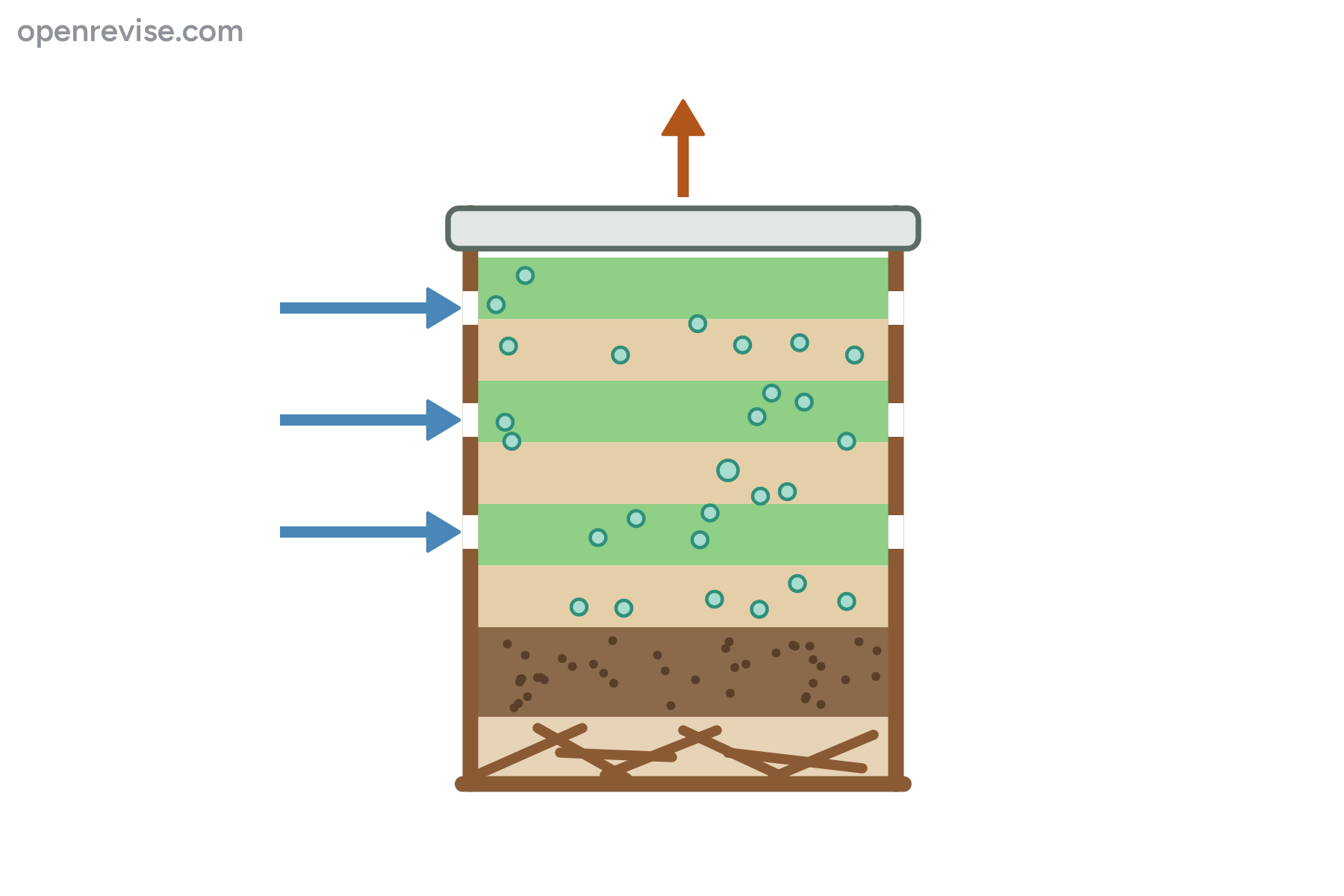 Label the compost bin and say what each feature does for the decomposers.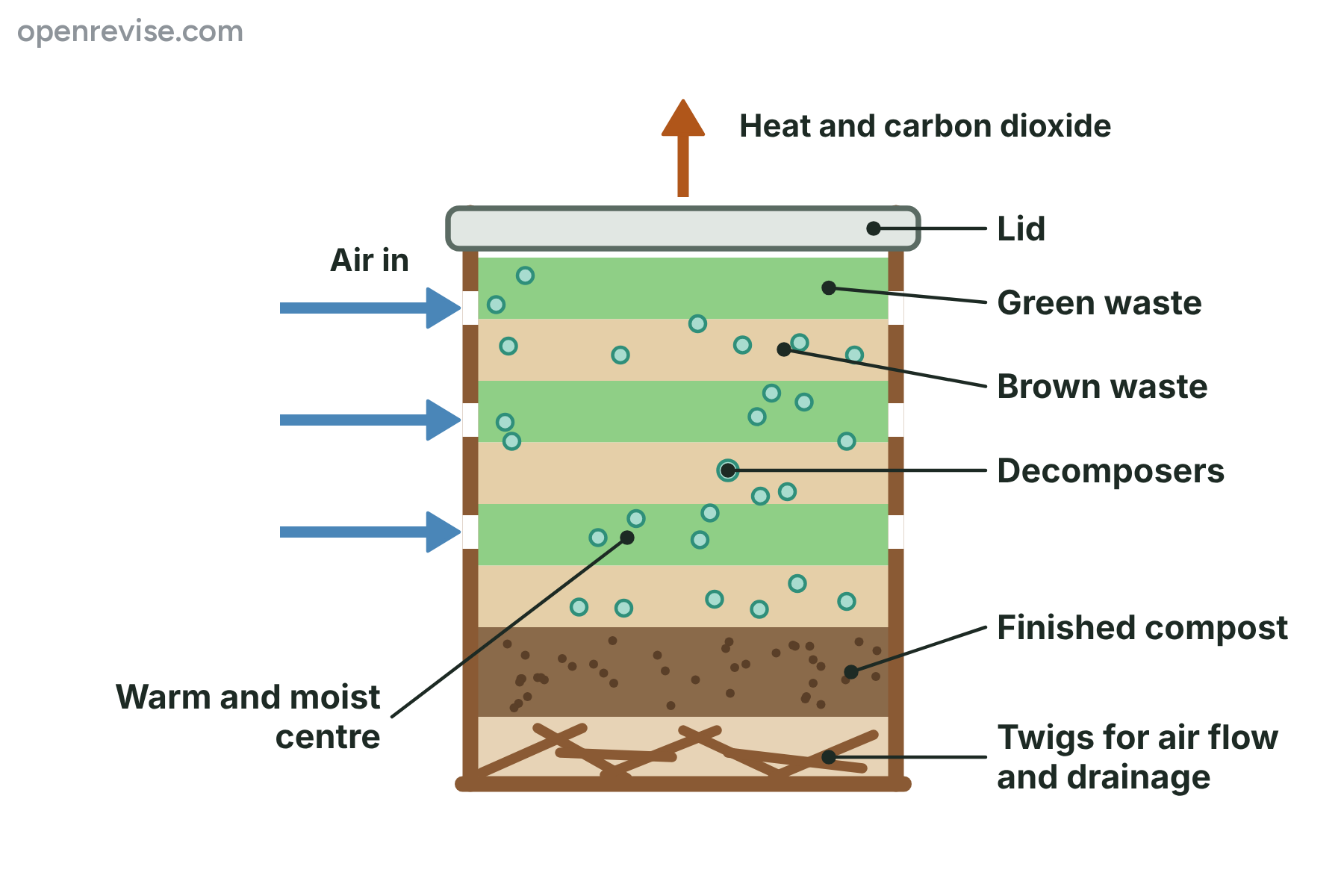
The lid keeps in heat and moisture. Air in through the slots gives the decomposers oxygen. Green and brown waste give food, and the twigs let air in and water drain. The decomposers respire, which releases heat and carbon dioxide.
-
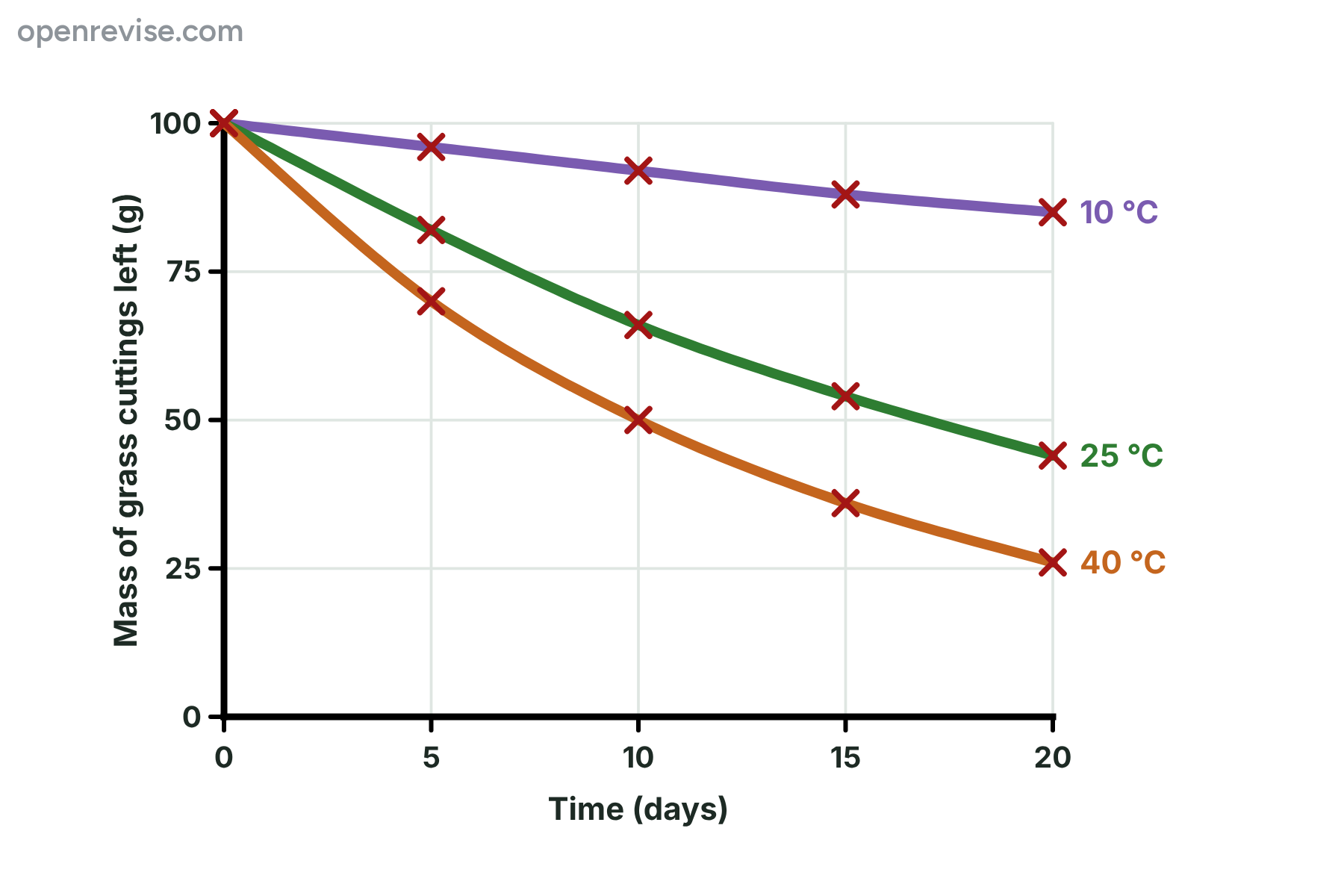 Compare the rates of decay at the three temperatures and explain the pattern.
 Decay is fastest at 40 degrees Celsius, then 25, and slowest at 10. Warmer conditions make the enzymes of the decomposers work faster, so the mass falls faster.