Flashcards · Biology · Respiration
Cellular Respiration and Aerobic Respiration
-
What is respiration?
A series of chemical reactions in living cells that release energy from nutrient molecules such as glucose.
-
How often does respiration happen in a living cell?
Continuously, day and night.
-
What does exothermic mean?
A reaction that transfers energy to the surroundings.
-
Is respiration endothermic or exothermic?
Exothermic.
-
What is metabolism?
All of the chemical reactions that take place in a living organism.
-
Write the word equation for aerobic respiration.
glucose + oxygen → carbon dioxide + water (+ energy)
-
Write the balanced symbol equation for aerobic respiration.
C₆H₁₂O₆ + 6O₂ → 6CO₂ + 6H₂O (+ energy)
-
Where do most of the reactions of aerobic respiration take place?
In the mitochondria.
-
Why do muscle cells have many mitochondria?
They use a lot of energy, and mitochondria release it by aerobic respiration.
-
Do plants respire?
Yes, all of the time, in the light and in the dark.
-
Give three uses of the energy from respiration.
Building large molecules, muscle contraction, keeping warm, active transport (any three).
-
What is the difference between breathing and respiration?
Breathing moves air in and out of the lungs; respiration is the chemical reaction in cells that releases energy.
-
How does oxygen get from the lungs to respiring cells?
It diffuses into the blood, is carried by red blood cells and is pumped round by the heart.
-
What carries glucose to respiring cells?
The blood plasma.
-
How is carbon dioxide removed from the body?
It diffuses into the blood, is carried to the lungs and is breathed out.
-
Why do breathing rate and heart rate rise in exercise?
The muscle cells respire faster, so they need more oxygen and make more carbon dioxide.
-
Respiration and photosynthesis: which one is endothermic?
Photosynthesis takes in light energy. Respiration releases energy.
-
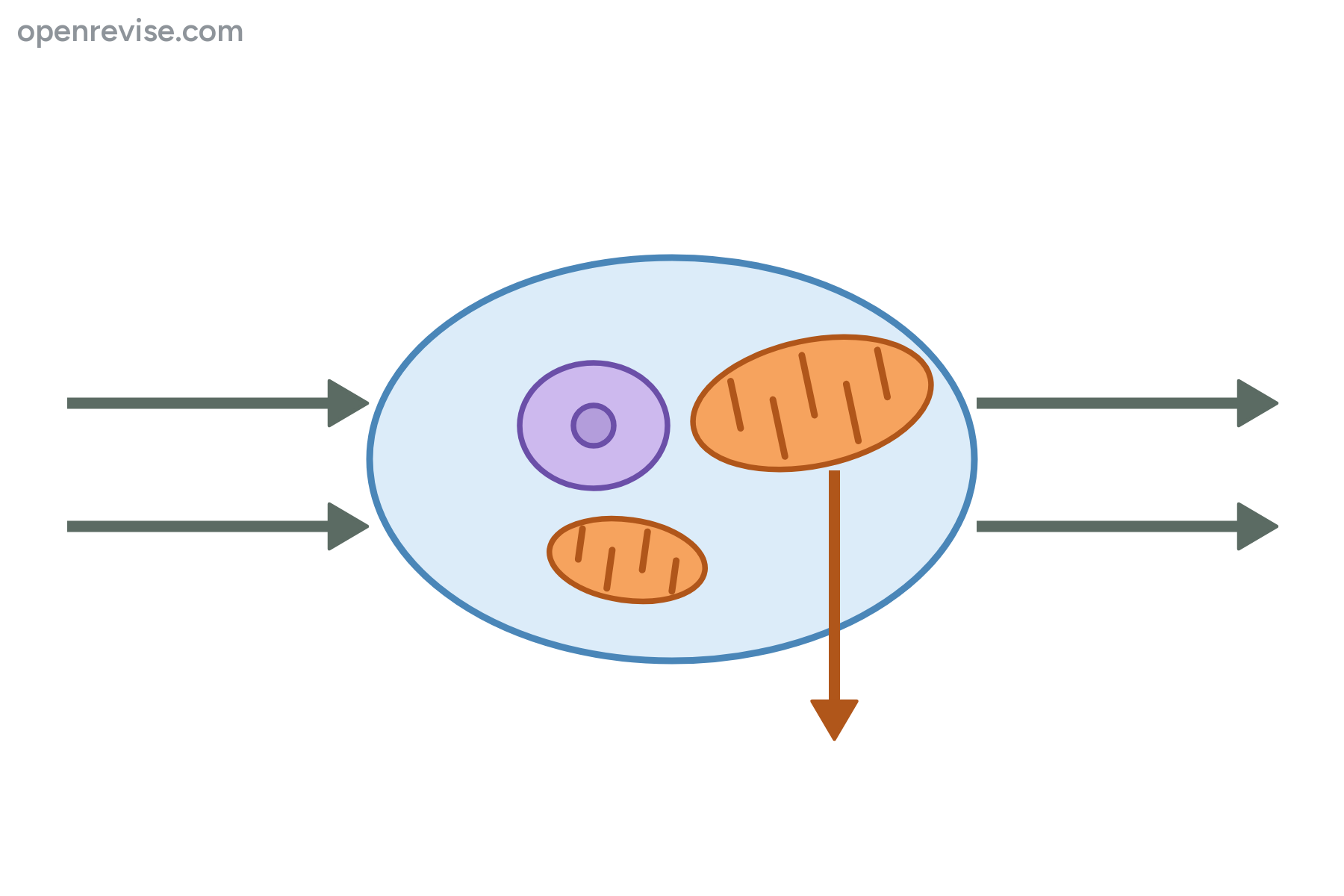 Name the three structures and the four substances shown, and say what is released.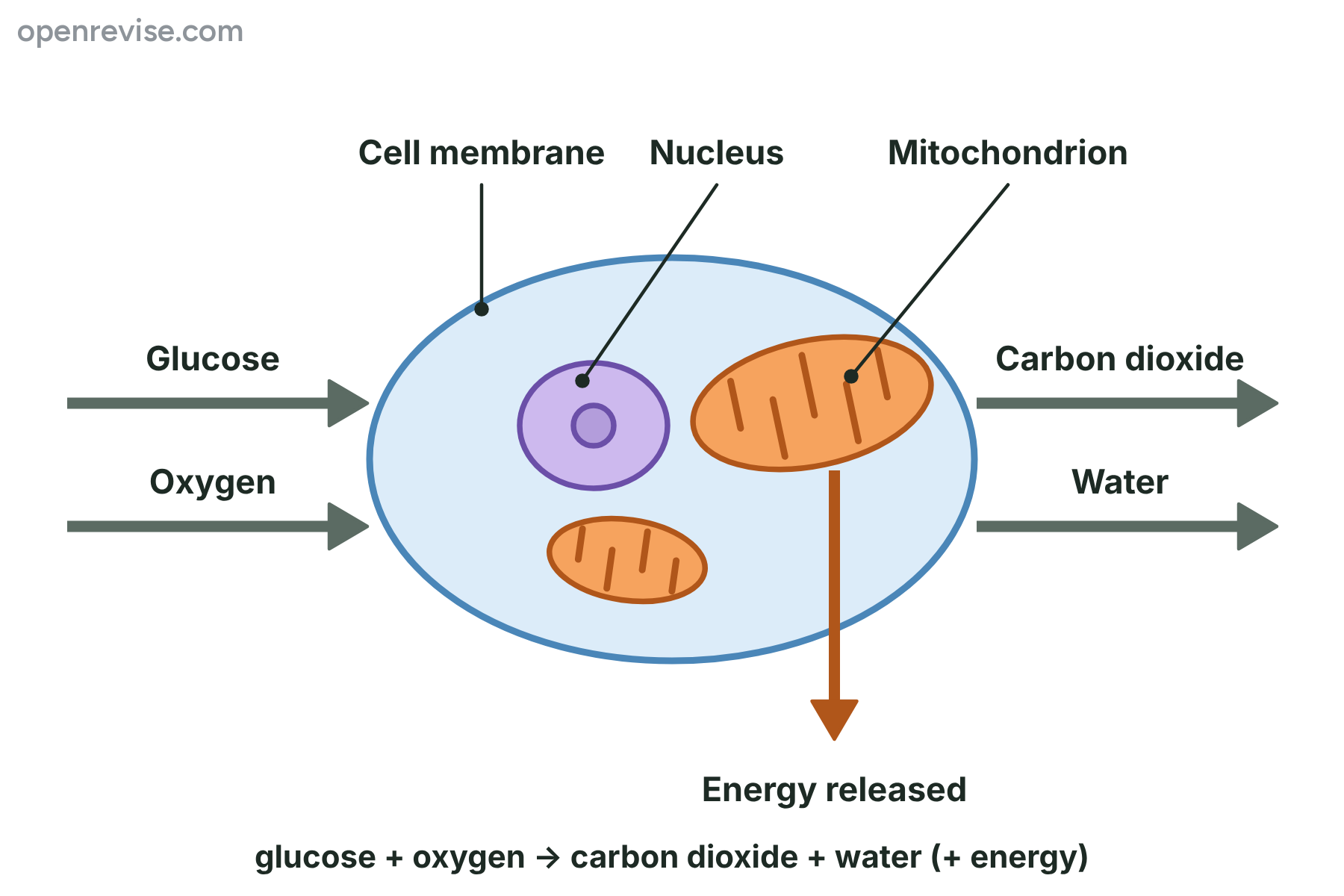
Structures: cell membrane, nucleus, mitochondrion. In: glucose and oxygen. Out: carbon dioxide and water. Energy is released from the mitochondrion.
-
Describe how oxygen reaches the respiring cells and how carbon dioxide leaves the body.
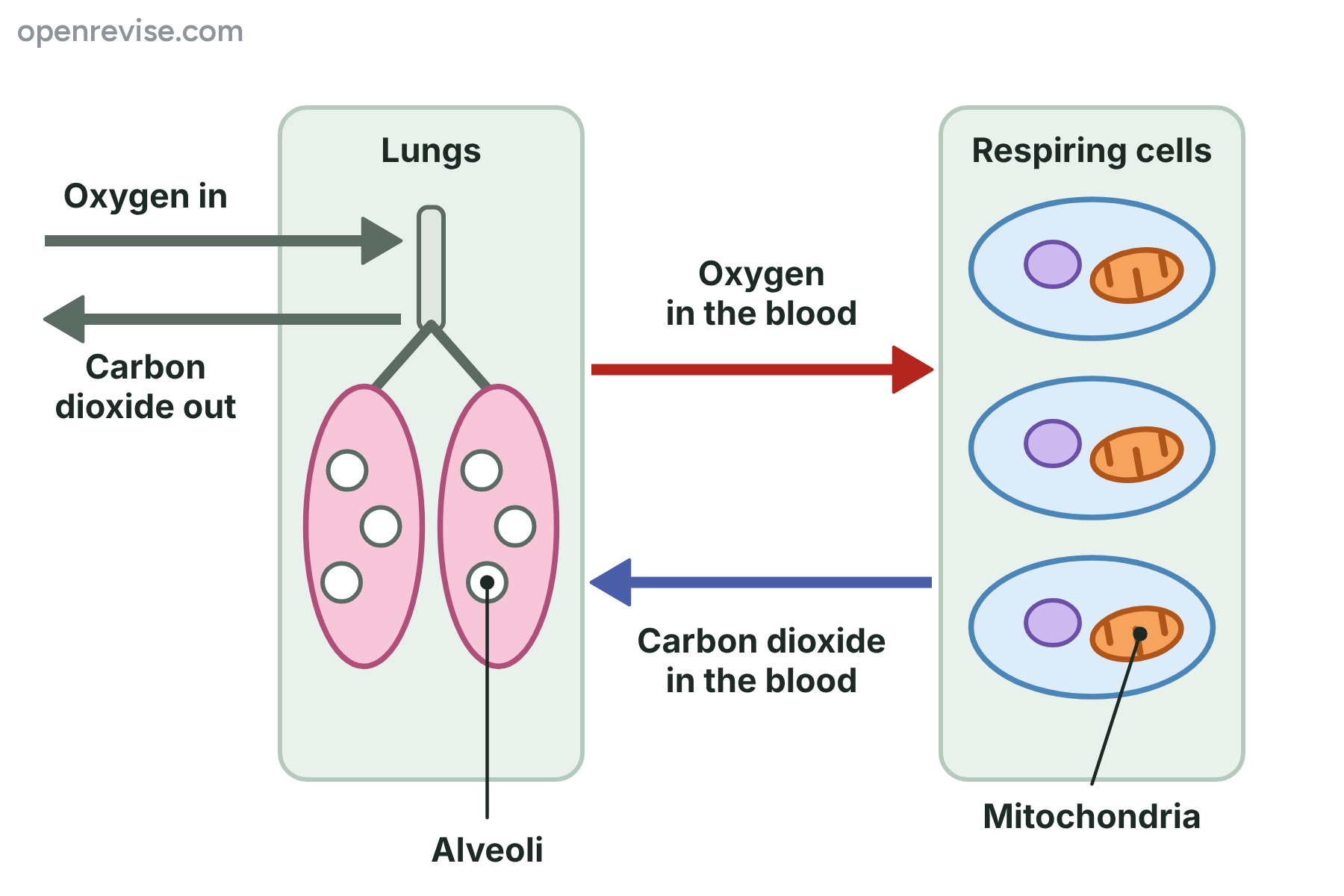
Oxygen is breathed into the lungs and diffuses into the blood at the alveoli. The blood carries it to the cells, where it is used in the mitochondria. Carbon dioxide diffuses into the blood, is carried to the lungs and is breathed out.