Flashcards · Biology · Respiration
Anaerobic Respiration
-
What is anaerobic respiration?
The release of energy from glucose without using oxygen.
-
Word equation for anaerobic respiration in muscles?
glucose → lactic acid (+ a small amount of energy)
-
Word equation for anaerobic respiration in yeast?
glucose → ethanol + carbon dioxide (+ a small amount of energy)
-
What is anaerobic respiration in yeast called?
Fermentation.
-
When do muscles respire anaerobically?
During vigorous exercise, when the blood cannot supply oxygen fast enough.
-
What causes muscle fatigue?
A build-up of lactic acid in the muscles.
-
What is the oxygen debt?
The extra oxygen needed after exercise to break down the lactic acid.
-
Where is lactic acid broken down?
In the liver, using oxygen.
-
Why do you keep panting after a sprint?
To take in the extra oxygen needed to repay the oxygen debt.
-
Which type of respiration releases more energy per glucose molecule?
Aerobic respiration.
-
Why does anaerobic respiration release less energy?
The glucose is only partly broken down, and the lactic acid or ethanol still holds energy.
-
Which type of respiration makes lactic acid, and which makes ethanol?
Muscles make lactic acid; yeast makes ethanol and carbon dioxide.
-
Why is carbon dioxide useful in baking?
It forms bubbles that make the dough rise.
-
Why is ethanol useful in brewing?
It makes beer and wine alcoholic.
-
Why do brewers seal the vessel?
To keep oxygen out, so that the yeast ferments instead of respiring aerobically.
-
What happens to heart rate and breathing rate during exercise?
Both increase, to supply the muscles with more oxygen and remove carbon dioxide.
-
How do you calculate a percentage increase?
Increase divided by the original value, times 100.
-
Where does anaerobic respiration take place in the cell?
In the cytoplasm.
-
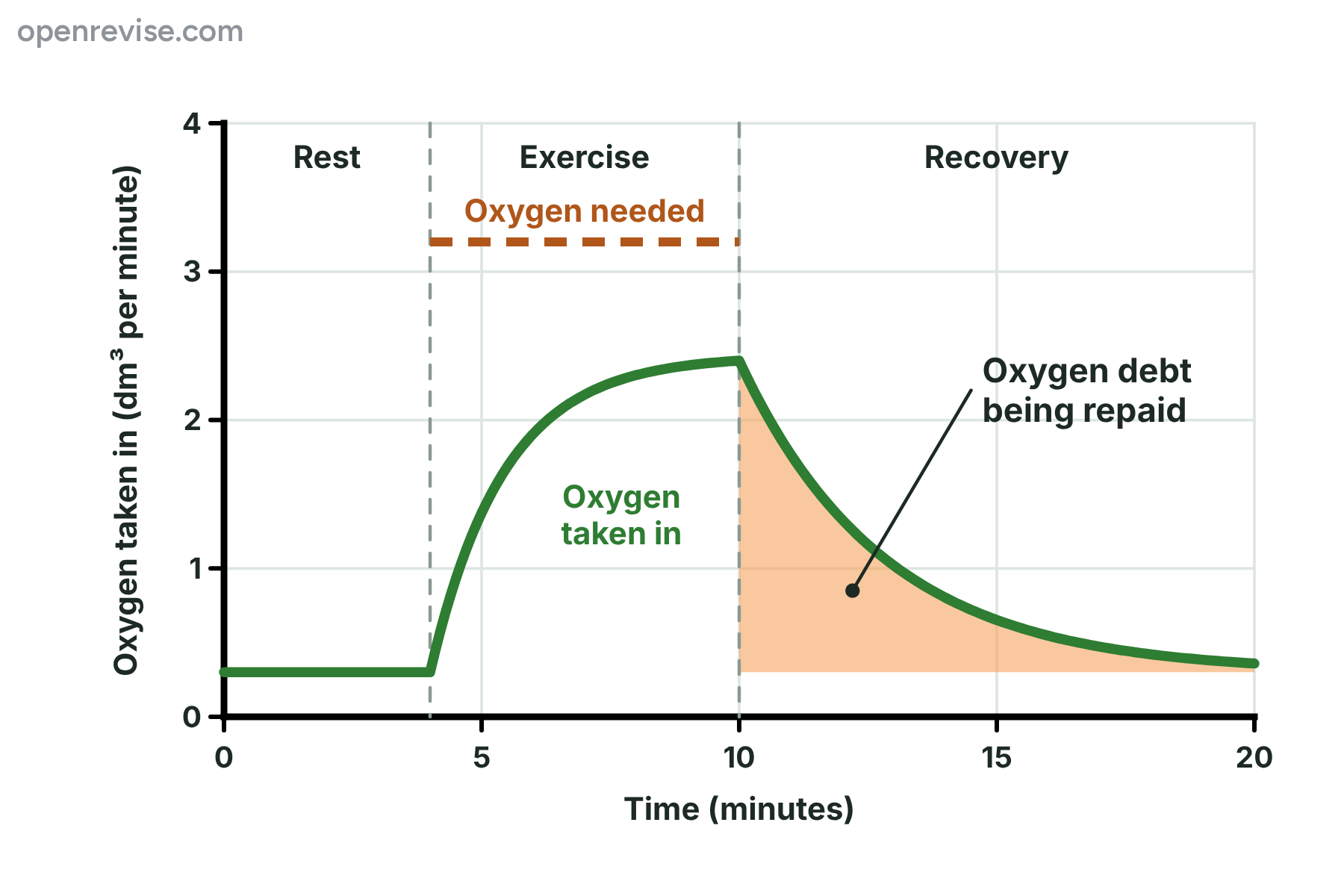 Describe what the shaded area on the graph shows.
 The shaded area is the oxygen debt being repaid. After vigorous exercise the body takes in extra oxygen to break down the lactic acid that built up in the muscles.
-
 Compare the three kinds of respiration. Name the products and say how much energy each releases.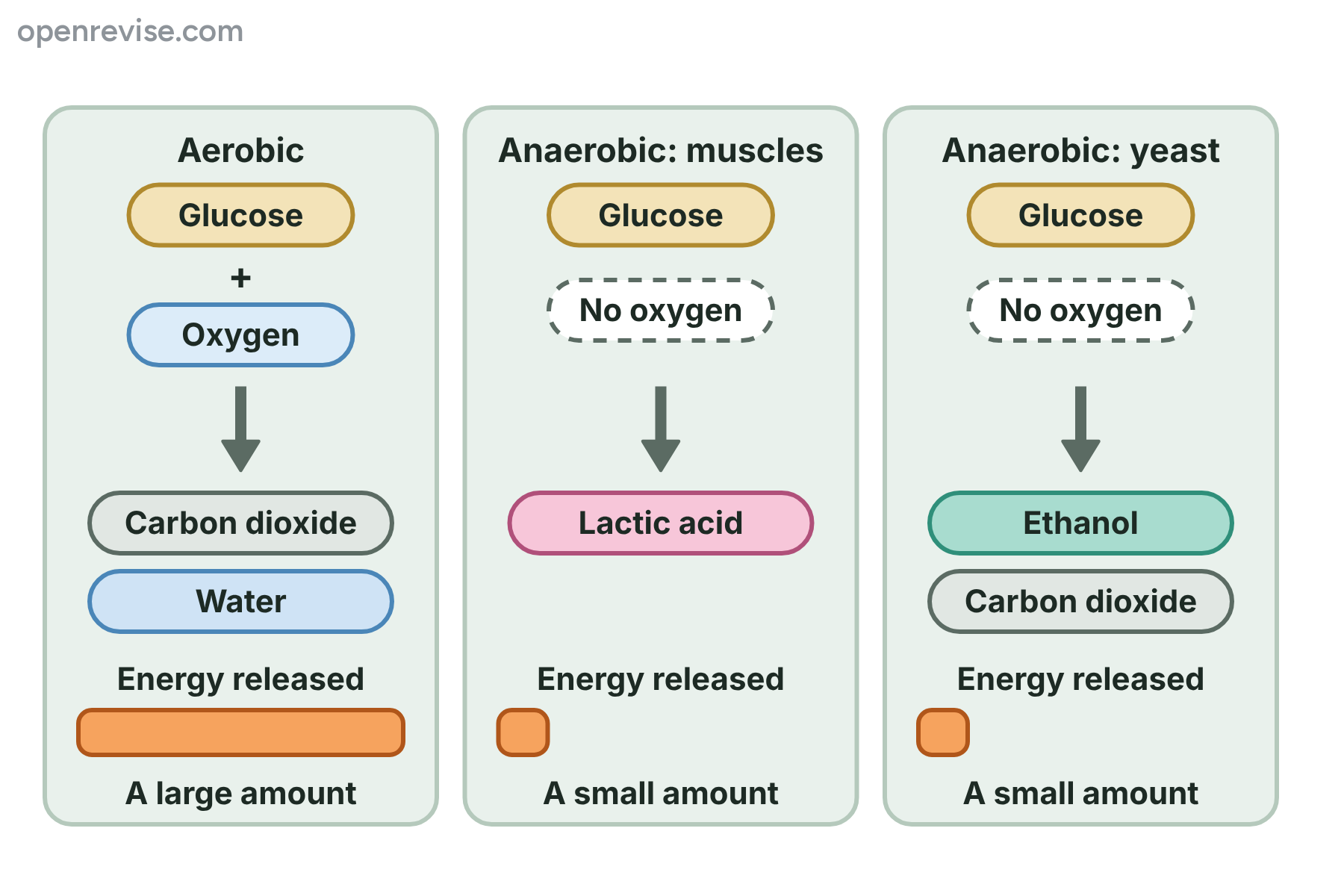
Aerobic: glucose + oxygen gives carbon dioxide + water and a large amount of energy. Muscles: glucose gives lactic acid and a small amount of energy. Yeast: glucose gives ethanol + carbon dioxide and a small amount of energy.