Flashcards · Biology · Homeostasis
The Kidneys and Water Balance
-
What happens to an animal cell in a dilute solution?
Water enters by osmosis, so it swells and may burst.
-
What happens to an animal cell in a concentrated solution?
Water leaves by osmosis, so it shrinks.
-
What do the kidneys remove from the blood?
Urea, excess water and excess mineral ions.
-
Where is urea made?
In the liver, from excess amino acids.
-
What carries urine from the kidney to the bladder?
The ureter.
-
What is a nephron?
The tiny filtering unit of the kidney.
-
What is the glomerulus?
A knot of capillaries inside the Bowman's capsule.
-
What passes into the Bowman's capsule during filtration?
Water, glucose, urea and mineral ions.
-
What is not filtered out of the blood?
Blood cells and proteins.
-
What is selective reabsorption?
All the glucose, some water and some ions are taken back into the blood.
-
How is glucose reabsorbed?
By active transport.
-
What is ADH? (Higher tier)
A hormone that controls how much water the kidneys reabsorb.
-
Where is ADH released from? (Higher tier)
The pituitary gland.
-
What does ADH do to the collecting duct? (Higher tier)
Makes it more permeable to water.
-
Why is the urine concentrated after exercise? (Higher tier)
Water is lost in sweat, so more ADH is released and more water is reabsorbed.
-
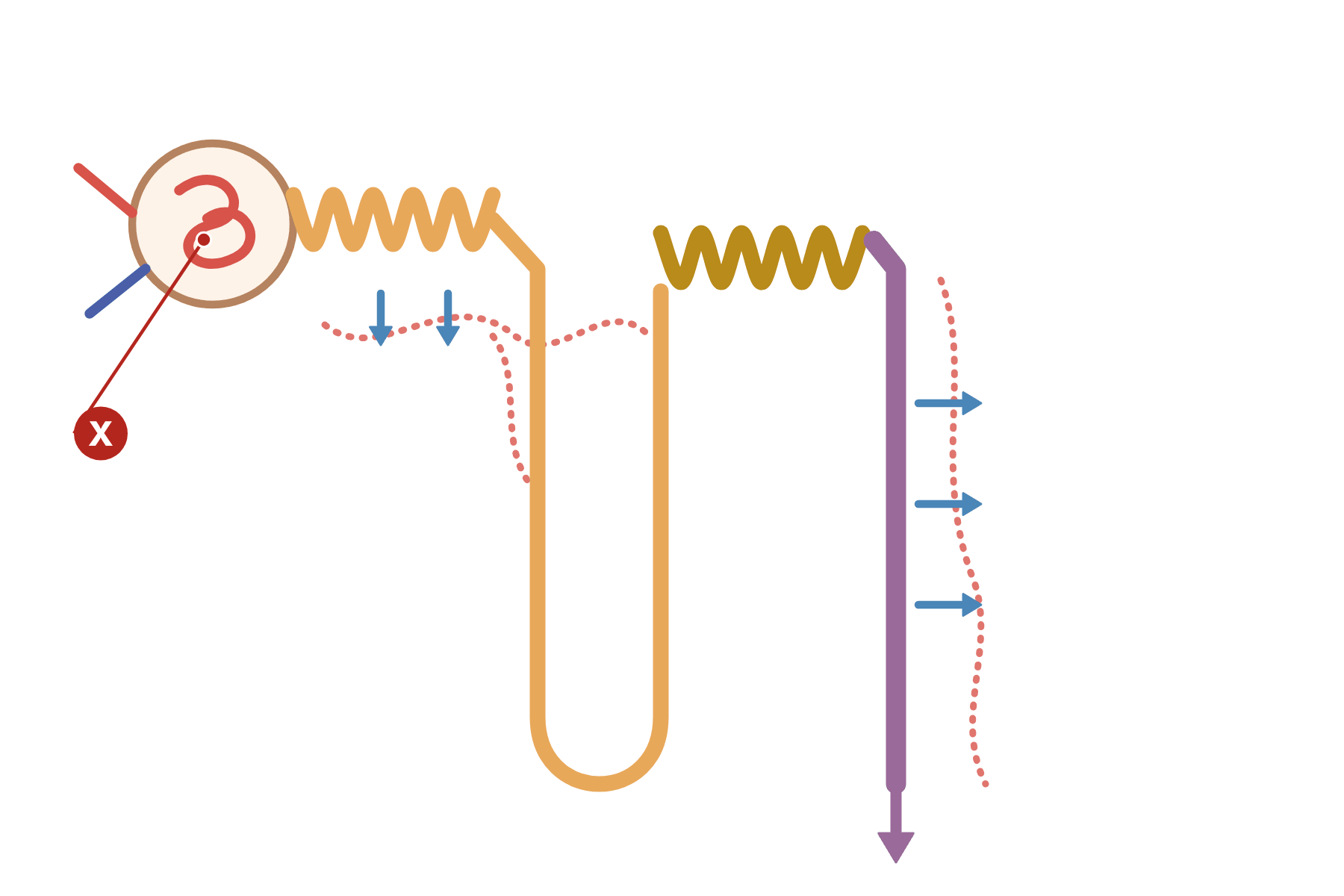 Name the part of the nephron marked X and say what happens there.
 The glomerulus. Blood is filtered here under high pressure, and small molecules pass into the Bowman's capsule.
-
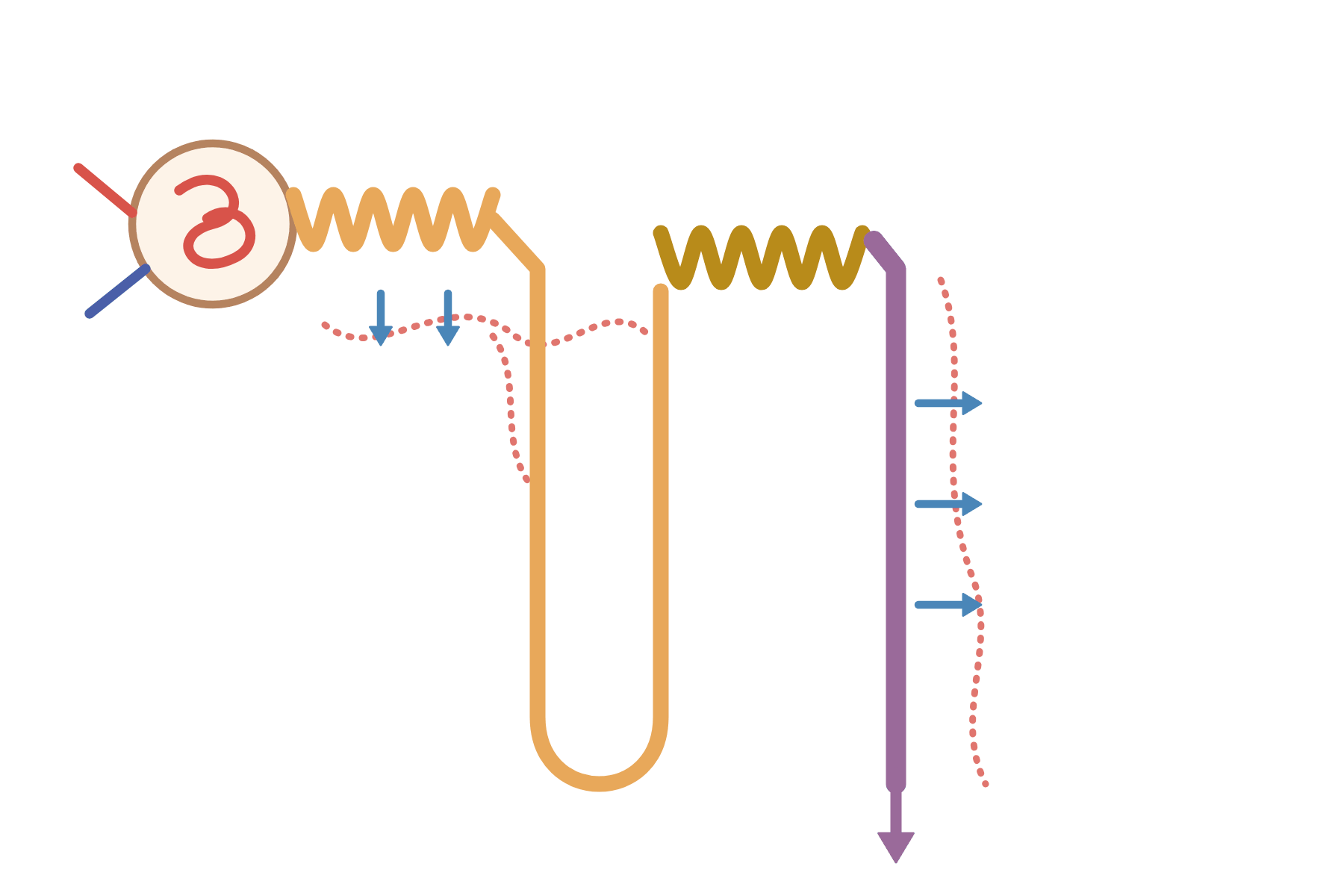 Label the parts of the nephron.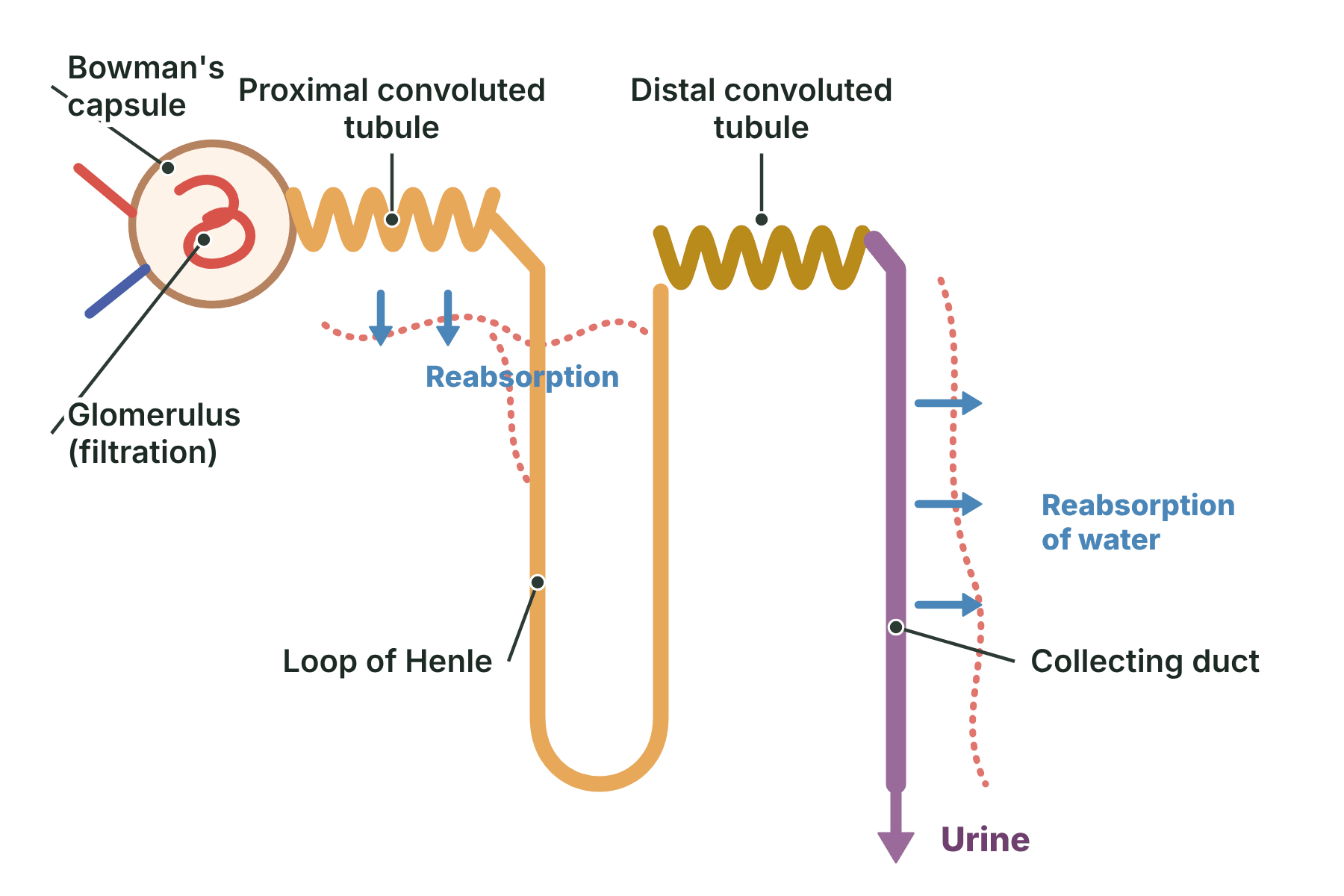
Bowman's capsule, glomerulus, proximal convoluted tubule, loop of Henle, distal convoluted tubule and collecting duct.
-
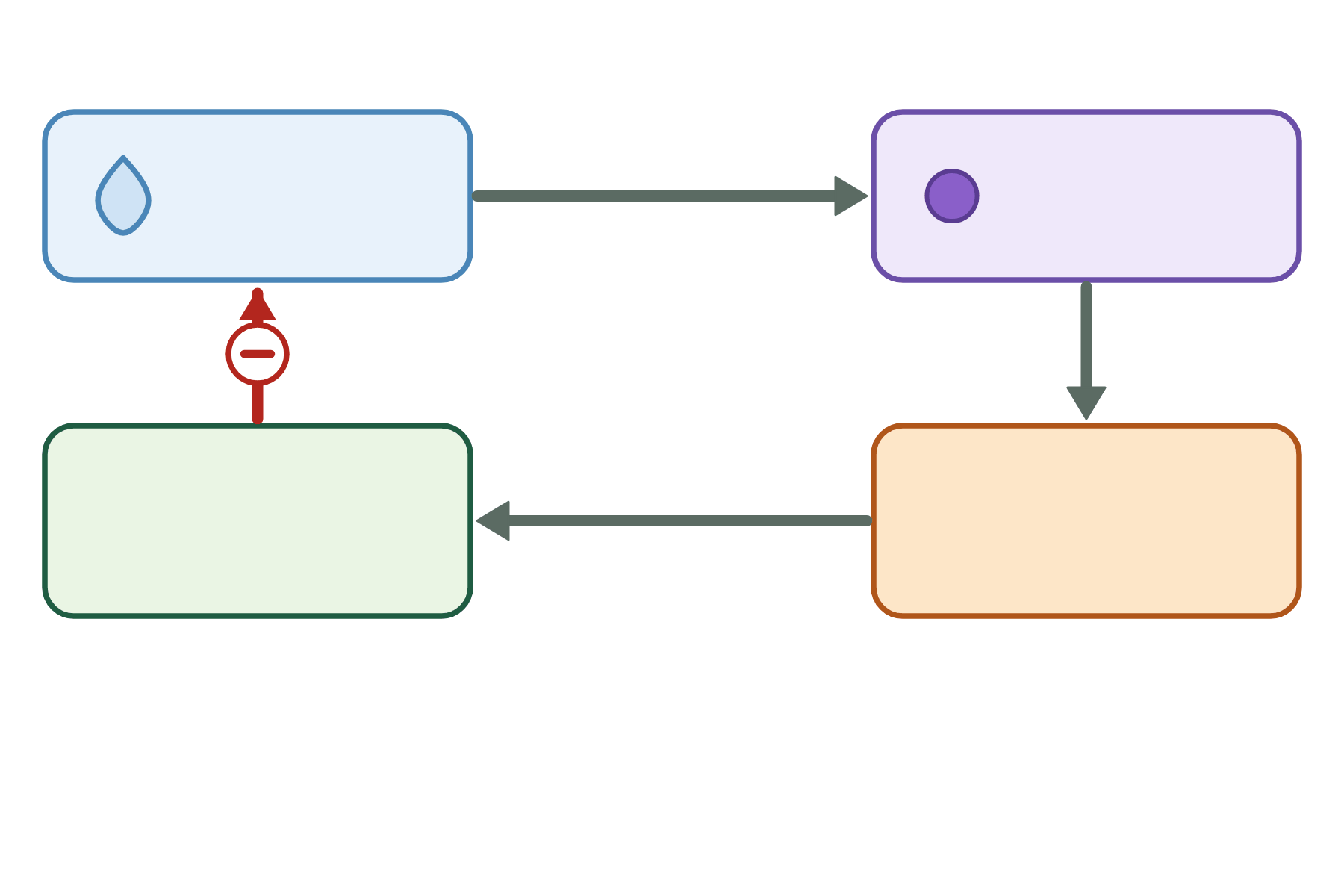 Describe how ADH keeps the water content of the blood constant.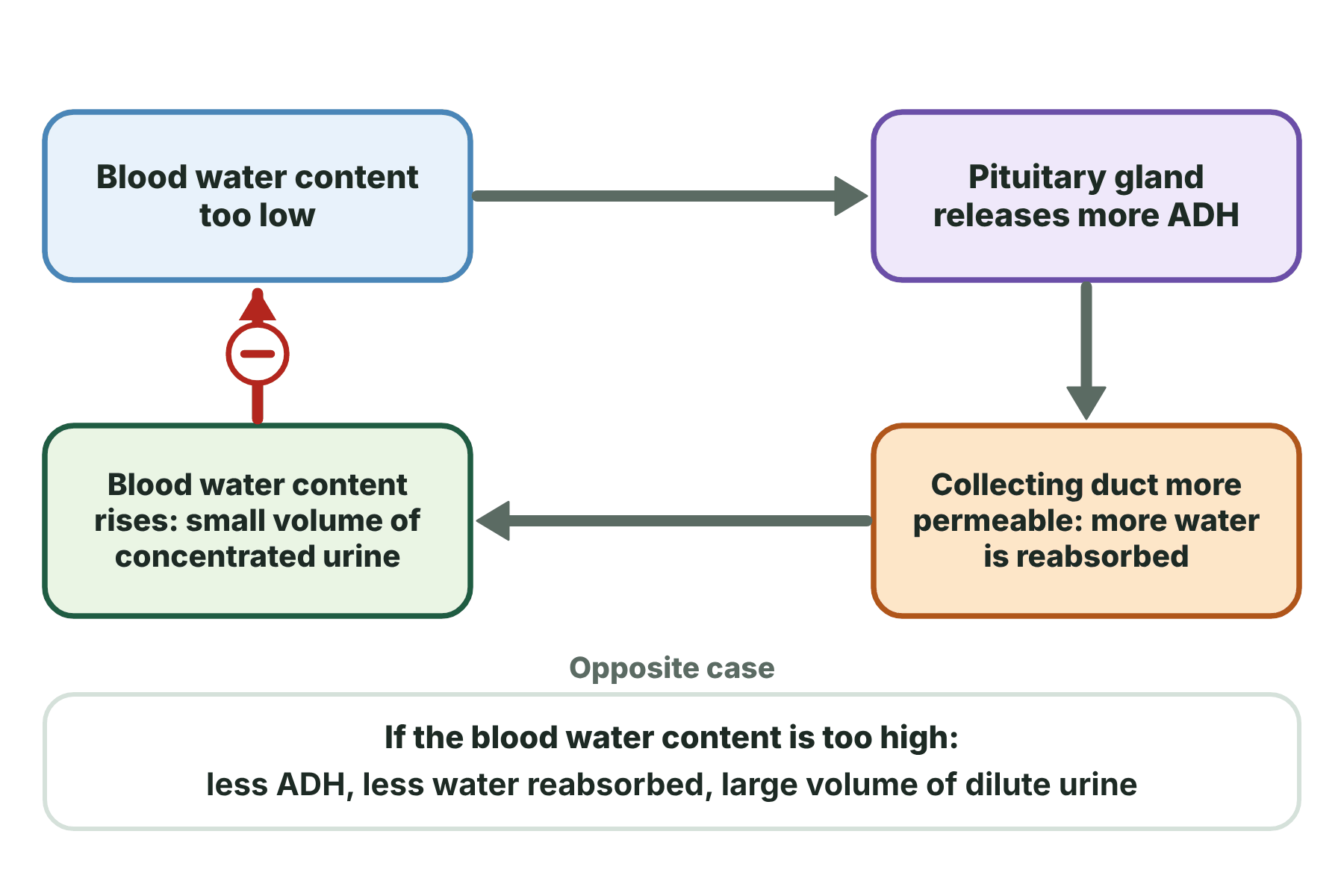
If the blood is too concentrated the pituitary releases more ADH. The collecting duct is more permeable, so more water is reabsorbed and the blood becomes less concentrated. If the blood is too dilute less ADH is released (Higher tier).