Flashcards · Biology · Respiration and Biological Molecules
Monomers and Polymers
-
What is a monomer?
A small molecule that can join with many others to make a polymer.
-
What is a polymer?
A large molecule made of many monomers joined together.
-
What are the monomers of carbohydrates?
Sugars.
-
Name three carbohydrates made from sugars.
Starch, glycogen and cellulose.
-
What are the monomers of proteins?
Amino acids.
-
What is a lipid made from?
One molecule of glycerol and three molecules of fatty acids.
-
Which enzyme breaks down carbohydrates?
Carbohydrase, such as amylase.
-
Which enzyme breaks down proteins?
Protease.
-
Which enzyme breaks down lipids?
Lipase.
-
What are lipids broken down into?
Fatty acids and glycerol.
-
What does the body need to synthesise new molecules?
Enzymes and energy from respiration.
-
What is the test for starch?
Iodine solution turns from orange-brown to blue-black.
-
What is the test for sugars?
Benedict's reagent, heated, turns from blue to green, yellow, orange or brick-red.
-
What is the test for protein?
Biuret reagent turns from blue to purple.
-
What is the test for lipids?
Shake with ethanol, then add water: a cloudy white emulsion.
-
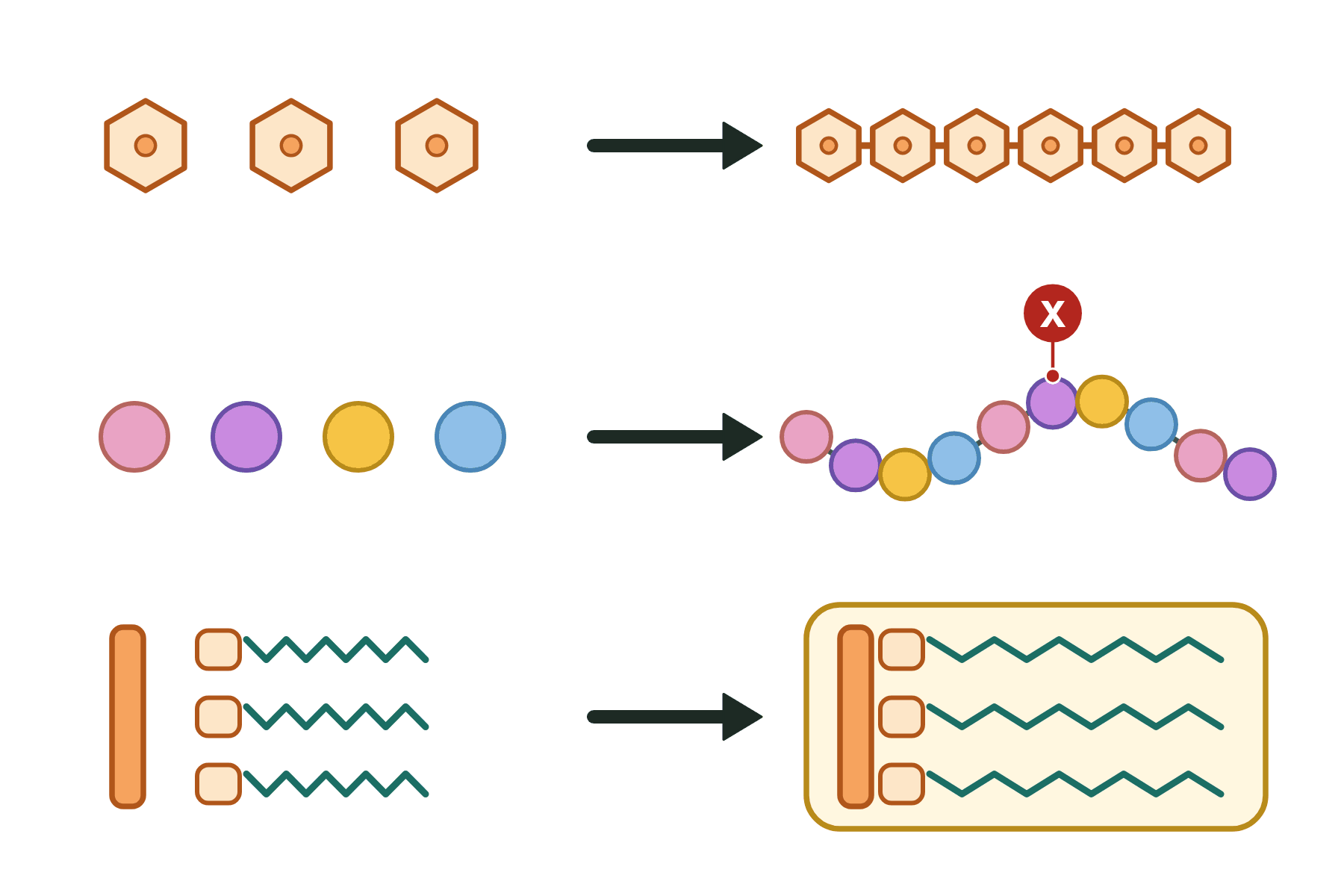 Name the large molecule marked X and the monomers it is made from.
 A protein. It is a polymer made of amino acids.
-
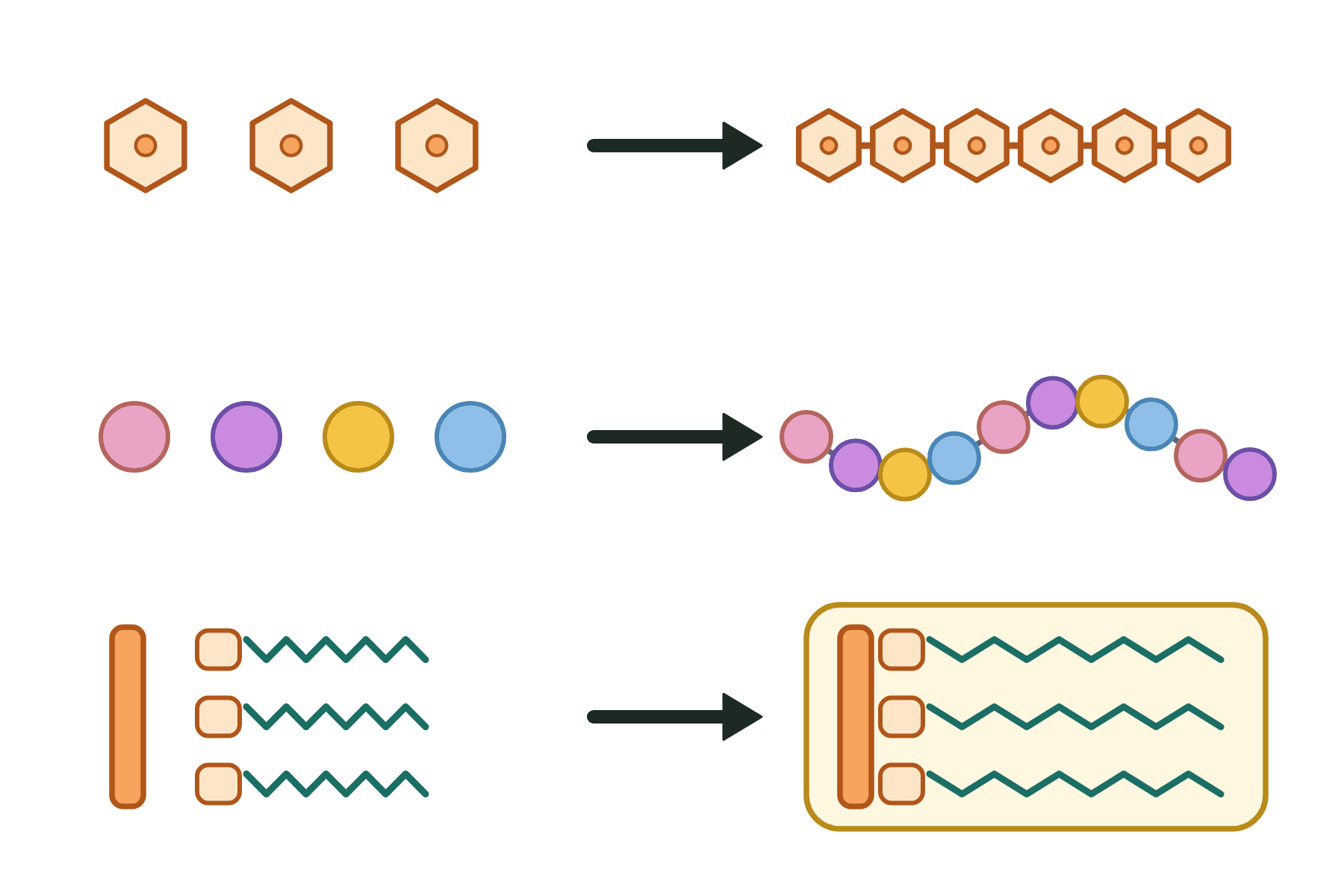 Name each large molecule and what it is made from.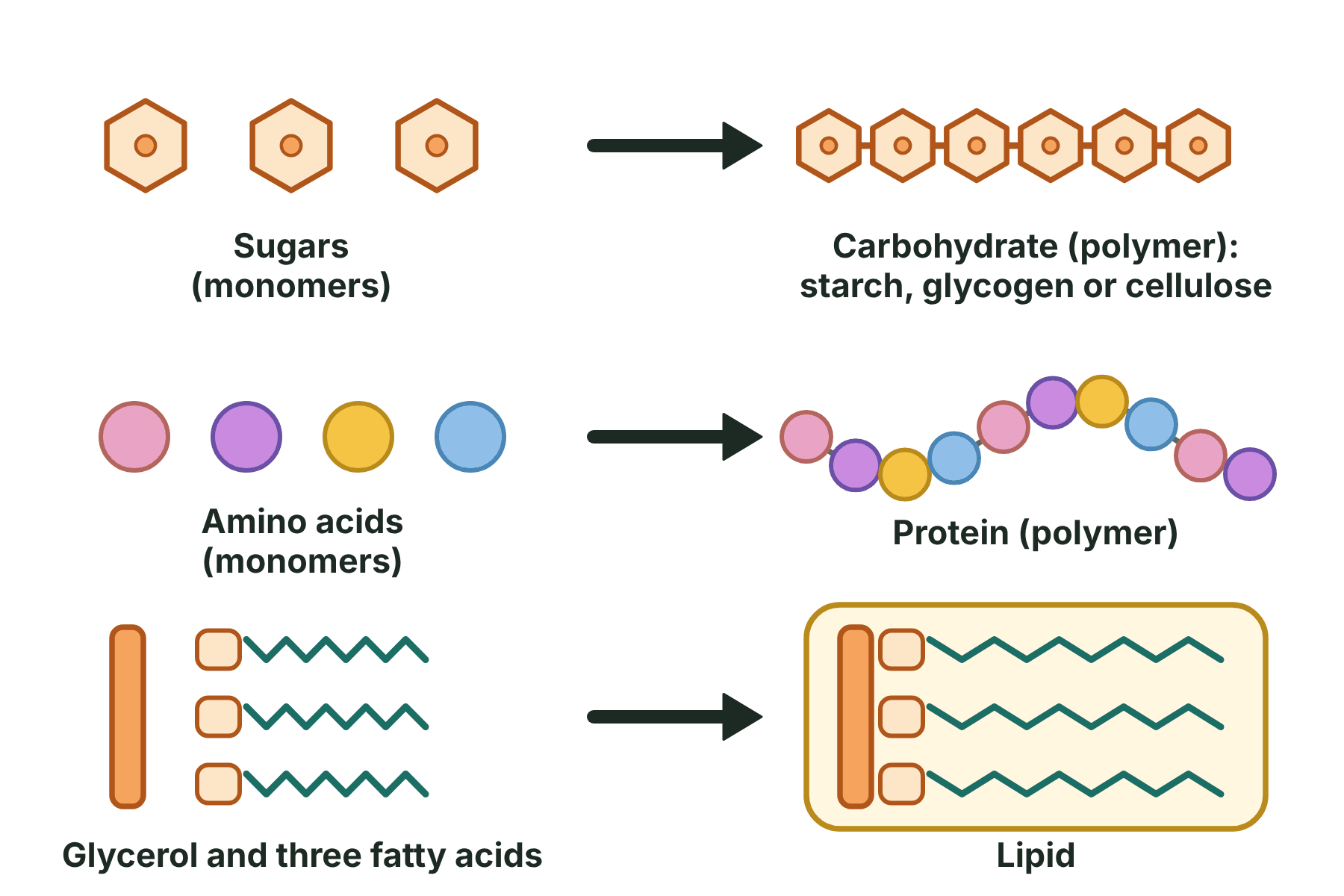
Sugars make a carbohydrate. Amino acids make a protein. One glycerol and three fatty acids make a lipid.