Flashcards · Biology · Communities in Ecosystems
Abiotic and Biotic Factors
-
What are abiotic factors?
The non-living factors in an ecosystem.
-
What are biotic factors?
The living factors in an ecosystem.
-
Name four abiotic factors.
Temperature, light intensity, moisture level and soil pH.
-
Name three biotic factors.
Predators, food and disease.
-
Why does light intensity affect plants?
They need light for photosynthesis.
-
How does soil pH affect plants?
It changes how well the roots take up minerals, so it decides which plants grow.
-
What happens to prey if predators increase?
The population of the prey falls.
-
What happens to an animal population if its food runs out?
It falls.
-
What is a quadrat used for?
To sample the organisms in a small area.
-
What is a transect?
A line along which samples are taken to see how species change.
-
How can you measure light intensity?
With a light meter.
-
How can you measure soil pH?
With a pH probe or indicator.
-
Why take many samples?
To get a reliable mean that represents the whole area.
-
Does a pattern in data prove cause?
No, other factors could also be involved.
-
Why do bluebells flower in early spring?
Light reaches the woodland floor before the trees grow leaves.
-
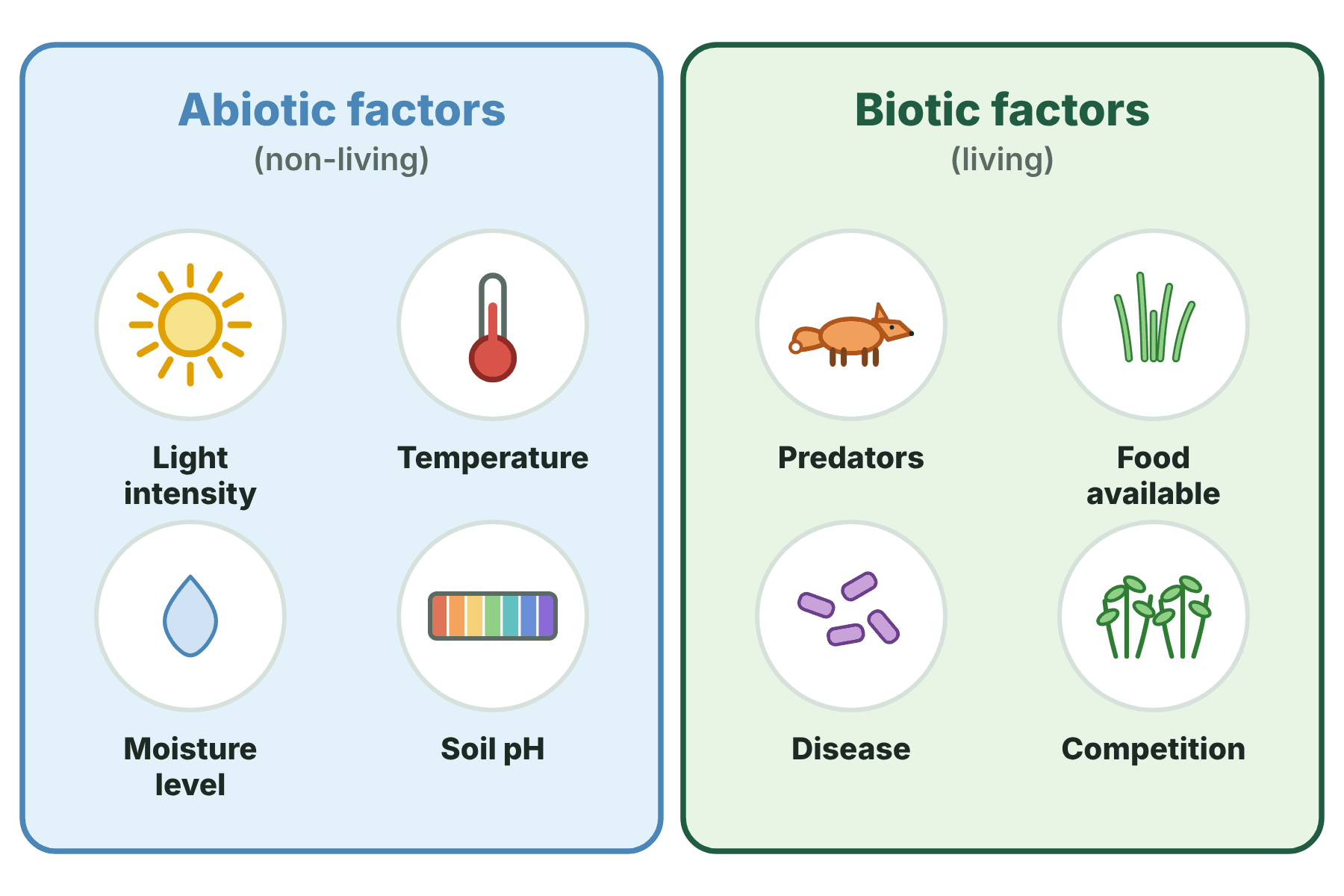 Sort these factors into abiotic and biotic.
 Abiotic (non-living): light intensity, temperature, moisture level, soil pH. Biotic (living): predators, food, disease, competition.