Flashcards · Biology · Communities in Ecosystems
Trophic Levels, Pyramids of Biomass and Efficiency
-
What is a trophic level?
The position of an organism in a food chain.
-
Which organisms are at trophic level 1?
Producers.
-
What is a primary consumer?
An animal that eats producers.
-
What is a secondary consumer?
An animal that eats primary consumers.
-
What does an arrow in a food chain show?
The direction in which biomass is transferred.
-
What does a pyramid of biomass show?
The mass of living material at each trophic level.
-
Why are biomass pyramids used instead of numbers?
One large organism can have a huge biomass but count as one.
-
Name four ways that biomass is lost between trophic levels.
Parts not eaten, egestion, excretion and respiration.
-
What is egestion?
The loss of undigested food as faeces.
-
What is excretion?
The loss of waste substances such as urea.
-
Why does respiration reduce the biomass passed on?
The carbon is lost as carbon dioxide, and the energy is released.
-
What is the formula for efficiency?
Biomass transferred divided by biomass available, times 100.
-
What is the typical efficiency of a biomass transfer?
About 10 per cent.
-
Why are food chains short?
So much biomass is lost at each step that there is too little left at the top.
-
Why can plants feed more people than meat?
Fewer trophic levels, so less biomass is lost.
-
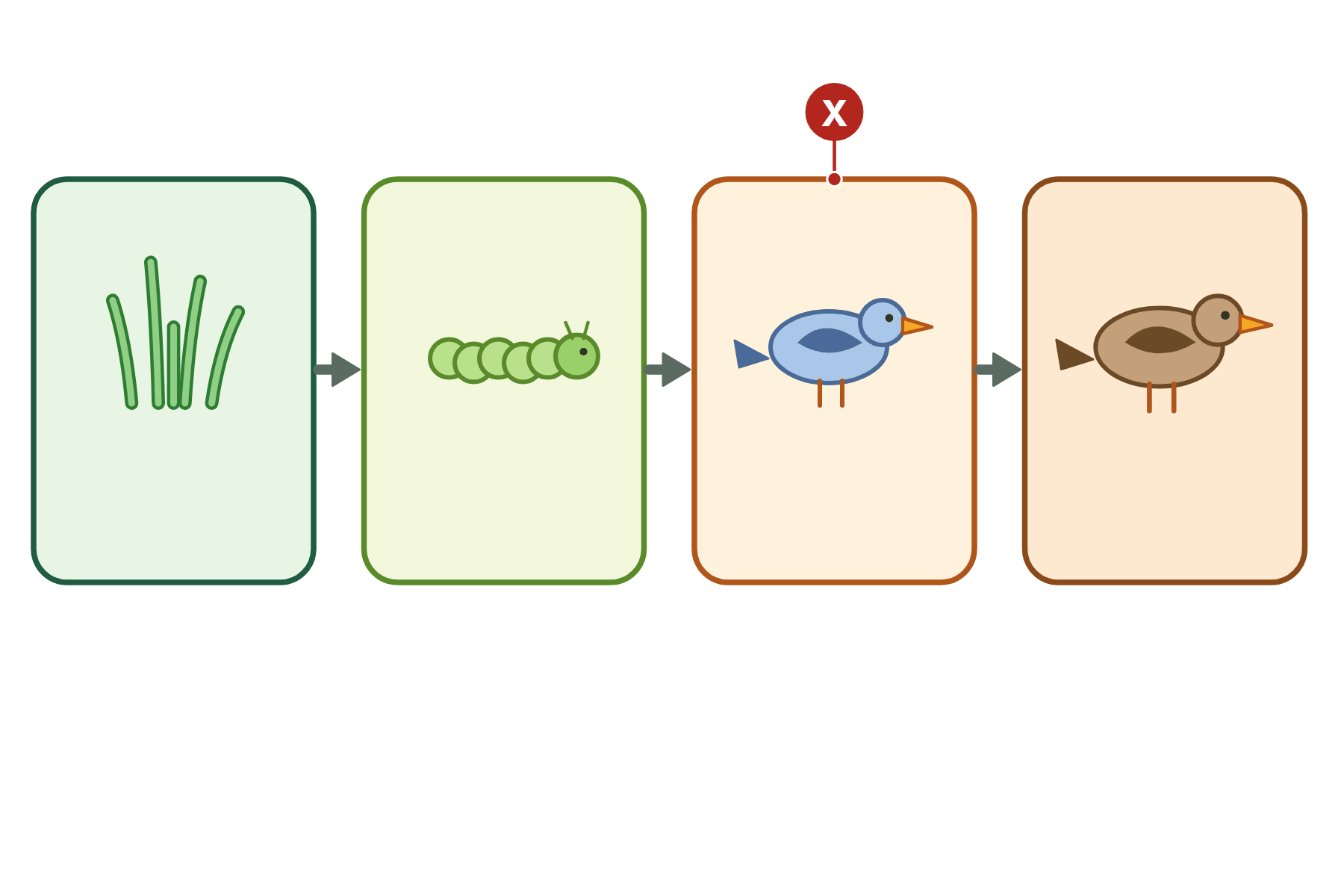 Name the trophic level marked X.
 The secondary consumer, trophic level 3. It eats the primary consumer, the caterpillar.
-
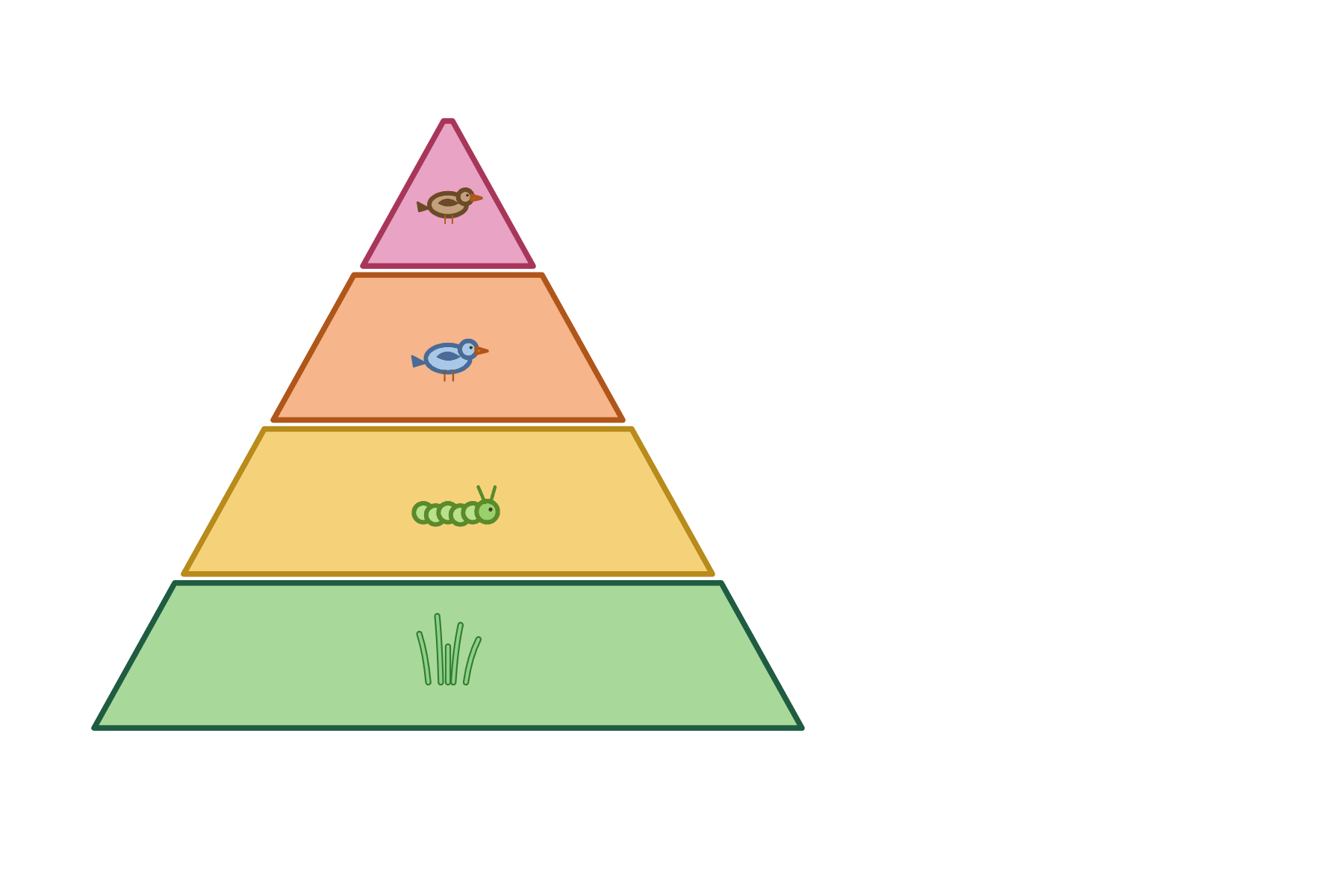 Label each level of this pyramid and say what it shows.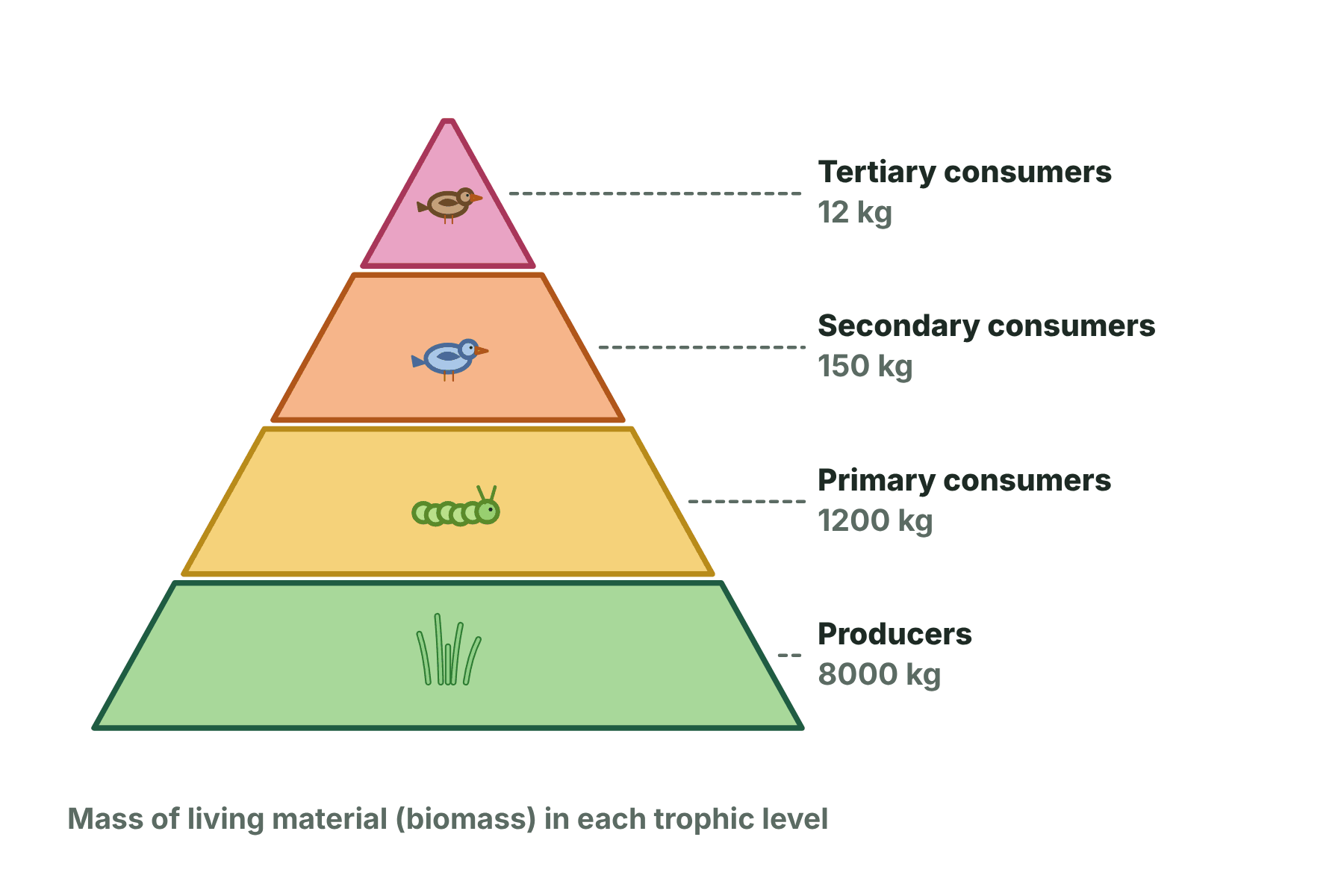
From the bottom: producers, primary consumers, secondary consumers, tertiary consumers. It shows the mass of living material, the biomass, at each trophic level, which gets smaller at each step.