Flashcards · Biology · Cycles in Ecosystems
The Water Cycle
-
What drives the water cycle?
Energy from the Sun.
-
What is evaporation?
Liquid water turning into water vapour.
-
What is transpiration?
Water vapour lost from the leaves of plants.
-
What is condensation?
Water vapour cooling and turning into droplets of liquid water.
-
What forms when water vapour condenses in the air?
Clouds.
-
What is precipitation?
Rain, snow, sleet or hail.
-
What is run-off?
Water flowing over the land into rivers and the sea.
-
What is infiltration?
Water soaking into the soil.
-
Where do plants get water?
From the soil, through their roots.
-
Why is rain fresh water?
The salt is left behind when sea water evaporates.
-
How does the water cycle maintain habitats?
Rain refills rivers, lakes and ponds and keeps the soil moist.
-
How does water move nutrients?
It dissolves mineral ions and carries them through the soil and into rivers.
-
Why do plants need water?
For photosynthesis and to support their cells.
-
Why do decomposers need water?
They need moisture to work.
-
What happens to a lake in a long drought?
It shrinks, and the habitat is lost.
-
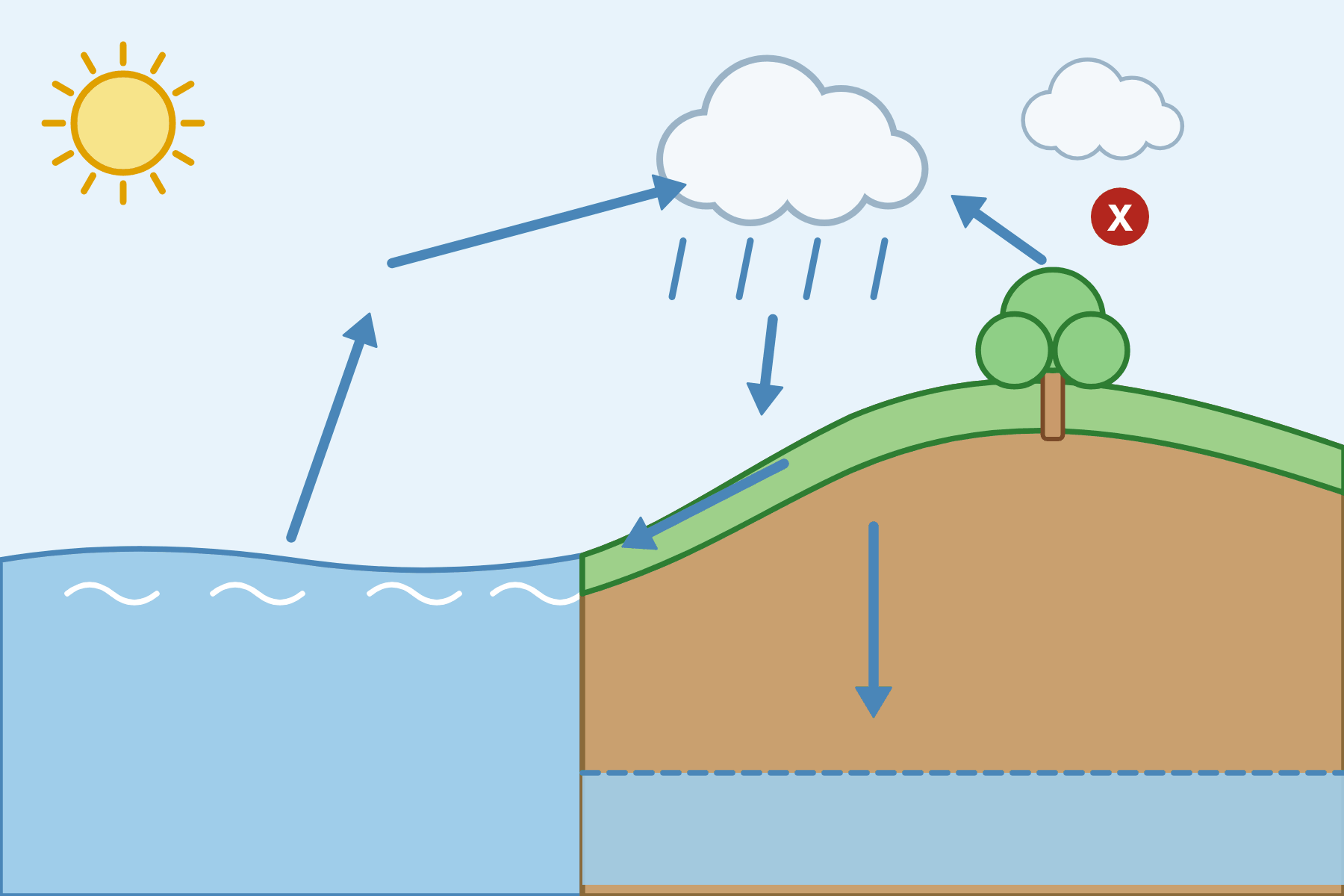 Name the process marked X and say what happens.
 Transpiration. Plants take up water through their roots and lose water vapour through the stomata in their leaves.
-
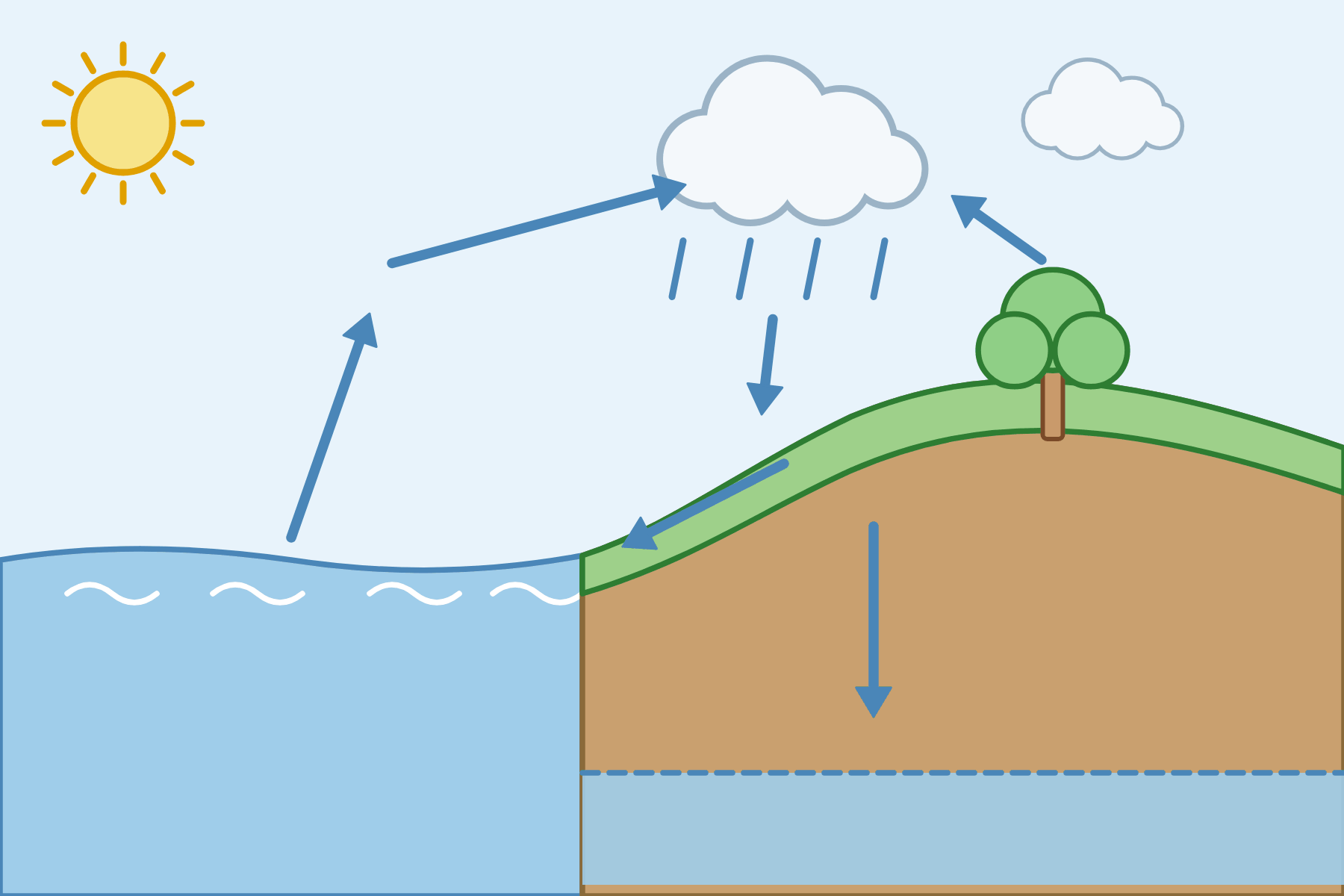 Describe the water cycle.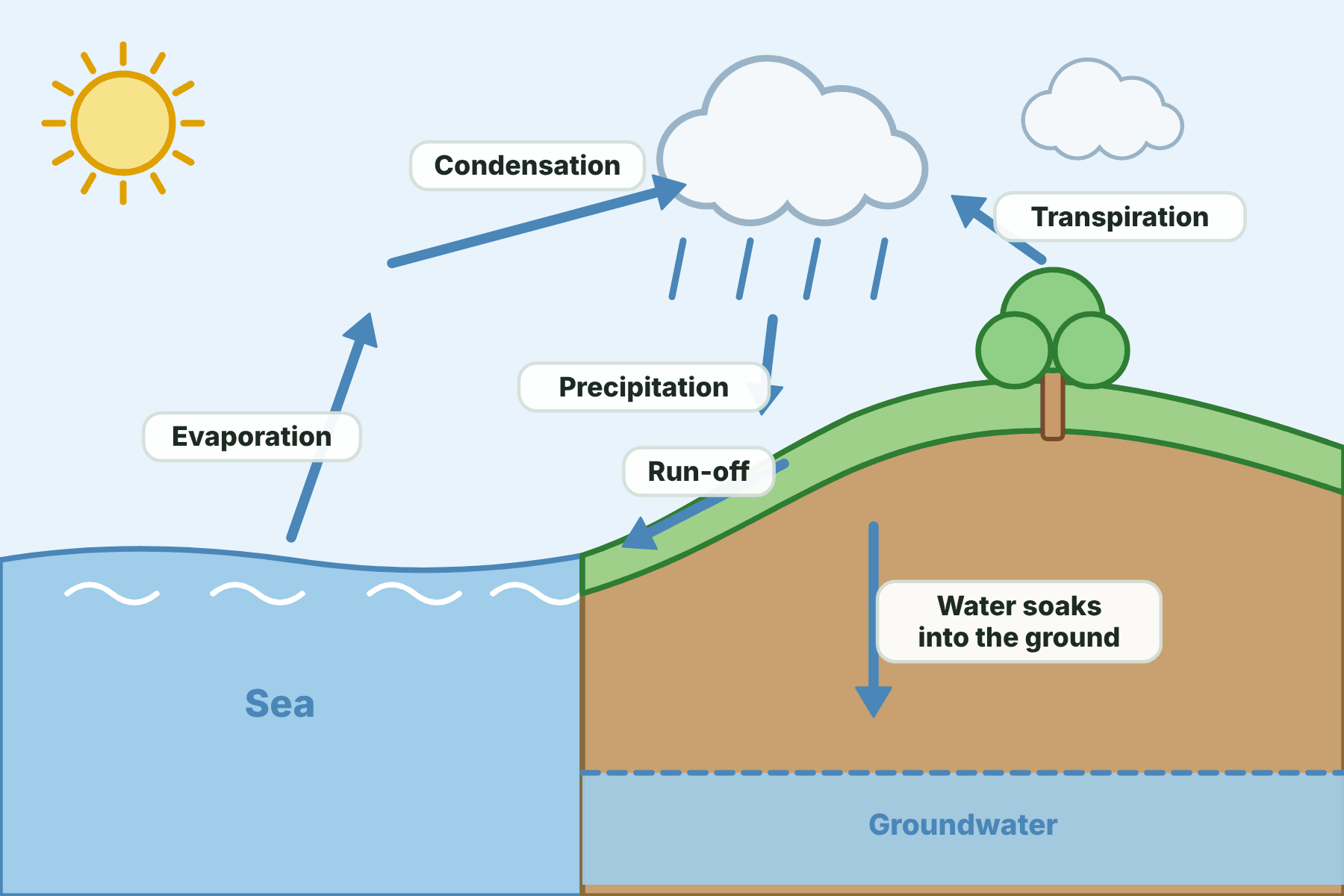
Evaporation from the sea and transpiration from plants put water vapour into the air. It condenses into clouds and falls as precipitation. The water runs off into rivers and the sea, or soaks into the ground.