Flashcards · Biology · Feeding the Human Race
Genetic Engineering
-
What is genetic engineering?
Modifying the genome of an organism by inserting a gene to give it a desirable characteristic.
-
What does GM stand for?
Genetically modified.
-
Where can the gene for genetic engineering come from?
Any species, not only the same species as the recipient.
-
What do enzymes do in genetic engineering?
They cut the gene out of the DNA of the donor.
-
What does a recipient cell do with the new gene?
It makes the protein that the gene codes for.
-
Why is a gene put into an embryo or a single cell at an early stage?
So that mitosis copies it into every cell of the organism.
-
How can the characteristic reach the next generation?
The gene is in the genome, so it is inherited by offspring.
-
What is the Bt gene used for?
To make crops produce a protein that kills caterpillars that eat them.
-
Why are herbicide-resistant crops useful?
The farmer can spray the field to kill weeds without killing the crop.
-
What was papaya in Hawaii given resistance to?
Ringspot virus.
-
Why do people with type 1 diabetes need insulin?
Their bodies cannot make enough, so the blood glucose level rises too high.
-
Where did insulin come from before genetic engineering?
The pancreases of pigs and cattle.
-
What is inserted into the bacteria to make insulin?
The human insulin gene.
-
Where are GM bacteria grown to make insulin?
In large tanks called fermenters.
-
Give two advantages of insulin made by GM bacteria.
It is identical to human insulin, it is cheap and plentiful, and no animals are used.
-
How is genetic engineering different from selective breeding?
A gene is moved in one step, instead of choosing parents over many generations.
-
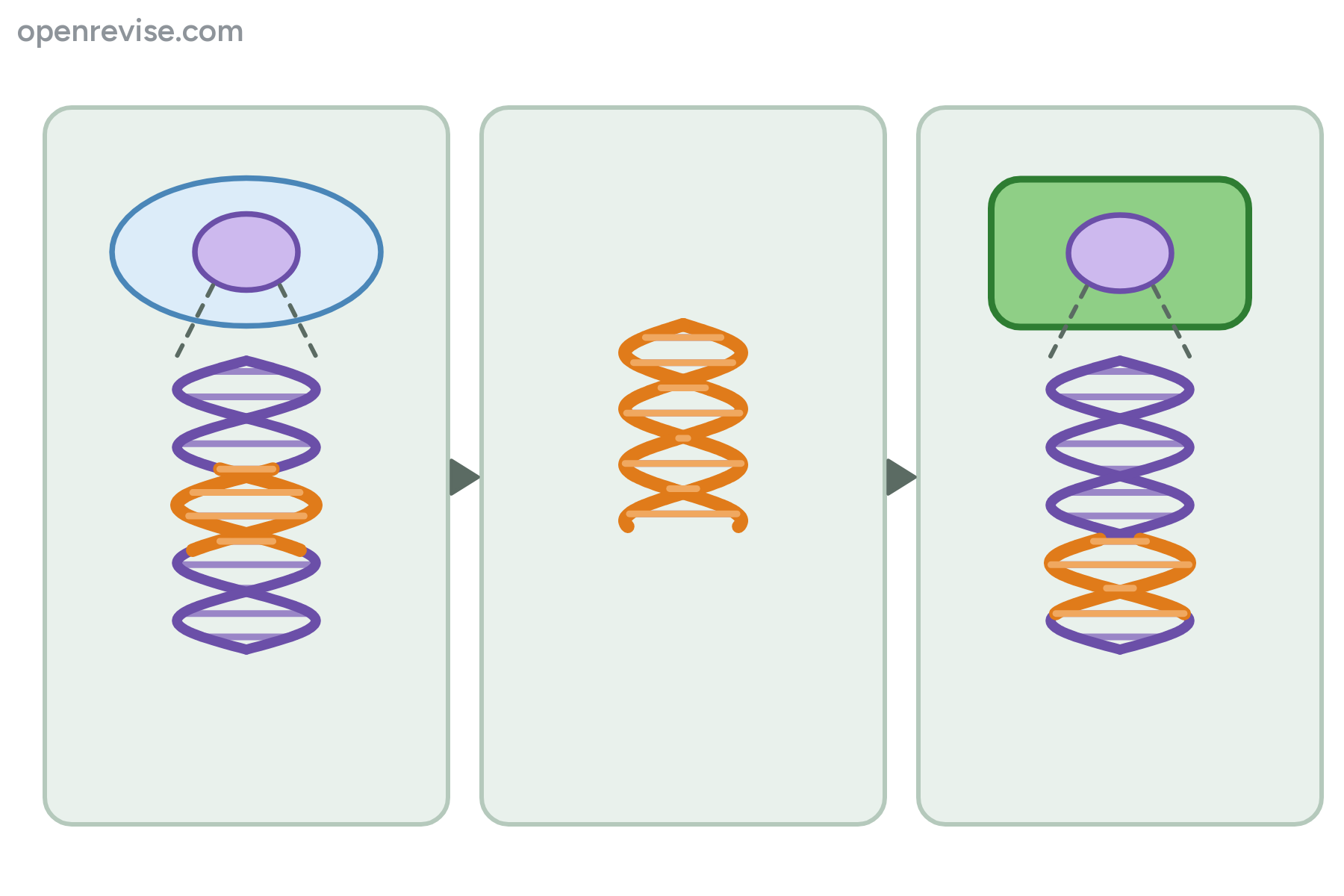 Describe what is happening at each stage of the diagram.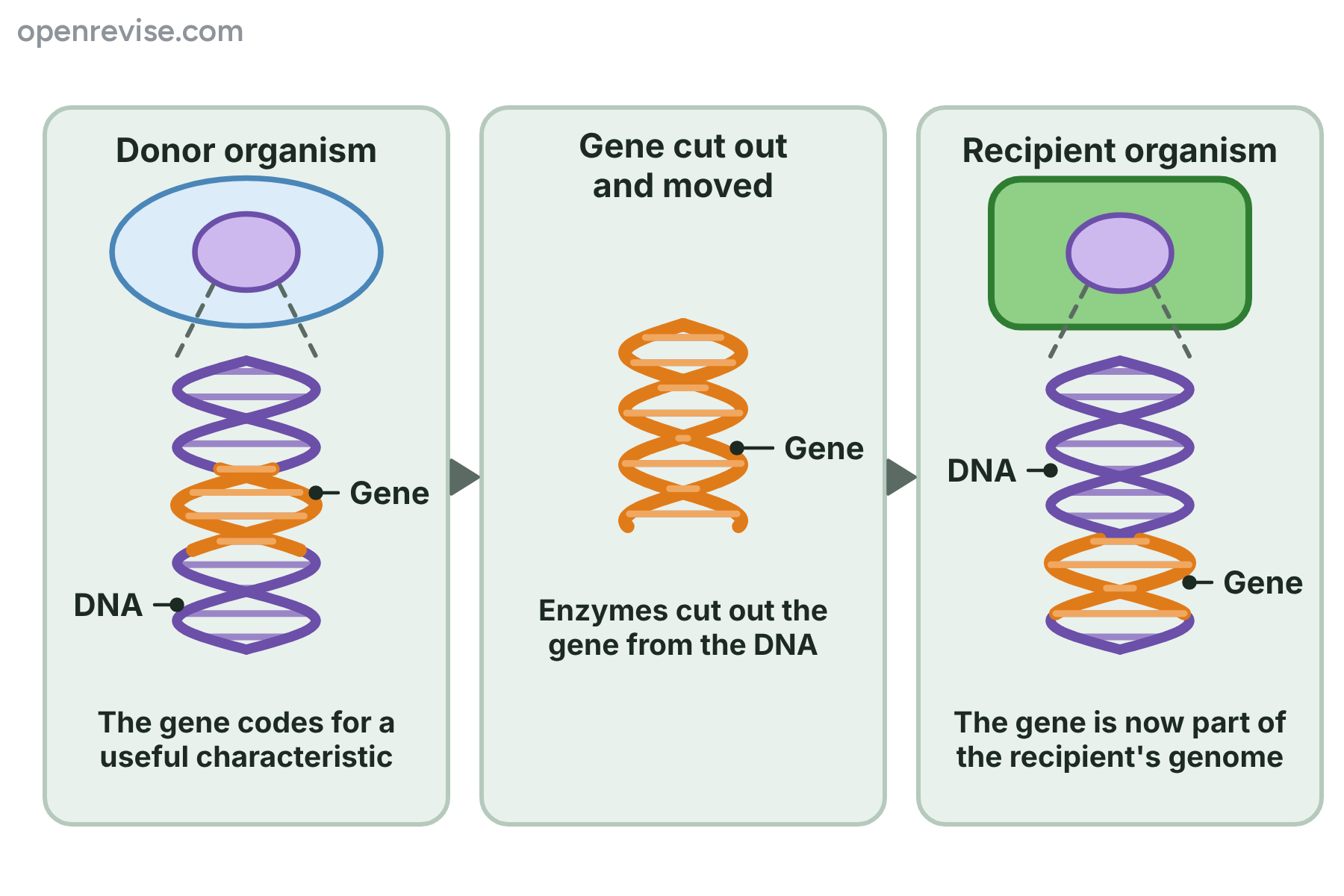
A gene is found in the DNA of the donor organism. It is cut out using enzymes. It is inserted into the DNA of the recipient cell, so that the recipient makes the protein for the new characteristic.
-
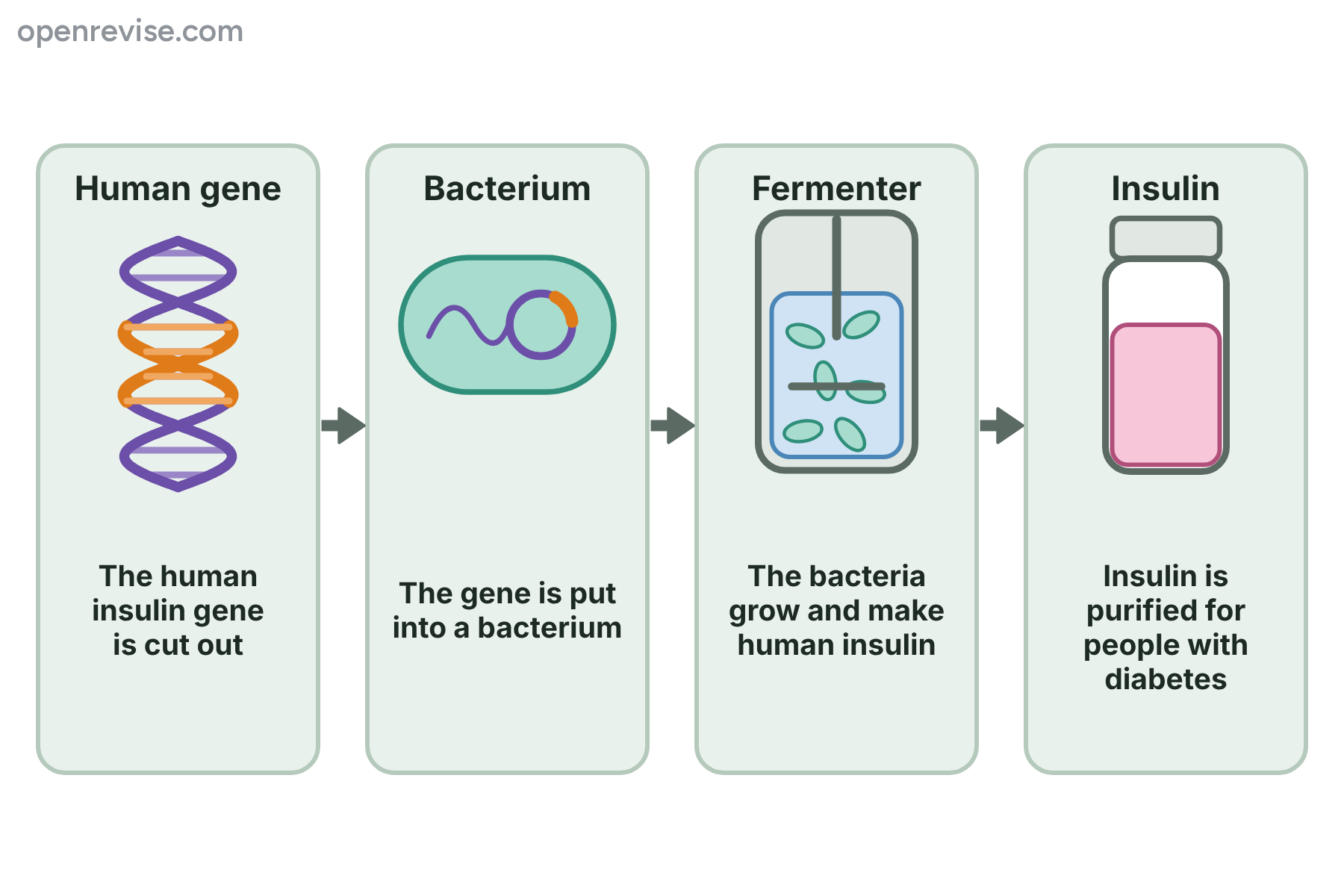 Describe how insulin is made by genetically engineered bacteria.
 The human insulin gene is cut out and put into a bacterium. The bacteria grow in a fermenter, and they make human insulin. The insulin is collected and purified for people with diabetes.