Flashcards · Biology · Monitoring and Maintaining the Environment
Human Interactions and Biodiversity
-
What is biodiversity?
The variety of living organisms in a habitat, or on Earth.
-
Name three ways in which land is used that destroy habitats.
Building, farming, quarrying and draining wetlands (any three).
-
What is deforestation?
The clearing of large areas of forest.
-
Why does deforestation reduce biodiversity?
The habitats and food of many species are destroyed.
-
Why are tropical rainforests important for biodiversity?
They hold more than half of all species, though they cover a small part of the land.
-
Give an example of a species that was driven to extinction by hunting.
The passenger pigeon.
-
What is overfishing?
Catching fish faster than they can breed.
-
What causes eutrophication?
Fertiliser or sewage running into water, which supplies extra nutrients.
-
Why do the plants in a pond die in an algal bloom?
The algae block the light, so they cannot photosynthesise.
-
Why do fish die in eutrophication?
Bacteria that decompose the dead plants use up the oxygen in the water.
-
What is an introduced species?
A species brought by humans to a place where it did not live before.
-
How did the grey squirrel harm the red squirrel?
It competes for food and carries a disease that kills red squirrels.
-
Name two methods of conservation.
Nature reserves, captive breeding, habitat restoration, laws (any two).
-
What does captive breeding aim to do?
Breed rare animals so they can be released into the wild.
-
What does CITES do?
It bans international trade in endangered species.
-
Why does losing one species affect others?
Species are interdependent, for example as food or shelter.
-
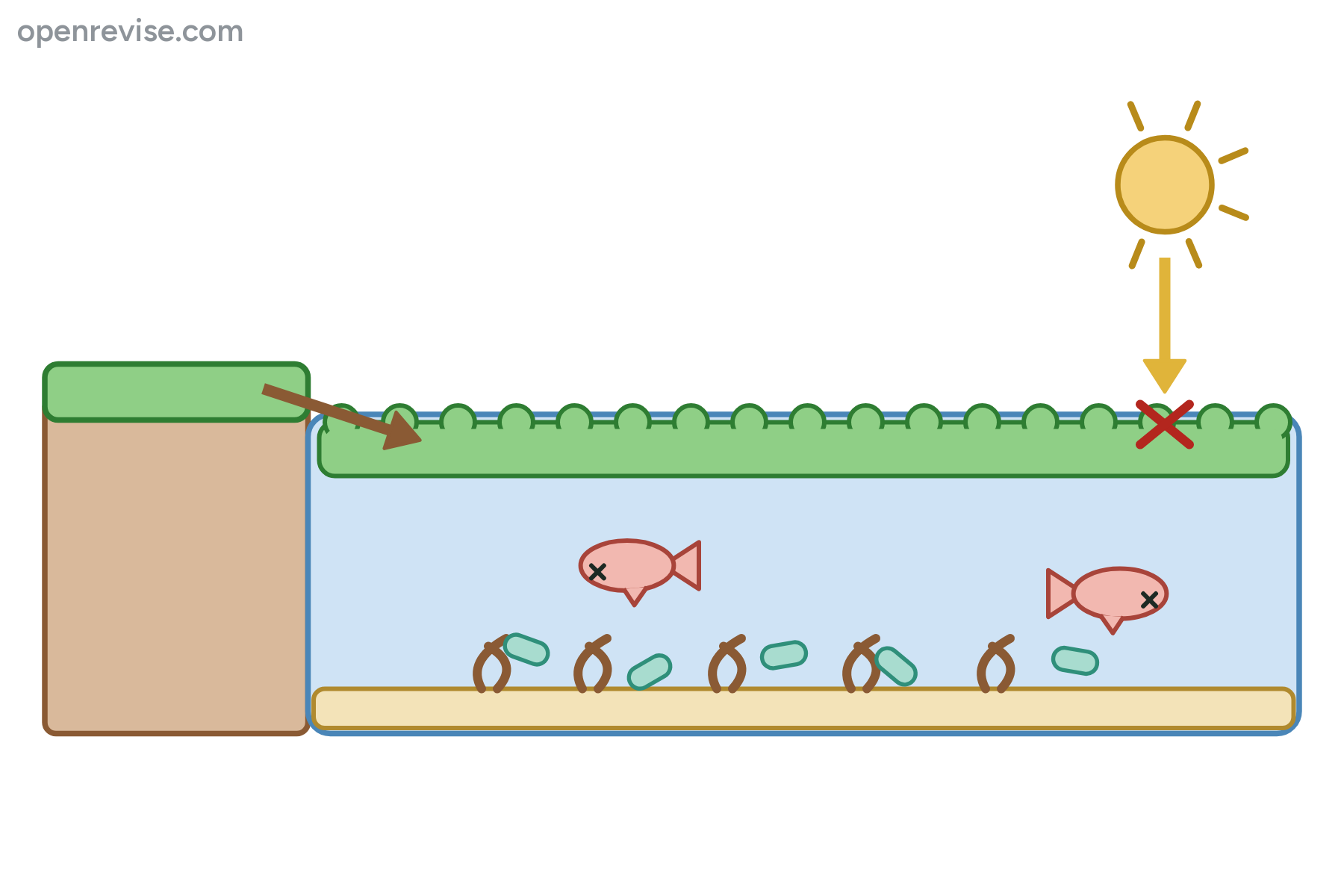 Describe how fertiliser from a field can lead to the death of fish in a pond.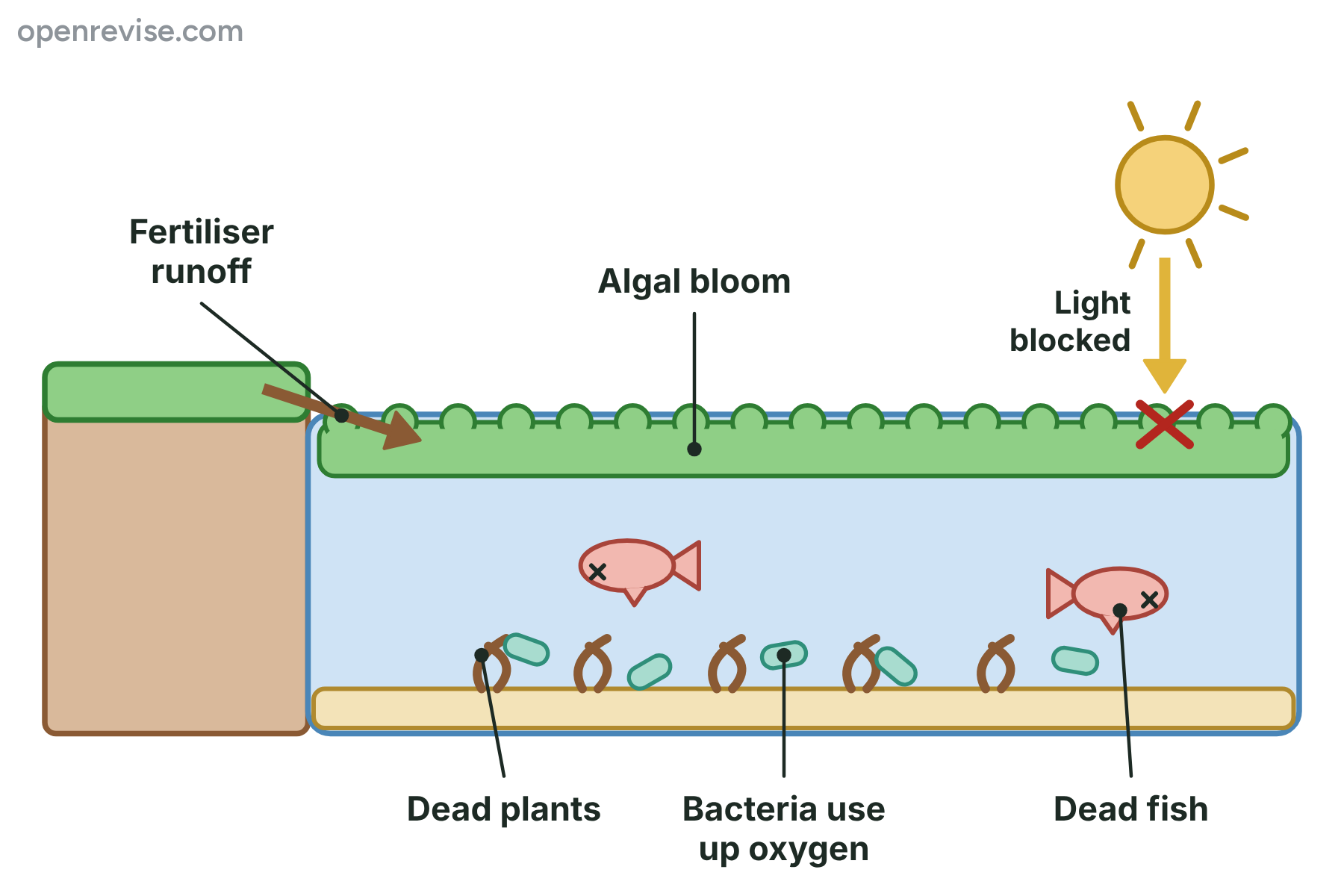
Fertiliser runs into the pond and the algae grow fast. They block the light, so the plants die. Bacteria decompose the dead plants and use up the oxygen, so the fish suffocate.