Flashcards · Biology · Natural Selection and Evolution
Darwin, Wallace and the Theory of Evolution
-
Which ship did Darwin sail on, and in which years?
HMS Beagle, from 1831 to 1836.
-
Which islands gave Darwin important observations of birds and tortoises?
The Galapagos Islands.
-
What did Darwin notice about the finches?
The beaks differed from island to island and suited the food available.
-
What did Darwin learn from pigeon breeders?
That selecting which individuals to breed can change a variety within a few generations.
-
State Darwin's inference from his observations.
The individuals best suited to the environment survive and breed more, so their features become more common.
-
Who was Alfred Russel Wallace?
A naturalist who developed the idea of natural selection independently of Darwin.
-
What did Wallace do in 1858?
He sent Darwin an essay setting out natural selection.
-
When was the joint announcement made, and where?
On 1 July 1858, at the Linnean Society of London.
-
When was On the Origin of Species published?
1859.
-
Give two reasons why the theory was resisted.
Religious belief, and no known mechanism of inheritance (or too slow to observe).
-
Why could Darwin not explain inheritance?
Genes and mutations were not known.
-
How did Mendel's work help to support the theory?
It showed how features are inherited in units, which are genes.
-
Name two types of evidence that led to acceptance of the theory.
Fossils such as Archaeopteryx, genetics and DNA, and observed natural selection (any two).
-
Name one impact of evolutionary theory on medicine.
It explains antibiotic resistance, and why new flu vaccines are needed.
-
What is a seedbank?
A store of seeds, dried and kept cold, to preserve plant biodiversity.
-
Why are seedbanks needed?
They keep genetic variation as insurance against loss of species and crop varieties.
-
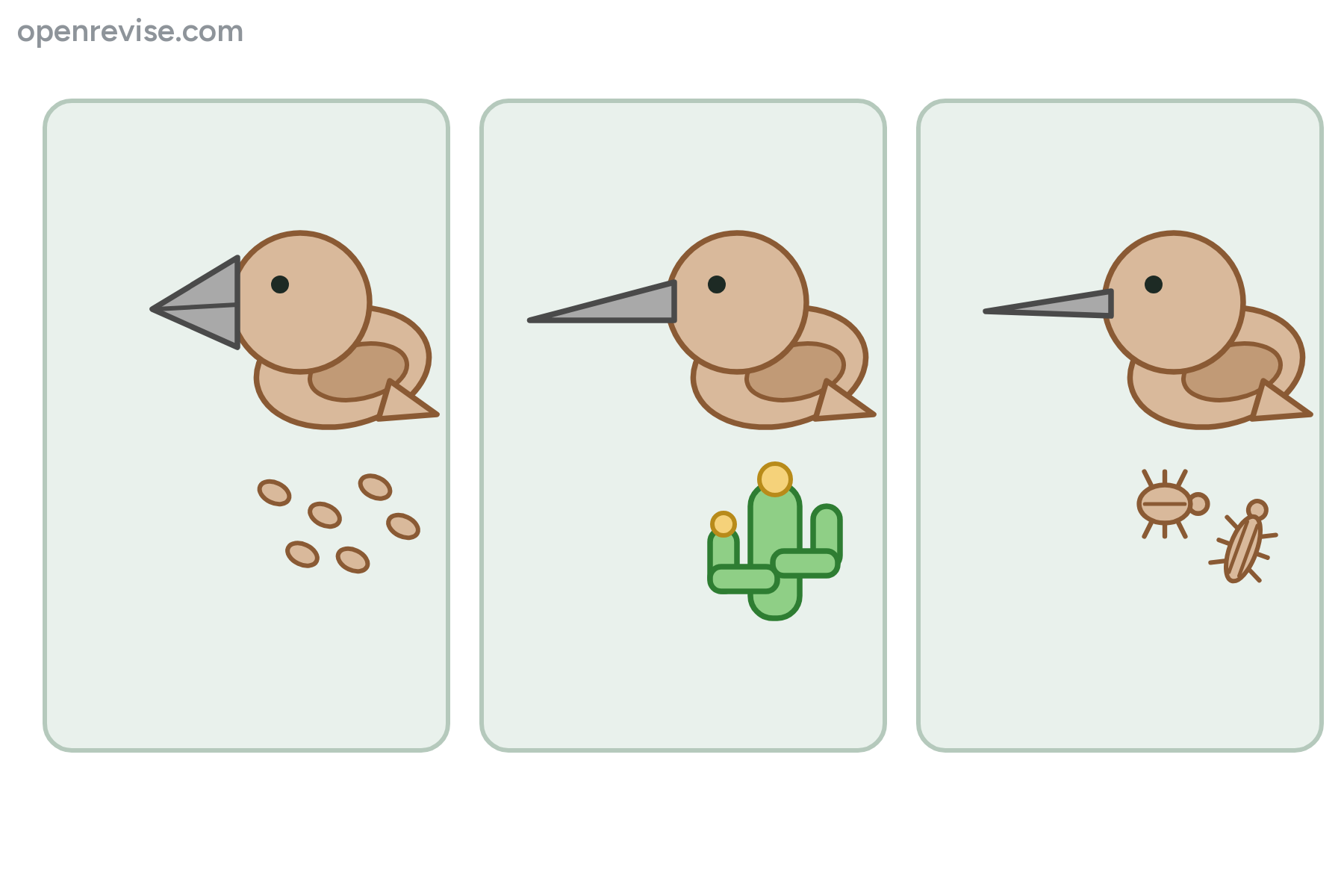 Explain how these finches show natural selection, and what Darwin inferred from them.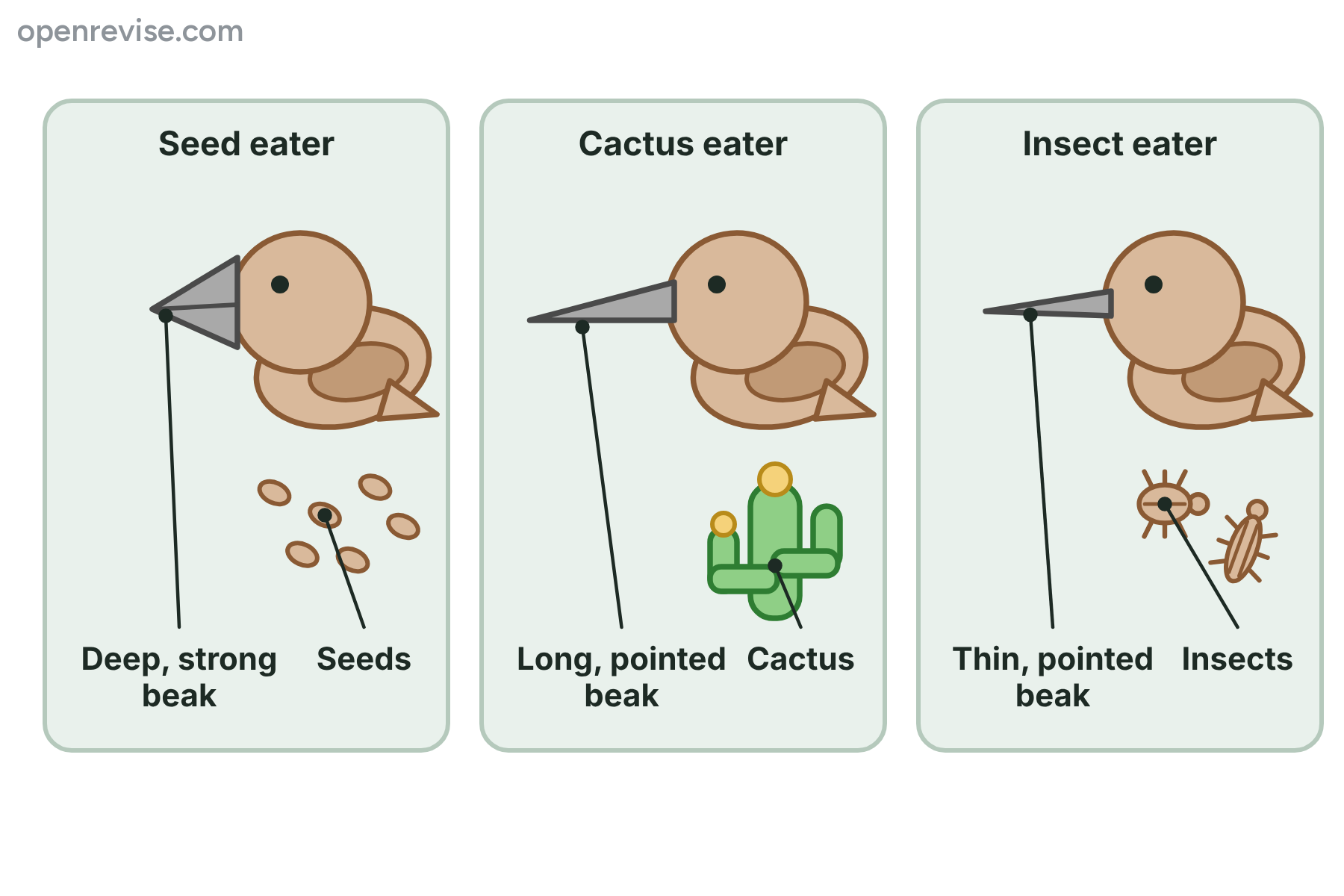
Each beak suits a different food. Finches with beaks best suited to the food on an island survive and breed more, so over generations the populations differ. Darwin inferred that the finches share an ancestor and changed by natural selection.