Flashcards · Biology · Natural Selection and Evolution
Fossils and Extinction
-
What is a fossil?
The remains or traces of an organism from many years ago, found in rock.
-
Which parts of an animal most often form fossils?
Hard parts, such as shells, teeth and bones.
-
How can minerals form a fossil?
Minerals replace the hard part as it decays, making a stone copy of it.
-
Give an example of a fossil that formed because there was no decay.
An insect in amber, a mammoth in ice, or a body in a peat bog.
-
Name one kind of trace fossil.
A footprint, a burrow or a rootlet trace.
-
In undisturbed rock, where are the oldest fossils?
In the deepest layers.
-
How did the foot of the horse change over time?
From four toes in the oldest fossils to a single large hoof.
-
What did Archaeopteryx show?
Features of both reptiles and birds, so it suggests that birds evolved from reptiles.
-
Why are soft-bodied organisms rarely found as fossils?
They decay quickly and leave little behind.
-
Give two reasons why the fossil record is incomplete.
Fossilisation is rare, many fossils are destroyed by movements of the Earth, and many are not yet found.
-
What is extinction?
The permanent loss of a species, with no individuals left alive.
-
Name three causes of extinction.
Environmental change, new predators, new diseases, new competitors, hunting or habitat destruction (any three).
-
Why can a change in climate cause extinction?
Individuals cannot compete and reproduce in the new conditions.
-
Why are small populations more likely to become extinct?
They have little genetic variation, so there may be no variants that can cope with a change.
-
What happened to the dinosaurs 66 million years ago?
An asteroid impact changed the climate and food chains, and the non-flying dinosaurs became extinct.
-
What does the fossil record tell us about extinct species?
What they looked like, when they lived and how they were related to living species.
-
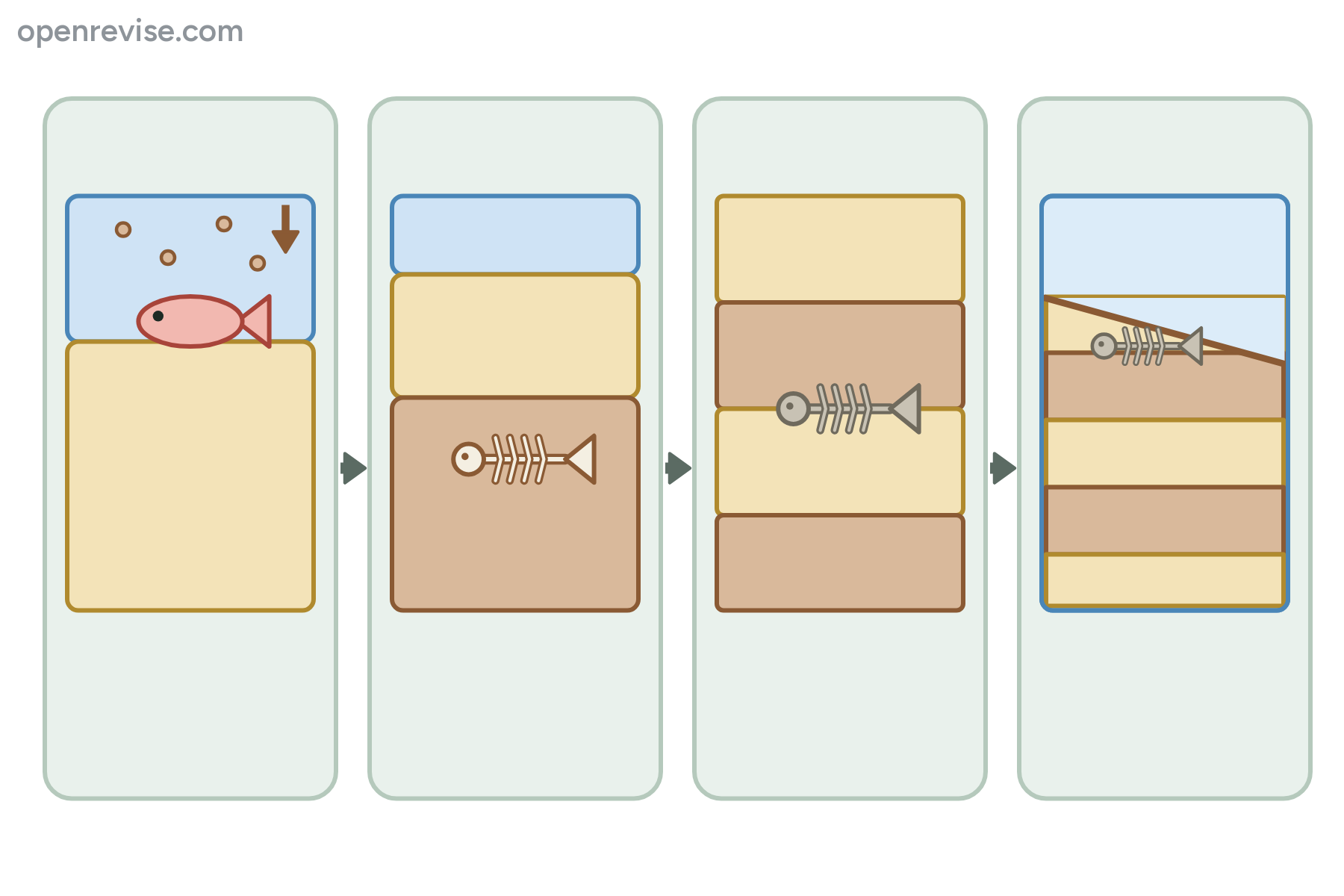 Describe the four stages shown in the diagram.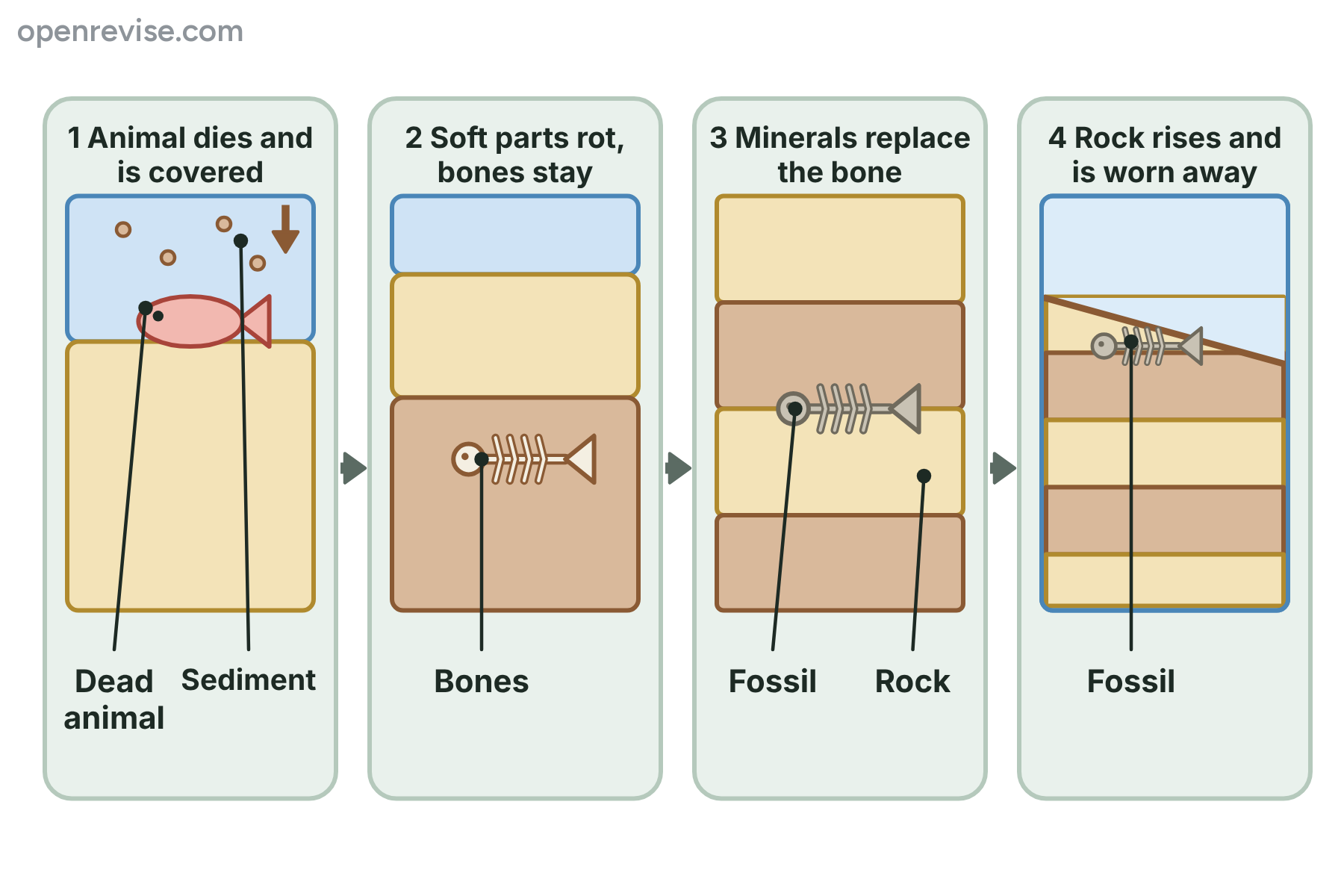
1 The animal dies and is covered by sediment. 2 The soft parts rot and the bones stay. 3 Minerals replace the bone, and the sediment turns to rock. 4 The rock is raised and worn away, which exposes the fossil.
-
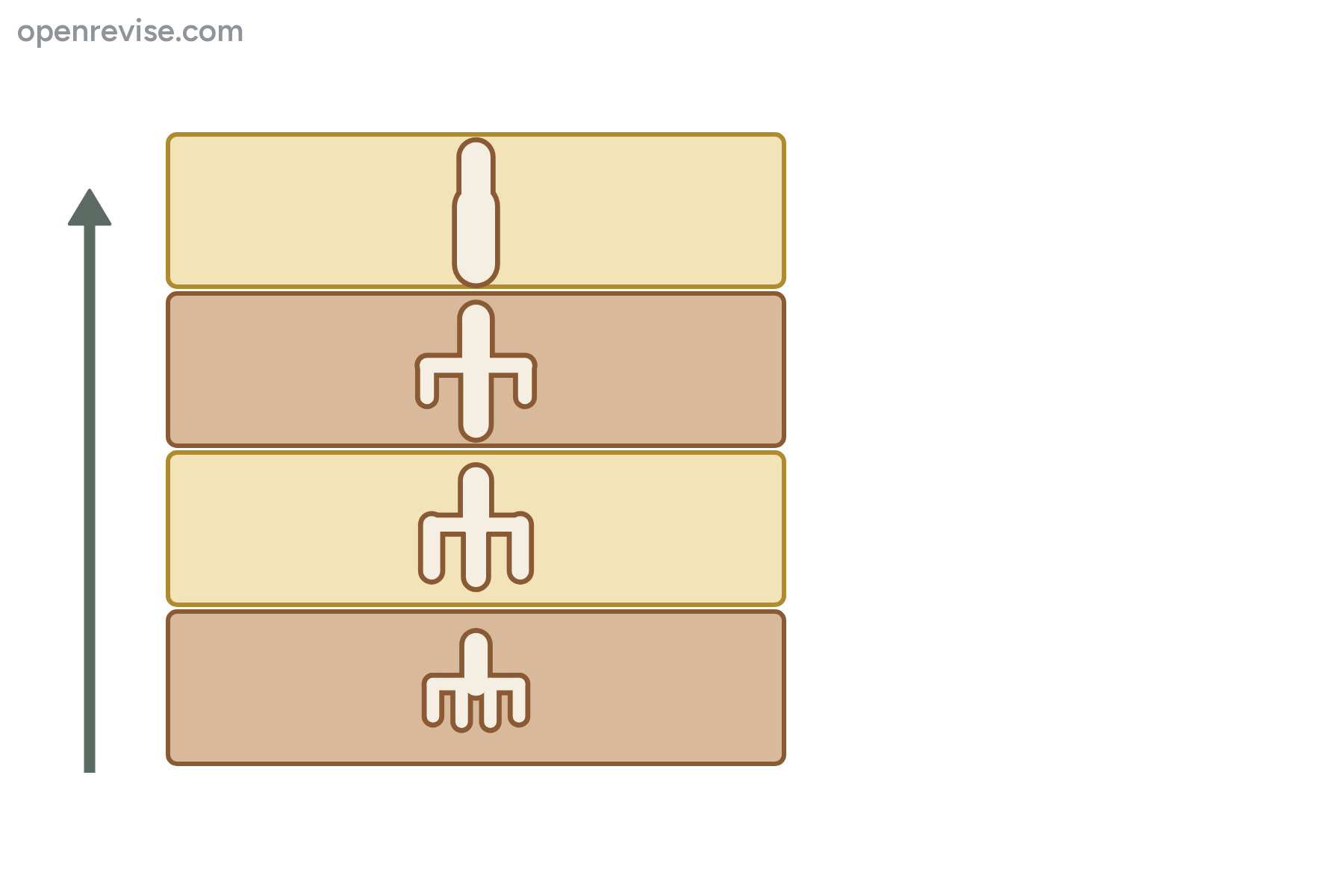 What does this series of fossils show about the evolution of the horse?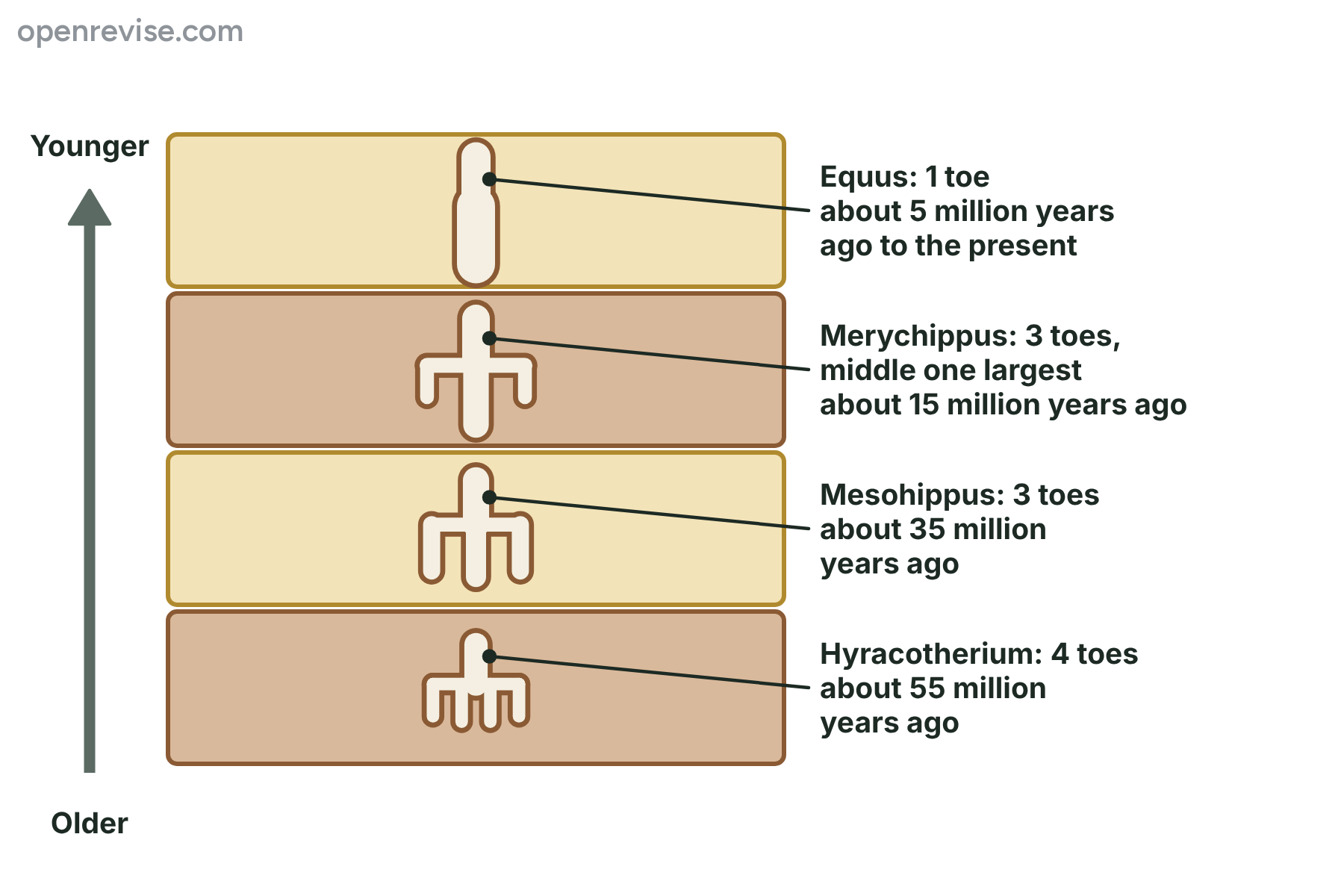
The number of toes fell from four in the oldest layer to one in the youngest, and the animal became larger, so the horse evolved gradually over about 55 million years.